 VPSbit
Best No-KYC Dedicated Servers 2026 — Metal Ranked

Ten no-KYC dedicated vendors compared on named specs: Forge from $39.20/mo annual-eff — Ryzen 9 9950X, IPMI, twin NVMe, Monero, 12 locations.
Ten no-KYC dedicated vendors compared on named specs: Forge from $39.20/mo annual-eff — Ryzen 9 9950X, IPMI, twin NVMe, Monero, 12 locations.
AMD Ryzen 9 9950X → 2× AMD EPYC 9554PECC DDR5NVMe RAID 0/1/5/10IPMI on all1–25 Gbps unmetered19 coins + XMR
Plan ledger
| Plan | CPU | RAM | NVMe | RAID | Port | IPMI | Price |
|---|---|---|---|---|---|---|---|
| Forge | 16c / 32t | 32 GB DDR5 | 2 x 1 TB NVMe RAID 0/1 | 0/1 | 1 Gbps | IPMI + DDoS | $49 list · $39.20/mo annual |
| Summit | 32c / 64t | 64 GB DDR5 ECC | 2 x 2 TB NVMe RAID 0/1 | 0/1 | 10 Gbps | IPMI + DDoS | $89 list · $71.20/mo annual |
| Monolith | 128c / 256t dual | 128 GB DDR5 ECC | 4 x 2 TB NVMe Gen4 RAID 0/1/5/10 | 0/1/5/10 | 25 Gbps | L3/L7 scrubber | $149 list · $119.20/mo annual |
Full ledger: all dedicated SKUs.
12 locations · 19 coins · SLA 99.95% · no KYC · public canary
VPS from $4.80* — Core on the annual term (list $6/mo), one invoice for 12 months, no auto-charges. Dedicated with IPMI from $39.20/mo. Crypto invoice, no KYC.
Launch nowHow ten vendors were scored
Bare metal without identity checks is a small market with loud claims, so this ranking sorts it with two columns before any adjectives get a turn: the entry sticker for a named specification, and the number of cities you can actually deploy to. Ten vendors make the table — VPSbit plus nine rivals — and each row carries the same five weights, printed below so you can rerun the math with your own priorities and still land somewhere defensible. A ranking that hides its weights is asking for trust; this one asks for a calculator and ten minutes.
- Metal depth: 25%
- IPMI and DDoS inclusion: 20%
- Payment privacy: 20%
- Location count: 20%
- Entry price: 15%
Every rival figure below was read from the vendor's own pages on 21–23 September 2026, cheap floors included, and nothing has been adjusted since. Where a vendor prints a floor price, the table says so; where the floor is not the machine most buyers would name, the watch-out column says that too. You get the accounting the way an auditor would run it — the total invoice for a named spec, not the smallest number on the homepage. Floors flatter; invoices decide.
The conflict of interest is printed rather than buried: VPSbit publishes this page, the entity behind it is Meridian Node Ltd. of Saint Kitts and Nevis, and there are no affiliate placements or paid rows anywhere in it. That is exactly why the rival floors stay honest and the publisher's own cons — no GPUs, no colocation — appear in their own section below. Use the ranking as a filter, not a verdict; if your workload needs a GPU, none of the leaders will serve you, and this page tells you so directly instead of selling you a consolation prize.
The 2026 ranking, row by row
Nine vendors ship bare metal without identity checks alongside VPSbit, and the scores compress each catalog into one number across the five weights. Two rows deserve a second look before you scroll past them. Incognito's $46 floor is genuine, but it is not the 8-core, 32 GB NVMe, IPMI machine the catalog name suggests — that configuration costs more. BitVPS stays in the table only so the Scamadviser flag travels with the price it prints.
| # | Provider | Score /10 | Dedicated from | Locations | Watch-out |
|---|---|---|---|---|---|
| 1 | VPSbit | 9.2 | $39.20 annual-eff ($49 list) | 12 | — |
| 2 | ServPrivacy | 7.8 | $66; Ryzen 5 7600, 32 GB; XMR first-class | 6 | Smaller map and catalog |
| 3 | VSYS Host | 7.5 | $68 ($54 yearly); email-only signup | 4 | Anti-DDoS a paid extra, from $100/mo |
| 4 | SuperBitHost | 7.3 | €70; crypto only | 26–31 claimed | Footprint claims vary; entry spec thin |
| 5 | AlexHost | 7.1 | Moldovan metal; Monero; low-cost | 1 | Mixed DMCA record |
| 6 | Evoluso | 6.9 | €99 and up; pseudonym signup | NL/SE/CH | Monero never explicitly named |
| 7 | FlokiNET | 6.8 | Iceland/RO racks + colo; cash by mail | 4 | Manual, quote-driven, slower |
| 8 | Incognito | 6.6 | $46 floor | 16 | Floor hides a cheaper config; named spec costs more |
| 9 | Impreza Host | 6.5 | $290–$660 (Iceland); Monero; no-email signup | 6 | 3.6–8× this catalog entry |
| 10 | BitVPS | 5.9 | From $39.50 | 4 on paper | Scamadviser flags; theft-flavored reviews |
On the weights, VPSbit lands first at 9.2 out of 10: the only catalog in this set where no-KYC metal spans three published tiers on named Ryzen and EPYC silicon, with IPMI and DDoS on every invoice, Monero beside eighteen other coins, and twelve elite locations across Europe and Asia. Credit where it is due — Incognito prints the lowest floor among vendors this ranking does not flag, and the row says so plainly. The named-spec invoice is the number that decides, and the sections below print those side by side so you can run the comparison yourself.
Read the watch-out column as carefully as the price column, because the two move together. A floor that hides a cheaper configuration, an anti-DDoS service billed as a second invoice, a footprint that shifts between twenty-six and thirty-one countries — each one reprices the sticker you thought you saw. You can verify every cell against the vendor pages checked in September 2026, and ten minutes of your own arithmetic beats any podium this market hands you for free.
The publisher's own ledger, cons first
The house row leads with its weaknesses, because a ranking that cannot criticize its publisher is an advertisement, and you can buy advertising anywhere. Everything below is checkable against VPSbit's own pages: three tiers on named silicon, and four concessions printed in the same voice as the rivals' rows. Strengths print first, trade-offs second, same order as every other ledger on this page, so you can compare them line against line without translations.
- Three tiers: Ryzen 9 9950X up to dual EPYC 9554P
- IPMI and DDoS filtering on every invoice
- Monero plus eighteen other coins
- Twelve elite locations across Europe and Asia
- $39.20 annual-eff entry with the list price published
- No GPU tiers at any price
- No colocation for your own hardware
- Premium flags add +15% to +35%
- Self-managed root metal only
Each concession has a buyer it disqualifies, and naming that buyer is more useful than hiding the line. GPU workloads — model training, frame rendering — must go to a GPU-focused host, because no amount of EPYC compensates for a missing accelerator. Colocation is a different product with a different custody chain, and FlokiNET sells it honestly if shipping your own machine is the point of the exercise. The premium flags print before you order, and self-managed means exactly that: autonomy is the product, and hand-holding is not on the invoice anywhere.
What you get for accepting those lines is consistency, and consistency is rarer than it sounds in this market. The same token-or-email door stands at every price, the same crypto invoice runs from Forge to Monolith, and provisioning hands you the IPMI console from the first minute at every tier. Weighed honestly, that consistency is why the 9.2 stands — not marketing, but the absence of the watch-outs that dock every row below it on the grid.
Rivals one to five, weighed
Five ledgers follow in rank order, each traced to the vendor's own checked pages from September 2026. Strengths print first, trade-offs second, and every item stays inside the facts those pages published — no modeled prices, no charitable readings. Hold each row against the publisher's ledger above, and ask which watch-out your workload would hit first: the silicon, the add-on invoice, the drifting footprint, or the single flag.
ServPrivacy prints $66 for a Ryzen 5 7600 with 32 GB — a genuine machine, XMR first-class, across six locations, on a smaller map and a thinner catalog than the leader. The gap is not the CPU; it is everything around the CPU, from the deployable city count to the depth of the ladder above the entry box. If your work fits six cities and non-ECC entry silicon, the row earns its 7.8 honestly and nobody should talk you out of it.
- $66 entry: Ryzen 5 7600 with 32 GB
- XMR first-class on the invoice
- Six deployable locations
- Smaller map and catalog
- Entry CPU below the ECC tiers here
- Half the leader's footprint
VSYS Host prices privacy-equal metal at $68, falling to $54 on the yearly term, with an email-only signup that asks for nothing else — the lightest door in the table. The catch sits in the protection column: named anti-DDoS is a paid add-on from $100 per month. On a $54 floor, a protection add-on at nearly twice the base price is the whole decision, and you should make it with that arithmetic printed in front of you rather than discovered on the second invoice.
- $68 entry, $54 on the yearly term
- Email-only signup, nothing else asked
- Four named locations
- Anti-DDoS a paid add-on from $100/mo
- The add-on nearly doubles the floor invoice
- Four named sites only
SuperBitHost posts a €70 entry with a crypto-only checkout and a claimed reach of twenty-six to thirty-one countries. The claims move with the weather, the entry specification runs thin, and the score docks for verification gaps rather than for anything provably false. Treat unverified maps with the same skepticism you would apply to unverified specs, and your money stays out of the drift while other people's money discovers what the map really holds.
- €70 entry price
- Crypto-only checkout
- Wide footprint, on paper
- Country claims vary, 26–31
- Entry spec thin
- Score docked for verification gaps
AlexHost sells Moldovan metal with Monero and a low-cost entry, and single-country simplicity is both its charm and its ceiling. One location concentrates every project under one legal regime, and a mixed DMCA record caps the score at 7.1 regardless of the price. For a box whose job is jurisdiction arbitrage rather than performance, the row still earns its place on the sheet, and you should read it that narrowly.
- Moldovan metal with XMR
- Cheap entry point
- Simple single-country story
- One location
- Mixed DMCA record
- Footprint caps the score
Evoluso runs anonymous metal from €99 upward with a pseudonym signup across the Netherlands, Sweden and Switzerland. Three countries is a real footprint in this market, but Monero is never explicitly named on its pages, and the entry sits above most of the field you just read about. If pseudonymous-without-XMR fits your rails, the row works; if XMR is the point of the exercise, keep scrolling to the section on wrong answers before you pay anyone.
- €99+ anonymous metal
- Pseudonym signup
- NL/SE/CH coverage
- Monero never explicitly named
- Entry above most of the field
- Three-country footprint
Rivals six to ten, weighed
The bottom half of the table holds the specialists and the cautionary rows, and it deserves the same honesty as the top. FlokiNET sells Iceland and Romania racks plus colocation, accepts cash by mail, and carries privacy-oriented branding with a long record behind it. The motion is manual and quote-driven, which slows every step in ways a crypto invoice never does, and quotes block the side-by-side price comparison this page exists to give you. Four locations is honest, and the colocation door is genuinely unique in this set.
- Iceland and Romania metal plus colo
- Cash by mail accepted
- Privacy-oriented branding, years deep
- Manual, quote-driven, slower
- Four locations
- Quotes block price comparison
Incognito prints the lowest credible floor in the table at $46, across sixteen locations, with a no-KYC signup. The catch is arithmetic, not honesty: the floor is not the named 8-core, 32 GB NVMe, IPMI configuration the catalog advertises — that spec costs more. Buy on the named spec and the row climbs in price; buy on the floor and you are buying a different machine than the one you compared, which is how buyers end up paying twice for one lesson.
- Lowest credible floor: $46
- Sixteen locations
- No-KYC signup
- The $46 floor is not the 8c/32 GB spec
- The named spec costs more
- Floor/spec mismatch docked
Impreza Host runs Iceland metal from $290 to $660, takes XMR, and offers a no-email signup — three things this ranking likes on paper. The price band sits 3.6 to 8 times above this catalog's entry before you compare a single component, which puts it out of entry-tier range entirely. As a premium Icelandic option it may suit you well; as a first rack it does not compete, and the score of 6.5 says exactly that.
- Iceland metal
- XMR accepted
- No-email signup offered
- $290–$660 entry, 3.6–8× this catalog
- Six locations
- Out of entry-tier range
BitVPS prints a $39.50 floor and four locations on paper, with no identity checks claimed anywhere on the site. The row stays in the table so the context travels with the number: Scamadviser flags and theft-flavored reviews accumulate around the operation, and paper locations are not a footprint until provisioning confirms them. The verdict prints plainly — do not trust — and nothing on this page should talk you out of a caution that cheap.
- $39.50 floor on paper
- Four locations on paper
- No identity checks claimed
- Scamadviser-flagged
- Theft-flavored reviews accumulating
- Verdict: do not trust
Weighting these rows is your call, and the weights are printed precisely so you can change them. If IPMI is non-negotiable for you, two of the nine rivals effectively drop out at entry level; if footprint is the point, the twelve-location column explains the gap to the six-, four- and one-location rows without another word of marketing. Your priorities, your arithmetic, ten minutes — and the answer you land on will survive questioning, which is more than most podiums can say.
The metal itself: Forge, Summit, Monolith
Three tiers cover the catalog, and both prices print side by side so nothing hides in a term. The annual term is list multiplied by 0.8 — twenty percent off for twelve months on one invoice, with no auto-charges — and quarterly billing takes ten percent off instead if you would rather commit a season at a time. Every tier runs on named silicon you can verify before paying: Ryzen 9 9950X at 4.3–5.7 GHz on Forge, EPYC 9354P at 3.25–3.8 GHz on Summit, and a dual EPYC 9554P pair at 3.1–3.75 GHz on Monolith.
| Server | List | Annual-eff | CPU | RAM | Disks | Port | Protection |
|---|---|---|---|---|---|---|---|
| Forge | $49 | $39.20/mo | Ryzen 9 9950X, 16c/32t, 4.3–5.7 GHz | 32 GB DDR5 | 2×1 TB NVMe, RAID 0/1 | 1 Gbps unmetered | IPMI + DDoS |
| Summit | $89 | $71.20/mo | EPYC 9354P, 32c/64t, 3.25–3.8 GHz | 64 GB DDR5 ECC | 2×2 TB NVMe, RAID 0/1 | 10 Gbps unmetered | IPMI + DDoS |
| Monolith | $149 | $119.20/mo | 2× EPYC 9554P, 128c/256t, 3.1–3.75 GHz | 128 GB DDR5 ECC | 4×2 TB NVMe Gen4, RAID 0/1/5/10 | 25 Gbps unmetered | IPMI + L3/L7 scrubber |
Follow the money through the table and the shape of the catalog appears. ECC memory arrives at the top two tiers, NVMe ships in mirrored pairs on Forge and Summit, Monolith spreads four Gen4 drives across RAID 0, 1, 5 and 10, and unmetered ports scale from 1 to 25 Gbps so a traffic spike never becomes a surcharge. The ledger above is the complete three-SKU catalog on one line each, so you can price the whole ladder in a single glance before you choose a tier and a flag together.
Provisioning runs two to four hours from confirmed payment, and the IPMI console answers from the first minute — you are not waiting on a technician to mount an ISO or check a cable. The invoice is crypto-only at every tier with no KYC step at any price: the same token-or-email flow as the VPS side, settled in XMR, BTC or any of the nineteen supported coins. XMR credits at ten confirmations, and the rack job starts from there with no human gate between your payment and your console.
Dedicated with IPMI from $39.20/mo annual-eff. Forge on Ryzen 9 9950X, twin 1 TB NVMe, DDoS filtering included, crypto invoice, no KYC at any tier.
Why IPMI decides the no-KYC equation
IPMI is a small computer living on the motherboard, and it keeps power, console and reinstall working whatever the operating system does. On offshore iron that turns a 3 a.m. kernel panic into a browser login and your own fix — no ticket, no technician in a distant timezone, no explaining to a support desk why you need a monitor attached to a machine you have never physically seen. All three tiers here include it as standard, and the difference compounds the moment something breaks at an inconvenient hour.
Rivals in this comparison often gate KVM access behind a per-request fee or drop out-of-band control entirely at entry level, which means the server is dedicated only while the operating system is healthy — precisely when you least need help, help sits furthest away. For no-KYC buyers the logic is sharper still: you chose this market partly because there is no relationship to fall back on, no account manager and no priority queue with your name on it. Out-of-band access replaces the relationship with autonomy, reinstall by reinstall.
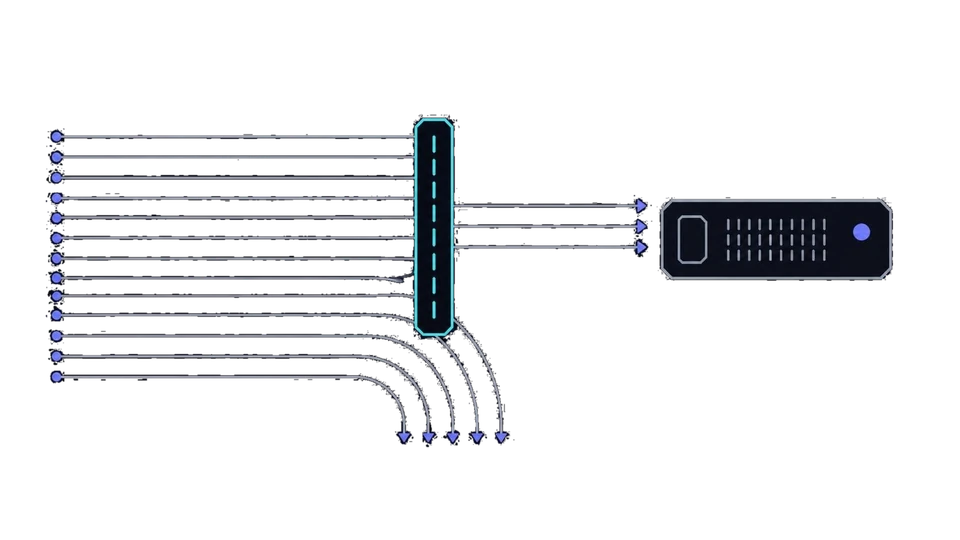
Add the included DDoS filtering and the equation closes: the two features that keep a headless machine manageable — out-of-band control and traffic scrubbing — ship on every Forge, Summit and Monolith invoice rather than arriving as line items later. When you compare rival floors, check those two columns first, because the sticker means little if either one is an add-on you will buy under pressure. Autonomy you can log into is the product; everything else on the brochure is packaging.
Entry-price reality check, checked September 2026
Three rivals beat or match the $39.20 annual-eff sticker, so read what each sticker actually buys before you applaud the number. The floors below are real, the check date is September 2026, and the named-spec question follows every one of them. A floor that buys a different machine than the one you compared is a discount against nothing, and you are the one who pays the difference.
- ServPrivacy: $66, Ryzen 5 7600, 32 GB, six locations
- VSYS Host: $68, or $54 yearly, four locations
- Incognito: $46 floor, sixteen locations
- Impreza Host: $290–$660, Iceland, six locations
- SuperBitHost: €70 entry, footprint claims vary
ServPrivacy's machine is genuine and XMR rides first-class, but the map runs six cities and the catalog runs thin — the gap is everything around the CPU. VSYS prices privacy-equal metal at $68 with an email-only door, and the yearly term brings it to $54; the named anti-DDoS add-on from $100 per month then widens the very gap it seems to close. Incognito's $46 is the lowest credible floor in the table, and it is still not the named 8-core, 32 GB ECC, NVMe, IPMI configuration — that machine costs more than the floor, and the invoice is where you meet it.
Impreza runs 3.6 to 8 times above this catalog's entry before you compare a single component, which removes it from any entry-tier conversation. Net the column out and Forge stands as the only entry tier in this set that puts IPMI, DDoS filtering, twin NVMe drives and twelve deployable cities on a single invoice. That is row-by-row arithmetic rechecked on vendor pages in September 2026, not a slogan — and rerunning it yourself, with the printed weights, is the entire point of publishing them in the first place.
When this metal is the wrong answer
Four cases call for a different vendor, and an honest ranking says so before you ask. None of the four is a defect; each is a boundary, and knowing where a product stops is worth more to you than any podium position. If your requirement list matches one of the lines below, buy elsewhere deliberately and sleep well about it.
- GPUs: no tier here carries one
- The sub-$60 bracket with add-on invoices accepted
- Colocation of your own hardware
- Managed, support-desk-run service
Take them in order. GPU workloads — training, rendering, inference — need a GPU-focused host, full stop, because renting metal without the accelerator pays dedicated prices for shared disappointment. In the sub-$60 bracket with non-ECC silicon accepted, VSYS at $54 yearly wins the trade outright, provided you price the $100 monthly anti-DDoS add-on into the comparison or genuinely need no filtering at all; a $54 floor with protection attached bills past $150, which is Summit territory with ECC memory and a 10 Gbps port already in the ledger above.
Colocation belongs to FlokiNET in this set: shipping your own machine is a different product with a different custody chain and a quote-driven motion that trades speed for control. And managed service is a different product from root metal at every vendor in this table — if you want someone on call for patching, monitoring and reboots, buy that deliberately and enjoy it. What every row here sells instead is autonomy: out-of-band control, root access, and no identity file anywhere in the flow. Autonomy and hand-holding do not ship in the same box, and pretending otherwise is how buyers end up disappointed in both halves of the purchase.
Provisioning day: from invoice to console
The clock starts when the crypto invoice confirms. XMR credits at ten confirmations, and from that moment the rack job runs two to four hours to a machine with the IPMI console already answering — usable from the first minute, before the operating system exists. You watch the boot, mount your ISO of choice, and configure the drives yourself; nobody else's hands are in the chassis, because no identity file exists that could name who else to involve in the job.
- Apply security updates before anything else
- Install your SSH keys, disable password logins
- Raise the firewall, close every port you cannot name
- Record a configuration inventory you can restore from
- Power-cycle once through IPMI to rehearse recovery
Checkout upstream of that is deliberately thin. A token alone, or an email plus a 12-character password, opens the account; the invoice settles in one of nineteen coins — XMR and BTC leading, USDT across seven networks behind them — and no card, phone number or passport enters the flow at any tier. The thinness is the feature: less identity in the funnel means less identity to leak, and fewer doors for anyone else to knock on when your guard is down.
Secrets deserve their own discipline once the box is yours. Credentials belong in files with locked-down permissions, never in shell history or repository commits; every service gets its own credential, and rotation runs on a schedule the schedule remembers for you. Unmetered ports from 1 to 25 Gbps mean you never think about transfer quotas, and included DDoS filtering makes the first hostile packet somebody else's cost rather than an invoice you discover later. By the end of the day the machine should pass one test: could you rebuild it from nothing but the rack, your notes, and one uninterrupted hour?
Twelve flags for sensitive metal
Twelve locations carry the dedicated catalog, and the same two dials apply as everywhere on this site: law and latency, chosen independently of each other. Reykjavik pairs a Tier IV hall at N+1 on entirely geothermal power with no mandatory data retention, at a +20% site premium — the pick when the speech statute is the point. Zurich answers with Tier IV at 2N+1 on hydro power, a 100 Gbps uplink onto SwissIX and DE-CIX, and FADP-backed judicial process, at +35% when the invoice can carry it.
- Frankfurt: 100 Gbps, DE-CIX, EU GDPR
- Amsterdam: 40 Gbps, inside AMS-IX
- Luxembourg: Tier IV / 2N+1, 40 Gbps, LU-CIX and AMS-IX, +15%
- Stockholm: 40 Gbps, NetNod and DE-CIX North, EU GDPR
- Helsinki: 20 Gbps, FICIX, the Baltic edge
- Oslo: 20 Gbps, NIX, EEA GDPR, +20%
- Tokyo: 100 Gbps, JPIX and JPNAP
- Singapore: 100 Gbps, SGIX
- Hong Kong: 40 Gbps, HKIX
- Taipei: 40 Gbps, TWIX
The latency map is just as concrete as the legal one. Frankfurt rides the DE-CIX belt roughly 8 ms from Amsterdam with European admin round-trip that is hard to beat; Amsterdam sits inside AMS-IX itself on a 40 Gbps port. For APAC audiences, Tokyo, Singapore, Hong Kong and Taipei put racks one short hop from your users, and Tokyo hands APAC webhooks to Hong Kong at about 30 ms. Luxembourg pairs naturally with a Frankfurt replica when you want law and speed inside one pattern, and the Nordics fill the map's quiet corners for Baltic and Northern workloads.
Abuse handling follows the hall, not the office: reports are dealt with under the law of the facility location, and the AUP draws the same lines everywhere — spam, phishing, attacks and worse are out, at every flag, at every tier. The IPMI console answers from the first minute wherever you land, provisioning takes two to four hours, and every premium is printed before you order rather than after. Whatever flag you choose, you are choosing law and latency — never a surprise hiding on a later invoice.
Red flags in the no-KYC metal market
This market attracts exactly the buyers who cannot easily ask for refunds, so the scam patterns get their own section rather than a footnote. Keep the list in front of you while you compare floors, because every pattern below wears a plausible-looking storefront. Each one has separated real money from real operators within the last market cycle, and the storefronts rarely look cheap or careless from the outside.
- Flagged operators: Scamadviser marks, accumulating scam reviews
- Floors that are not the named spec they advertise
- Footprint claims that drift between checks
- Protection sold as a second invoice
- Paper locations, unconfirmed by provisioning
The counter-pattern is boring and published: named silicon, printed list and annual prices, IPMI and DDoS on the same invoice, locations you can actually deploy to, and a company entity you can read about — Meridian Node Ltd., incorporated in Saint Kitts and Nevis. A vendor who prints less than that is asking you to underwrite the difference, and on bare metal the difference is your entire deployment. Cheapness and carelessness rhyme; only one of them is a strategy you can audit after the fact.
One meta-flag closes the section: any ranking of this market that hides its weights or its conflicts of interest. This page prints both — the weights in the methodology, the publisher relationship in the opening sections — because a no-KYC buyer's whole posture is verification, and a ranking that demands trust has already failed you. For the next step, the cheapest no-KYC dedicated comparison tags the floor tier, the Monero VPS guide covers XMR settlement for every invoice metal included, the buy with crypto primer walks the invoice line by line, the offshore dedicated server guide takes entities, no-KYC dedicated worldwide widens the map, and the VPS vs dedicated switch guide helps when you are sizing upward.
Three tiers, one documents-free door. Forge $39.20, Summit $71.20, Monolith $119.20 on annual terms — IPMI on every invoice, provisioning in two to four hours.
Is dedicated really no-KYC here?
Yes. Metal orders follow the same token-or-email flow as the VPS side, with no identity step at any price tier from Forge through Monolith. The passport, phone and card stay out of the funnel entirely.
Can I pay for dedicated servers with Monero?
Yes. XMR sits on the shared invoice beside BTC and seventeen other coins, and it credits at ten confirmations. Provisioning then runs two to four hours, with the IPMI console usable from the first minute.
How fast is dedicated provisioning?
Two to four hours from confirmed payment is the standard window, and the IPMI console answers from the first minute while the job completes. No technician queue sits between you and the machine at any hour.
Is the $46 Incognito floor cheaper than this?
The floor is real, but it is not the named 8-core, 32 GB ECC, NVMe, IPMI spec — that configuration costs more. On comparable named specs the $39.20 annual-eff entry undercuts every rival checked in September 2026.
What does the annual term change besides price?
It multiplies list by 0.8 — Forge $39.20, Summit $71.20, Monolith $119.20 per month — as one twelve-month invoice with no auto-charges. Specs, IPMI, DDoS filtering and the no-KYC flow stay identical on both terms.
Which tier should a first rack be?
Forge, unless a requirement names otherwise: 16 cores and 32 threads of Ryzen 9 9950X, 32 GB DDR5 and twin 1 TB NVMe cover most single-workload uses. Summit arrives when ECC and 10 Gbps both matter; Monolith when one box must hold many tenants.
Primary sources
Ready to launch?
Build the box — VPS or bare metal — create the password, pay the invoice that follows.