 VPSbit
How to Buy an Anonymous VPS in 2026 — Step by Step
Buy an anonymous VPS in 2026: private mailbox, XMR invoice from self-custody, SSH keys, neutral DNS. Plans from $4.80/mo, 12 locations, no KYC.
Buy an anonymous VPS in 2026: private mailbox, XMR invoice from self-custody, SSH keys, neutral DNS. Plans from $4.80/mo, 12 locations, no KYC.
12 locations · 19 coins · SLA 99.95% · no KYC · public canary
VPS from $4.80* — Core on the annual term (list $6/mo), one invoice for 12 months, no auto-charges. Dedicated with IPMI from $39.20/mo. Crypto invoice, no KYC.
Launch nowWhat an anonymous VPS purchase actually covers
Stated precisely, an anonymous purchase makes two promises and only two: the provider stores none of your identity documents, and the payment leg can stay unlinked from your person. A no-KYC VPS account here is a token or an email plus a 12-character password — no passport, no phone number, no card field anywhere in the flow. Billing sits with Meridian Node Ltd. in Saint Kitts and Nevis, so no card processor ever holds a file that correlates an alias with a payment, and no bank ever sees the transaction described as hosting.
What the purchase will not do is cloak your traffic, erase DNS history, or lift the machine above the criminal law at the facility. This page handles the buying half only; run it alongside the opsec guide and the honest-limits page for everything that comes after checkout, because a spotless checkout followed by careless operation still produces a correlated account. With a funded XMR wallet already in hand, the whole sequence runs about 15 minutes on the deploy screen, and most of that time is wallet confirmation, not forms.
- Account: token-only, or email plus 12-character password
- Documents requested: none, at any tier
- Payment rails: 19 coins, XMR first-class
- Provisioning: about 60 seconds after credit
- Entry price: $4.80/mo annual-eff (Core lists at $6)
Step 1-3: mailbox, access path, jurisdiction
Open a fresh Proton or Tuta alias that never touches anything else in your life. The login is the one string that bolts the account to an identity for good, so a personal Gmail doing duty as the panel login undoes everything downstream of it. When local observers belong in your threat model, load the checkout through Tor or a VPN, because IP records at the panel would otherwise tie a home line to the exact moment of account creation — a link no later discipline removes.
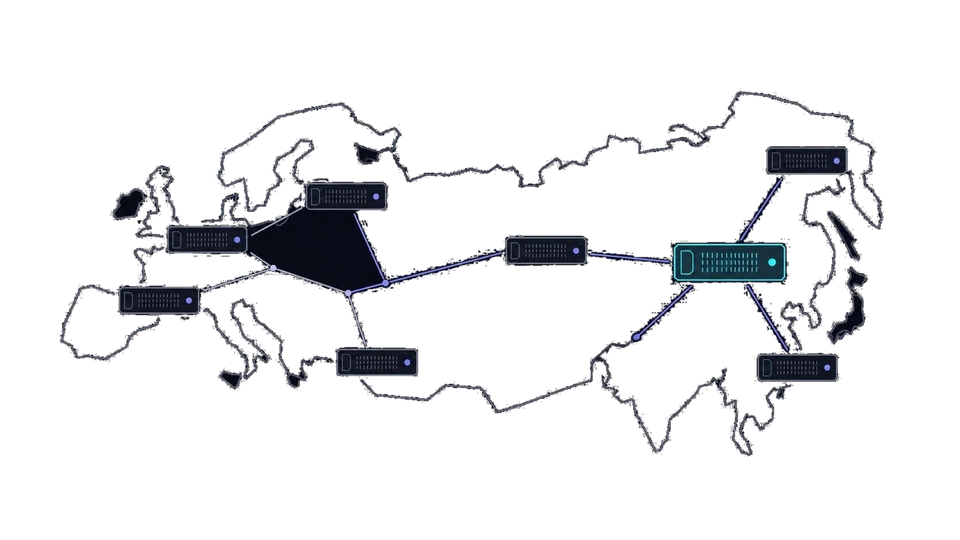
Jurisdiction comes third, and it deserves more thought than ping does. Reykjavik and Zurich carry the strongest flags, and the jurisdiction ranking compares the remaining ten in order. The classic mistake is choosing Frankfurt for latency while quietly describing an Eyes-exit threat model to yourself; match the rack to the threat instead. Iceland publishes no mandatory data retention and prices at a 20 percent premium; Zurich sits outside the EU under the Swiss FADP at 35 percent; every other one of the 12 locations bills base list.
- Mailbox: dedicated alias, zero prior history
- Access: Tor or VPN whenever local observers matter
- Reykjavik: Tier IV, no mandatory retention, +20%
- Zurich: Tier IV, Swiss FADP, non-EU, +35%
- Mismatch to avoid: latency pick under a surveillance threat model
Step 4-7: configure, pay, harden, DNS
Configure in a fixed order — plan, term, datacenter, operating system — and stay on Debian 12 unless something in your stack demands otherwise. Cute hostnames and a named PTR set on day one are the leak nobody audits later, because they live in DNS zones and rDNS records that outlive the server contract itself. Keep every label generic, and treat the hostname as public information from the first minute.
Pay with Monero from a wallet you control: one transfer for the exact locked amount, sent once. BTC withdrawn straight from an exchange drags a public, KYC-tagged trail behind it, which defeats the entire exercise regardless of how clean the provider's side is. First-login hygiene takes ten minutes and closes the doors that matter: install SSH keys, switch password authentication off, raise a default-deny firewall — the hardening checklist walks every command with copy-paste lines.
DNS comes last, deliberately. Use a privacy registrar or skip the domain entirely; real names stay out of every record, because WHOIS history and archived A records routinely outlive the VPS itself by years.
- Plan and term: Core $6 list, monthly until the routine settles
- Datacenter: Reykjavik or Zurich for the private flags
- Pay: exact XMR amount once, from self-custody
- Harden: keys, password auth off, default-deny firewall
- DNS: privacy registrar, or bare IP, never a named record
Keeping the payment leg private
Monero comes first on the invoice; BTC only from wallets you hold yourself. Transfer the exact locked amount once, with the wallet's own fee on top of it, and never round up out of convenience. An invoice address is single-use — reuse it in a later month and you have hand-built a link between two payments that needed no link. Threat models with real stakes keep the funding wallet separate from the spending one, so a correlation between them never exists on any ledger.
The invoice stays wide rather than narrow: 19 coins price on the same screen, which lets you match the rail to the moment rather than to a policy. XMR serves the private rail, USDT on seven networks freezes the dollar figure when the budget must not drift, and BTC wins when liquidity outranks linkage. The 20 percent annual discount remains optional; rolling monthly avoids one large, correlated transaction whenever separation matters more than the saving, and you can switch terms later without touching the account.
- Send once: exact locked amount, fee on top
- Address: single-use per invoice, never repeated
- Wallets: separate funding and spending reserves
- USDT networks: TRC-20, ERC-20, BEP-20, Polygon, Arbitrum, Optimism, SPL
- Annual term: 20% off, one invoice for 12 months
The checkout itself, click by click
The privacy mailbox exists before the deploy page loads. Then open deploy — through Tor or a VPN whenever local observers are in scope, which costs one click and removes an entire class of correlation. Take Core at $6 list, Prime at $12, or Titan at $24; pick monthly or annual billing, where annual saves 20 percent in USD; place the box in Reykjavik or Zurich unless the threat model says otherwise. The panel password gets twelve characters and exists nowhere else in your life, written once into the password manager and never into a browser.
On the invoice, choose Monero and the amount locks. Scan the QR — or paste address and amount into Cake, Feather, or the official GUI — and send exactly once. Confirmations land and the VPS is usually up within a minute; collect the SSH details from the panel, install your public key, and set the firewall before anything else touches the box. Windows Server rides the same path as an image choice, and Titan's 320 GB of NVMe absorbs disk-heavy work without a plan change. Dedicated metal from $39.20/mo tells the identical identity-and-coin story, with IPMI from the first minute.
| Plan | List | Annual-eff | Spec |
|---|---|---|---|
| Core | $6 | $4.80 | 2 vCPU / 4 GB DDR5 / 80 GB NVMe / 1 Gbps |
| Prime | $12 | $9.60 | 4 vCPU / 8 GB DDR5 / 160 GB NVMe / 2.5 Gbps |
| Titan | $24 | $19.20 | 8 vCPU EPYC / 32 GB DDR5 ECC / 320 GB NVMe / 10 Gbps |
| Dedicated Forge | $49 | $39.20 | 16c Ryzen 9 9950X / 32 GB / 2 x 1 TB NVMe / IPMI |
- Plan screen: Core $6, Prime $12, Titan $24
- Term: monthly, or annual at 20% off
- Rack default: Reykjavik or Zurich
- Image: Debian 12 unless told otherwise
- Invoice: one coin, one exact transfer
Renewals and routine — staying private after day one
Renewal time is where anonymous buying quietly falls apart. Operators wander back to the panel from a home IP, pay the next invoice out of a KYC exchange, or point a named domain at the machine just to test something — each habit writes the very correlation the careful first purchase avoided. The discipline never changes month to month: Tor or a VPN for the panel, a fresh XMR invoice from self-custody, a neutral PTR, and no personal strings tied to hostnames anywhere in the zone files.
Name the server generically inside your password manager — edge-rkv-01 beats any project codename that might surface publicly in a screenshot or a support ticket. Keep the panel's 2FA recovery codes offline on paper, not in the same mailbox the account depends on. If the alias mailbox dies, panel recovery dies with it, so guard that account like an SSH key.
Two catalog numbers keep the routine cheap: snapshots bill $6.50/mo and a second IPv4 costs $3.50/mo whenever a workload needs its mail reputation separated from the rest of the box — both on the same crypto invoice, with no card filed quietly on a renewals page and no upsell flow asking for a phone number first.
- Panel access: always the same Tor or VPN path
- Renewals: fresh single-use XMR invoice each cycle
- Hostname: generic, kept in the password manager
- Snapshot add-on: $6.50/mo
- Second IPv4: $3.50/mo
The pre-flight kit to assemble first
Build the kit offline before anything else loads, because every item assembled under time pressure arrives weaker. Start with a Proton or Tuta alias that touches nothing else, then a funded XMR spending wallet kept away from any tip jar or public donation bearing your name — a wallet known for funding a named project is already half a profile. Mint an SSH keypair on a hardened admin device you trust, not on the machine you happened to be using, and make the Reykjavik-or-Zurich call before the checkout tempts you into deciding by price alone.
Only then open deploy, over Tor or VPN whenever local observers belong in scope. Checkout defaults stay deliberately boring: Core at $6 unless 8 GB of RAM is already a settled requirement — Prime runs $12. Debian 12, monthly term until the routine stabilizes, Monero on the invoice, the exact amount sent once. After the roughly 60-second provision, spend ten minutes on keys, password-auth-off, and a default-deny firewall before touching DNS or domains of any kind.
That order prevents the classic collapse: an impeccably private payment followed by a named PTR and a personal Gmail sign-in, undoing in two fields what the whole ceremony protected.
- Alias: fresh, single-purpose, never reused
- Wallet: funded, self-custody, unlinked history
- Keys: generated on a hardened device
- Default plan: Core $6, Debian 12, monthly
- Burned alias rule: new account, never a patch
What an anonymous VPS purchase will not do
The purchase is not a waiver from local law, not a home for crime beyond the reach of process, not traffic no one can observe, and not a substitute passport. VPSbit rents KVM machines without asking for documents — the machine still runs under your watch, bound by the AUP and by the criminal law that genuinely applies to you at the facility. Anyone selling more than that is selling a story, and the story collapses the first time a court in the rack's country asks a question.
Recommended setup in one line: Core at $6/mo, Monero on the invoice, Reykjavik for the rack, about 15 minutes end to end. Once the invoice clears, budget another fifteen for hardening — keys, firewall, unattended upgrades — before the box carries anything real. Roll monthly XMR renewals until the routine settles; the same account later takes dedicated metal from $39.20/mo with no KYC step invented, because none ever existed at any tier or any flag.
- Not covered: traffic confidentiality — encrypt at the application
- Not covered: immunity from facility-country process
- Not covered: DNS history you created elsewhere
- Covered: no identity documents stored, ever
- Covered: payment leg unlinkable when XMR is used right
Core from $4.80/mo on the annual term, XMR accepted first-class, twelve locations. Open the deploy screen
Is it legal to buy a VPS anonymously?
Yes. Privacy itself is lawful — whatever you host still answers to criminal law and to the AUP at the facility's location.<ul><li>Lawful: privacy, always</li><li>Not protected: AUP-banned conduct, any flag</li></ul>
Does the account ever need my name?
No. An email address plus a password opens the account, and the invoice settles in crypto only — no document field exists in the flow.<ul><li>Credentials: email + 12-character password</li><li>Documents requested: none</li></ul>
For privacy, BTC or XMR?
XMR. Bitcoin's ledger stays public for good; Monero conceals the amount and both parties by design, which is why it bills first-class here.<ul><li>XMR: sender, receiver, amount hidden</li><li>BTC: public ledger, permanent</li></ul>
Is Tor necessary at checkout?
Yes, whenever local network observers form part of your threat model — the extra step costs nothing and removes the IP tie to account creation.<ul><li>Use Tor when: local observers in scope</li><li>Optional when: threat model excludes them</li></ul>
Can I skip the domain altogether?
Yes — plenty of workloads live happily on the bare IP or an internal DNS name, and skipping removes the whole WHOIS leak surface along with renewal chores.
When does the server arrive after payment?
Once the on-chain payment confirms, a VPS-class machine is typically live inside a minute; XMR credits at 10 confirmations, roughly 20 minutes.
My real mailbox is already attached — now what?
Start a new alias and register a fresh account; write the old login off as burned and migrate, because patching a correlated login never uncorrelates it.
Primary sources
Ready to launch?
Build the box — VPS or bare metal — create the password, pay the invoice that follows.