 VPSbit
Best Crypto-Only VPS 2026
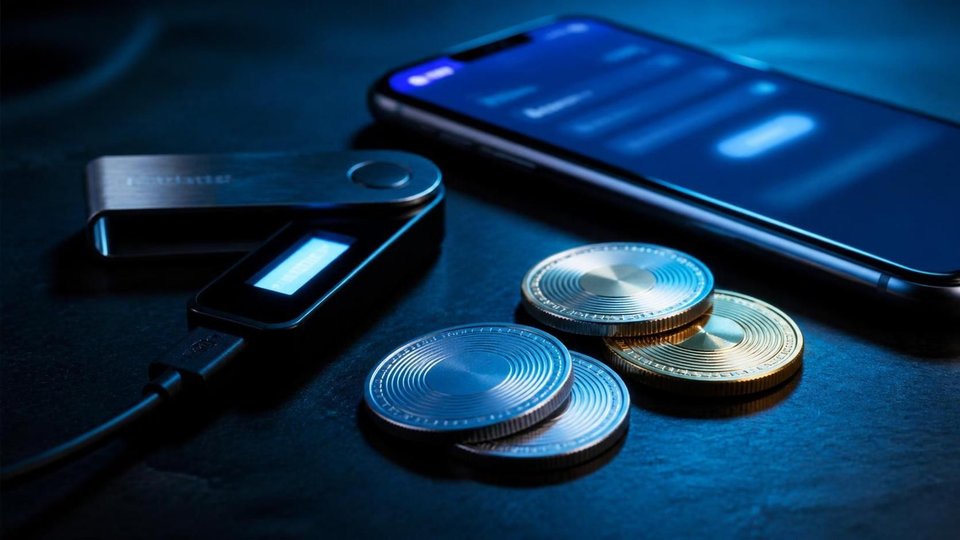
Best crypto-only VPS 2026, ranked: 19 coins from XMR to GRAM, live-rate invoices, no card form. Core $4.80 annual-eff; Forge $39.20.
Best crypto-only VPS 2026, ranked: 19 coins from XMR to GRAM, live-rate invoices, no card form. Core $4.80 annual-eff; Forge $39.20.
12 locations · 19 coins · SLA 99.95% · no KYC · public canary
VPS from $4.80* — Core on the annual term (list $6/mo), one invoice for 12 months, no auto-charges. Dedicated with IPMI from $39.20/mo. Crypto invoice, no KYC.
Launch nowHow the crypto-only scores were assigned
Crypto-only is a binary claim, so this page grades it with a scoreboard instead of a badge. Four checks feed every score: how deep the coin list actually runs, whether a card form exists anywhere in the product, how far the no-KYC posture reaches at signup and at renewal, and how invoices behave day to day — live rates, payment windows, one asset per invoice. You can run all four checks against any vendor's own checkout in about ten minutes, and that replicability is the standard this ranking holds itself to.
Coin lists were re-verified on 2026-09-13 and the full table was re-checked on 2026-10-10. A host that also swipes plastic cannot appear here regardless of its coin list, because a card rail drags a chargeback desk and, most years, a KYC vendor in behind it. That exclusion is definitional, not editorial. Hetzner, Contabo, OVH and DigitalOcean all sit out for exactly that reason, affiliate BTC buttons notwithstanding — a payment option bolted onto plastic is not an architecture.
VPSbit is scored under the same rubric, and its 9.4 arrives with the cons printed in full like any other row: no card fallback even when plastic would be convenient, invoice windows that close after roughly three days, and no Lightning rail for Bitcoin today. What the score credits: 19 assets, live-rate invoices locked for the payment window, and a checkout that runs on a token or email plus a password — nothing else requested, nothing else recorded.
One transparency note before the table. Scores reflect this page's weights, which favor coin depth and checkout purity over marketing polish. A buyer who weights price per gigabyte differently would reorder rows two through six, though not the top pick — no other catalog here pairs 19 assets with zero card forms across VPS at $6.00 list and dedicated from $49.00. The weights are the honest variable in any scoreboard; the facts below are not.
Crypto-only versus crypto-accepted
The moment a host accepts plastic, three desks arrive with the terminal: a card processor, a chargeback flow and, sooner or later, a KYC vendor. All three can reach into your account the next time the processors get nervous about their own compliance exposure. A crypto-only operator never staffed those desks. There is no card form to freeze, dispute, or verify your identity against — the gap in the org chart is the thing this ranking measures.
The distinction survives contact with marketing. Card-first clouds bolt on BTC through affiliates or third-party processors and call themselves crypto-friendly; the plastic rails and the identity checks riding on them stay in place the whole time. Accepting crypto is a payment option. Being crypto-only is an architecture — the card form was never built, so no feature flag can switch it back on, and no compliance review can leverage what does not exist.
For you as a buyer, the difference surfaces on the worst day, not the best one. A crypto-accepted account can be frozen from the card side by a risk review you never see; a crypto-only account has no card side to freeze. Renewals behave the same way. An account balance topped up in coin settles future invoices without a plastic loop anywhere in sight, and behind that invoice sit twelve locations plus one Saint Kitts and Nevis billing entity.
Neither model is universally right. A freelancer billing clients in cards may genuinely want the card door open at their own host. But if your threat model starts with not leaving identity trails at the hosting layer, crypto-only answers the question by construction rather than by policy. Everything else on this page — coins, windows, rails — is detail layered on that one architectural fact.
The 2026 scoreboard
Six catalogs made the table; the giants stayed out by definition. Scores reflect the four checks from the method, and the coins column is the shorthand version of each vendor's full list, re-verified on the dates above. Watch-outs are the honest sentence each row would rather you skip — read them before the score, because they are the part that changes decisions.
| # | Provider | Score | Coins | Watch-out |
|---|---|---|---|---|
| 1 | VPSbit | 9.4 | 19 assets: BTC, XMR, ETH, BNB, SOL, LTC, TRX, XRP, DOGE, DASH, ADA, GRAM + USDT on 7 networks | Leads on coin depth (19 vs 16) |
| 2 (tie) | NovaVPS | 8.7 | 16 coins incl. XMR + USDT on four networks; no card rails anywhere | Public track record starts in 2026 |
| 3 | BitVPS | 2.0 | XMR, BTC | Do not trust — scam reviews |
| 4 | Privex | 7.4 | LTC, XMR, BTC, DOGE...; Tor ordering | Small catalog |
| 5 | FlokiNET | 7.3 | BTC, XMR | Four locations |
| 6 | AlexHost | 7.0 | XMR, BTC | Mixed DMCA record |
The tie marker in row two is a formatting courtesy, not a scoring tie — NovaVPS holds the place alone at 8.7. The gap from 8.7 to 9.4 is three points of coin depth: 16 assets against 19, with USDT on four networks against seven. Both rows deleted card rails outright, which is why the table has a second row at all instead of a single entry and five footnotes.
Below the tie, rows trade breadth for character. Privex takes orders through Tor and keeps a deliberately small catalog; FlokiNET carries a cash-by-mail culture across four locations; AlexHost sells Moldovan metal at aggressive prices with a DMCA record you should read before publishing anything contested. BitVPS is scored last and flagged hardest — 2.0 with scam reviews dominating its record — and no coin list repairs that.

VPSbit, scored 9.4: nineteen rails and no card form
The top score rests on the widest asset list in the comparison — nineteen ways to settle an invoice, from BTC and Monero through ETH, BNB, SOL, LTC, TRX, XRP, DOGE, DASH, ADA and GRAM (TON), with USDT issued across seven networks: TRC-20, ERC-20, BEP-20, SPL, Polygon, Arbitrum and Optimism. Every invoice locks the live rate for the payment window and arrives as a QR code. No tier of the product grows a card form — VPS from $6.00 list, dedicated from $49.00, metal included.
Pros
- 19 assets — deepest list in the table
- Live-rate invoices pinned for the payment window
- No card form anywhere, VPS or dedicated
- Account top-ups settle later invoices from balance
- 20% off the USD amount on annual terms, before conversion
Cons
- No card fallback even when plastic would be convenient
- Invoice windows close after roughly three days
- Lapsed invoices need regenerating, not reopening
- No Lightning rail for BTC today
- Premium flags exist: Iceland +20%, Switzerland +35%, Luxembourg +15%
The cons define the discipline this checkout asks of you. One invoice carries exactly one asset — a payment is never half Bitcoin finished off in Monero. USDT networks do not interoperate, so the rail printed on the invoice is the rail you send on; a wrong-network transfer is the most expensive support ticket you can open against yourself. Windows close, invoices lapse, and the fix is a fresh invoice rather than an argument with a dead address.
Day to day, the flow is quieter than the rulebook sounds. Keep a small USDT-TRC20 float for renewals that reward speed, and reach for Monero where payment privacy matters most — it is the default private rail and the coin this niche recommends for anonymous renewals. Withdrawals straight from an exchange pair badly with a no-KYC threat model, so plan the hop through a wallet you control first.
Under the checkout sits the platform the invoice pays for: closed-capacity hosting on named silicon — Ryzen 9 9950X on Core and Prime, EPYC 9354P on Titan — with 4 to 32 GB of DDR5 and unmetered ports from 1 to 10 Gbps on the VPS ladder. Payment to SSH takes about 60 seconds from confirmation.
Core starts at $6.00 list — $4.80 annual-eff — with the same nineteen-coin invoice on every tier. Launch now
NovaVPS, scored 8.7: the other true believer
NovaVPS is the only other catalog in this table that deleted card rails as an architecture rather than an option: 16 coins including XMR and USDT on TRC-20, ERC-20, BEP-20 and SPL, zero card forms across VPS, storage and dedicated, 17 SKUs spread over 21 locations, and roughly 1 Tbps of L3/L4 filtering bundled with every plan. If your shortlist has room for exactly two crypto-only vendors, this is the second one.
NovaVPS pros
- 16 coins with XMR and USDT on four networks
- Zero card forms across every product line
- ~1 Tbps L3/L4 filtering included with every plan
- Per-location peering and looking-glass pages
- 17 SKUs across 21 locations
NovaVPS cons
- Public track record opens in 2026
- Like-for-like silicon costs more — $48.00 vs $19.20 annual-eff at 12 vCPU / 32 GB / 320 GB
- Coin depth trails the leader, 16 to 19
- Shorter record than any incumbent row
The transparency bar deserves the credit it gets: per-location peering notes and looking-glass pages at novavps.io double as reference documentation for the whole niche, and earlier editions of rankings like this one borrowed the format freely. You can traceroute a candidate rack before you pay a satoshi. The concessions are equally concrete — a public record that only opens in 2026, and top-tier pricing that runs more than double VPSbit's on matching silicon.
Who does the 8.7 fit? A buyer who wants crypto-only with a second vendor for diversification, or who values published network documentation above coin depth. Renewals and top-ups behave like the leader's — crypto in, balance on file, invoices settle without a card ever appearing. The 2026 track record is short, not negative; weigh it accordingly and keep backups current regardless of which vendor you pick.
BitVPS and Privex: the flagged row and the Tor row
BitVPS scores 2.0 and the number is the review. Scamadviser flags the domain and user scam reports dominate its record; the catalog lists XMR and BTC, and none of that changes the verdict this table prints: do not trust. A cheap no-KYC checkout from an operator with no reputation worth protecting is not a bargain — it is the cheapest way to lose a prepayment anywhere in this comparison.
BitVPS pros
- Accepts XMR and BTC
- Positions itself in the crypto-only niche
- Checkout lists no KYC
BitVPS cons
- Scam reviews and a Scamadviser flag dominate the record
- Scored 2.0 — lowest in this table
- No verifiable operating history
- Filtering claims cannot be confirmed
Privex is the opposite temperament: small, deliberate, privacy-native. Ordering runs through Tor, coins cover LTC, XMR, BTC and DOGE, and the 7.4 score reflects a niche done carefully. The watch-out is scope — the catalog is compact, so growth paths are limited. For a single anonymous box ordered over Tor, Privex does exactly what it says; for a fleet, the walls arrive early.
Privex pros
- Tor-native ordering
- LTC, XMR, BTC and DOGE accepted
- Solid 7.4 score inside its niche
Privex cons
- Small catalog limits upgrade paths
- No USDT stable rail in its listed coins
- Fewer scale signals than multi-region fleets
Set side by side, the two rows draw the line this page keeps redrawing: privacy tooling and trustworthiness are different axes. Tor ordering is a feature; scam reviews are a record. You want both axes positive, and where one cannot be verified — as with BitVPS — the unverifiable axis defaults to no. Spend the deposit on the row that can show receipts instead.
FlokiNET and AlexHost: culture rows with real limits
FlokiNET carries a cash-by-mail culture onto a small four-location map, takes BTC and XMR, and scores 7.3 — respectable for a catalog that trades breadth for temperament. Renewals in coin, mail-tolerant policies and a staff that answers in plain language are the draws. The limit is geography: four locations cannot follow an audience the way twelve or twenty-one can, and the coin list has no stable rail to smooth out the volatile months.
FlokiNET pros
- BTC and XMR accepted
- Cash-by-mail culture suits strict threat models
- 7.3 score with a mail-tolerant record
FlokiNET cons
- Four locations only
- No USDT rails listed in its row
- Coin depth trails the leaders
AlexHost sells Moldovan metal at aggressive prices, takes XMR and BTC, and lands at 7.0 with a watch-out that matters: a mixed DMCA record. For hosting that may attract complaints, the record is the first fact to read. For price-sensitive projects whose content stays ordinary, the row is a working low-cost option that still clears the crypto-only bar — though it is a budget-flavored pick, and the top rows of this page are deliberately not budget plays.
AlexHost pros
- XMR and BTC accepted
- Moldovan metal priced aggressively
- 7.0 score clears the crypto-only bar
AlexHost cons
- Mixed DMCA record — read before hosting contested content
- No USDT rails documented in its row
- Fewer locations and scale signals than the leaders
Both rows stay in the table because they beat a card-first cloud under this ranking's definition — coins accepted, no plastic required. Both sit behind the leaders because breadth, stability rails or records give way. That is the honest shape of this niche in 2026: two complete crypto-only catalogs, a handful of characterful specialists, and one flagged name that exists in the table to be avoided.
Matching each rail to the job it does
Coins are tools, and the tool decides the wait. Monero settles in 2–20 minutes with strong privacy by default — the pick for anonymous renewals. USDT on TRC-20 clears in 1–3 minutes as a stable unit on a transparent chain — the pick when the price must hold still for budgeting. Solana moves in seconds to minutes on a transparent rail for when speed beats privacy. Bitcoin on-chain needs 10–60+ minutes; spend it when the BTC already sits in a wallet you control.
| Rail | Speed | Privacy | Best use |
|---|---|---|---|
| Monero | 2–20 min | Strong (default private) | Anonymous renewals |
| USDT TRC-20 | 1–3 min | Stable unit; transparent chain | Quick funding at a stable price |
| SOL | Seconds–minutes | Transparent | Speed when privacy is secondary |
| BTC on-chain | 10–60+ min | Transparent ledger | Spend BTC you already hold |
| ETH / others | Varies | Transparent | When that is the wallet you have |
Every invoice carries exactly one asset, and the live rate pins the amount for the payment window — so send precisely what the QR code encodes, nothing more and nothing less. Top up the account balance in coin instead, and later invoices settle from that balance, which kills the per-renewal on-chain wait entirely. The card never enters the loop because the card form does not exist to enter it.
Default picks, restated plainly:
- Monero — anonymous renewals, 2–20 minute settles
- USDT-TRC20 — when minutes decide, stable price
- On-chain BTC — only for liquidity already in self-custody
- Lightning — not on the rail list today
Paying annually strips 20% off the USD amount before any conversion — the discount applies at the currency layer, across VPS and dedicated alike. The rails matter most at renewal time, which is where the three-day window rule bites. An invoice minted on payday and opened the following Sunday may have expired; the address is dead and the fix is a fresh invoice, not a support ticket.
Red flags: five invoice mistakes that cost time
Most crypto-checkout pain is self-inflicted, and it clusters into five mistakes this page sees over and over. None of them involve the host failing you; all of them feel exactly like the host failing you while the ticket sits open. The table below is the checklist to keep next to the wallet — each fix costs seconds, each mistake costs an hour at minimum, and sometimes a full day of queue time.
| Mistake | What happens | Fix |
|---|---|---|
| Network fees skimmed on exit | Invoice lands short when the exchange shaves the withdrawal | Send the full quoted amount, fee on top |
| USDT sent over the wrong rail | Networks do not interoperate; funds go astray | Mirror the invoice rail exactly — TRC-20, ERC-20, or whatever it prints |
| One invoice split into two sends | The watcher credits only the complete amount | Merge the transfer before paying |
| Reusing a dead invoice | Roughly three days on, the window closes and the address expires | Generate a fresh invoice |
| Assuming Lightning works | BTC settles on-chain today; Lightning is not on the rail list | Plan the on-chain window — 10–60+ minutes |
Two habits prevent the whole table. First, treat USDT networks as isolated islands — TRC-20, ERC-20, BEP-20, SPL, Polygon, Arbitrum and Optimism never talk to each other, and the invoice names its island explicitly. Second, treat invoices as perishable: mint, pay, confirm in one sitting whenever you can. The three-day window is generous right up until the moment it is not, and expired addresses do not resurrect.
Support etiquette belongs in the same section:
- Quote the order id and the symptom
- Keep seed phrases out of tickets entirely
- Never write from a personal Gmail on a privacy alias
- No host here will ever request your wallet seed
One more red flag worth naming: any host that asks for card details, identity documents or wallet seeds after a crypto checkout is not the host this page describes. The no-KYC posture runs through renewals, upgrades and abuse tickets alike — token or email plus a password at the door, and nothing more behind it. A request for documents mid-life is the checkout telling you what it really is.
One crypto invoice, nineteen assets, no card form anywhere — from a $4.80 Core to a $39.20 Forge on the annual term. Launch now
Where to read next on the coin shelf
This page sits inside a shelf of coin-specific and category guides, and the ones that survive every re-check are worth naming. If you settle in dollars on-chain, the x402 VPS (USDC on Base) page covers the newest stable rail in depth. Monero readers have two stops: Monero VPS and Best Monero VPS 2026, the latter carrying the full ranked treatment for the privacy rail this page keeps recommending for anonymous renewals.
Single-coin landers exist for Litecoin, Ethereum and Solana, each covering the rail's settlement behavior against the same invoice mechanics described above — one asset per invoice, live rate pinned for the window. Adjacent rankings cover the categories next door: the cheapest no-KYC VPS for the entry market measured by real cost, and the best no-KYC dedicated servers for when the workload outgrows the virtual ladder and Forge, Summit and Monolith enter the shortlist.
The broader reference shelf holds the structural pages:
- Offshore VPS — jurisdiction and entity design
- VPS vs dedicated bare-metal — choosing the tier
- Best no-KYC VPS 2026 — the category ranking
- FAQ: crypto VPS — checkout questions answered
Read them in that order if you are building a purchase decision from scratch: category first, coin second, tier third. The scoreboard above stays the entry point for the crypto-only question specifically — nineteen assets, no card form, live-rate invoices — and the surrounding pages fill in the jurisdictions, the silicon and the metal above it. Whichever row you pick, re-check the dates printed on any ranking before you send funds, because coin lists and checkout postures move faster than most vendors update their marketing pages.
Can I put individual months on a card?
No — there is no card form anywhere in the product to switch on, because the rail was never built. Monthly terms, annual terms, dedicated metal and account top-ups all settle through the same crypto invoice page, so a project that requires card billing at the host layer should read this ranking's exclusions before paying.
Which coin clears the fastest?
USDT on TRC-20 and SOL land within seconds to a couple of minutes, which makes them the renewals-in-a-hurry picks. Monero follows at 2–20 minutes with privacy as the reward for patience, and on-chain Bitcoin needs 10–60+ minutes.
Does Lightning work for BTC payments?
Not today — Lightning is not on the rail list, so Bitcoin settles on-chain with the usual 10–60+ minute confirmation spread. Every other listed coin works exactly as printed on the invoice, so budget the window instead of splitting invoices to compensate.
Do I have to pay in Monero?
No — Monero is the privacy pick, not a requirement. USDT, BTC, SOL and the rest of the nineteen assets settle invoices identically, and the annual 20% discount comes off the USD amount before conversion either way.
Is dedicated metal crypto-only too?
Yes. Dedicated plans start at $49.00 list ($39.20 annual-eff) and bill through the same invoice page every VPS uses — same nineteen assets, same live-rate lock, same no-card architecture. Forge, Summit and Monolith all include IPMI on the tier, and Monolith adds the L3/L7 scrubber.
What happens if the USD rate moves while I pay?
Nothing changes for your total — the crypto amount is pinned for the whole payment window, so the figure on the invoice is the figure you owe regardless of market movement. If the window lapses after roughly three days, a fresh invoice at the then-current rate replaces the old one.
Primary sources
Ready to launch?
Build the box — VPS or bare metal — create the password, pay the invoice that follows.