 VPSbit
Litecoin VPS: settle in LTC with zero KYC, from $4.80/mo
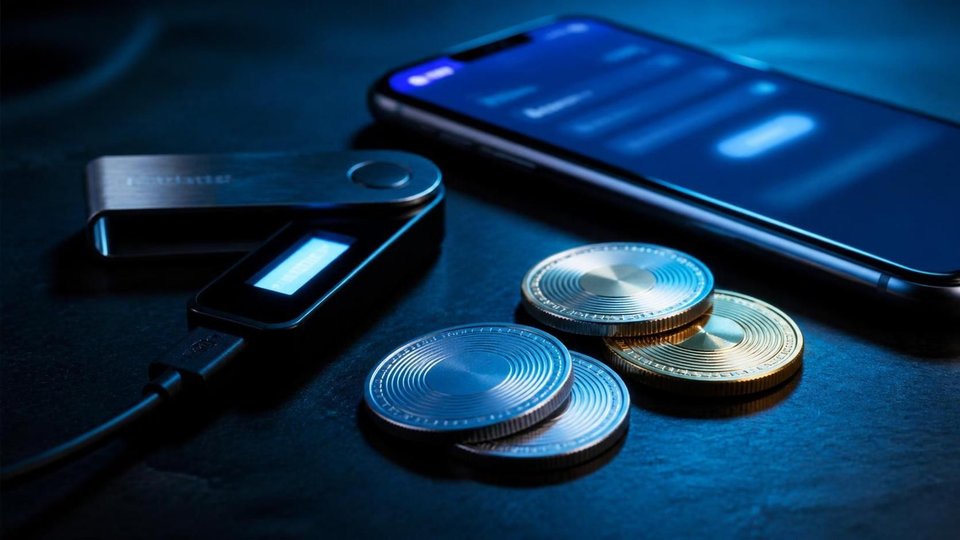
Pay for a VPS in LTC: one transfer to one address, credit after 3 confirmations, zero KYC, KVM plans from $4.80/mo in 12 elite locations.
Pay for a VPS in LTC: one transfer to one address, credit after 3 confirmations, zero KYC, KVM plans from $4.80/mo in 12 elite locations.
12 locations · 19 coins · SLA 99.95% · no KYC · public canary
VPS from $4.80* — Core on the annual term (list $6/mo), one invoice for 12 months, no auto-charges. Dedicated with IPMI from $39.20/mo. Crypto invoice, no KYC.
Launch nowFrom checkout to credit: the LTC invoice flow
The flow has three moves and asks nothing about who you are. Choose Litecoin as the payment asset and the checkout prints an invoice quoted in USD, locked to an exact LTC amount at the live rate the moment it opens. Send that LTC sum, once, to the single address printed on the invoice. The watcher waits for 3 network confirmations and posts the credit to your balance — at roughly 2.5 minutes per Litecoin block, the wait is usually inside ten minutes door to door. No form, no upload, no card ever enters the loop.
The account behind the invoice is a 32-character token, or an email paired with a 12-character password — zero KYC, and the invoice itself carries no identity fields. Matching runs on the printed amount, so exactness is the entire discipline: the figure on the wire must equal the quoted LTC sum to the last decimal, or nothing happens automatically. Each address exists for exactly one invoice, which is why a second transfer against the same invoice never stacks credit — it just delays reconciliation while support untangles the pair.
LTC against the other rails: where it fits
Litecoin shares the UTXO model of Bitcoin, so every transfer is publicly auditable on-chain, but its 2.5-minute blocks and near-zero fees make it far handier for top-ups than the longer confirmation curves on the oldest chain. That places LTC deliberately mid-spectrum: fully auditable like BTC, without the ring-signature overhead Monero carries. If the payment itself should stay quiet, Monero VPS is the deep dive; the conservative route is covered on that page too.
One invoice carries exactly one asset — the checkout never blends coins. If your money sits in a stablecoin, USDT VPS maps all seven networks USDT runs on here, TRC-20 through SPL; XRP and GRAM (TON) also invoice natively. Every route lands in the same place: a USD-denominated balance against one shared catalog. The rail you pick changes the fee and the wait, and nothing else — LTC settles every SKU on the site, VPS tiers and dedicated metal alike.
Where does that leave the practical comparison? If you already hold LTC, it is the shortest path on the site: no swap, no bridge, one network fee near zero, credit inside 10 minutes. If you hold USDT on Tron, the TRC-20 route usually beats LTC to the balance by a couple of minutes at about the same cost. If the payment itself should leave no public trail, neither LTC nor USDT can offer that — only Monero can, and it trades auditability and a longer confirmation wait to do it. Pick by what you are optimizing for: speed, audit, or quiet.
The plan ladder your LTC unlocks
Credit is credit — once the watcher posts it, the balance spends against the standard list. Core opens at $6.00 list / $4.80 annual-eff: 2 vCPU of a Ryzen 9 9950X clocking 4.3-5.7 GHz, 4 GB of DDR5, 80 GB of NVMe, an unmetered 1 Gbps port. Prime scales the same silicon to 4 vCPU, 8 GB, 160 GB and 2.5 Gbps at $12.00 / $9.60. Titan moves onto an EPYC 9354P with 8 vCPU, 32 GB of ECC DDR5, 320 GB of NVMe and 10 Gbps at $24.00 / $19.20.
| Plan | CPU | Memory | Storage | Port | List /mo | Annual-eff /mo | Deploy |
|---|---|---|---|---|---|---|---|
| Core | 2 vCPU, AMD Ryzen 9 9950X (4.3-5.7 GHz) | 4 GB DDR5 | 80 GB NVMe | Unmetered 1 Gbps | $6.00 | $4.80 | Deploy Core, pay in LTC |
| Prime | 4 vCPU, AMD Ryzen 9 9950X (4.3-5.7 GHz) | 8 GB DDR5 | 160 GB NVMe | Unmetered 2.5 Gbps | $12.00 | $9.60 | Deploy Prime, pay in LTC |
| Titan | 8 vCPU, AMD EPYC 9354P (3.25-3.8 GHz) | 32 GB DDR5 ECC | 320 GB NVMe | Unmetered 10 Gbps | $24.00 | $19.20 | Deploy Titan, pay in LTC |
Each row carries its deploy link with the plan preselected, so the trip from credited balance to running box is two clicks by hand and zero if an agent drives the API. Storage climbs with the tier — 80, 160, then 320 GB — and the same balance reaches Forge metal when a slice runs out of headroom. Nothing about the ladder knows or cares which coin funded it; LTC buyers see the identical list every other payment asset sees, down to the last dollar.
Annual, quarterly, and what the discount does
List price is the sticker; the annual term is what the headline quotes. Twelve months paid up front takes 20% off every tier: Core falls from $6.00 to an effective $4.80 per month, Prime from $12.00 to $9.60, Titan from $24.00 to $19.20. One invoice covers the year and no auto-charges ride behind it — renewal is a decision you make again when the term ends, not a card on file waiting to fire at midnight.
If a year locks too much capital for your run style, the quarterly term takes 10% off list instead: Core at $5.40, Prime at $10.80, Titan at $21.60 per month. Both terms settle from the same balance in the same nineteen coins, LTC included, and the deploy page shows the effective rate before you commit. The spread compounds at the top of the ladder: a year of Titan on the annual term keeps $57.60 in your pocket against list, and Forge metal drops from $49.00 to $39.20 under the same arithmetic.
Two habits make the terms easier to live with. First, mix tiers across terms: a year of Core for the always-on services and a quarter of Titan for a short migration costs less than over-provisioning one size to cover both. Second, remember the balance is reusable across terms — the same credit that settles an annual Core invoice later settles a quarterly Titan one, with no conversion step and no new identity check, because the checkout never changes shape underneath you.
Four reconciliation details before you send
First: one address, one invoice, one transfer. The LTC address printed for your invoice exists for that invoice alone, and sending twice does not double the credit — a second send leaves the watcher waiting on an amount that will never match. Second: matching is exact-amount. The figure on the wire must equal the printed LTC sum precisely; a rounded or eyeballed number never auto-matches, however close it lands.
Third: if the amount was wrong, stop sending and open a ticket with the txid attached. The watcher reconciles against the exact printed figure and support closes the loop from there; a rushed corrective transfer to the same address only deepens the mismatch it has to unwind. Fourth: the invoice is quoted in USD and switches to the live LTC rate the moment it opens, so a prompt send prices at the rate you saw — a payment made hours later settles at whatever the chain confirms by then. Four boring lines; that is the whole discipline of paying in LTC here.
One habit prevents almost every ticket on this list: read the invoice back to yourself before sending. The address, the amount, the asset — three fields, one glance each. The invoices that reconcile without human help are the ones that were right on the first wire, and the watcher credits those without any support touch at all. Ten seconds of checking saves a day of back-and-forth.
Twelve cities, four premium flags, one closed list
The machine your LTC buys can sit in any of twelve locations, and the list is closed — nothing outside it gets sold, at any price. Reykjavik runs Tier IV / N+1 on 10 Gbps with FICIX peering under Icelandic law, which imposes no mandatory data retention. Amsterdam and Frankfurt anchor the EU at 40 and 100 Gbps under GDPR; Zurich holds a Tier IV / 2N+1, 100 Gbps floor under the Swiss FADP; Tokyo (JPIX / JPNAP, APPI), Singapore (SGIX, PDPA), Hong Kong (HKIX) and Taipei (TWIX) cover Asia; Stockholm, Helsinki, Oslo and Luxembourg fill the north.
Four flags carry a published premium: Reykjavik +20%, Zurich +35%, Oslo +20% and Luxembourg +15%. The remaining eight price at base list, and the hardware behind the labels does not change with the flag — what changes is the monthly rate and the legal regime your box lives under. Every facility runs DDoS filtering at the edge, unmetered ports behind it, and abuse handling under its own local law. You are choosing a jurisdiction as much as a ping time, and the locations table says which is which before the invoice opens.
Beyond slices: the same LTC reaches bare metal
When a VPS tier runs out of headroom, the same balance and the same three-confirmation discipline reach dedicated machines. Forge opens metal at $49.00 list / $39.20 annual-eff: 16 cores and 32 threads of a Ryzen 9 9950X, 32 GB of DDR5, two 1 TB NVMe drives in RAID 0 or 1, an unmetered 1 Gbps uplink, and an IPMI console on the board. Summit steps to $89.00 / $71.20 — 32 EPYC 9354P cores, 64 GB of ECC DDR5, two 2 TB drives, 10 Gbps.
Monolith ends the ladder at $149.00 / $119.20: a dual AMD EPYC 9554P pair, 128 cores and 256 threads, 128 GB of ECC DDR5, four 2 TB NVMe drives on Gen4 slots with RAID 0/1/5/10, and a 25 Gbps unmetered uplink fronted by an L3/L7 scrubber. LTC invoices for metal work identically to VPS ones — exact amount, single address, 3 confirmations — so the payment habits you built on slices carry straight up the ladder without a single change.
When does metal start to make sense? A rough line: when your workload sustains all 8 vCPU of Titan for hours at a time, or when the 320 GB NVMe ceiling forces you to shard storage across several slices. Two Prime tiers cost more than one Forge at that point and still share nothing between them, while the dedicated box gives you all 16 physical cores, the full disk pair and an IPMI console that survives a locked-out SSH config. The upgrade is a hardware decision, not a new account.
The honest section: what a Litecoin VPS will not do for you
Zero-KYC is a checkout property, and it deserves a precise reading. It means no passport, no phone number and no card is collected: your account is a token or an email with a 12-character password, and the LTC invoice carries no identity fields. It does not mean the machine is detached from you. Your VPS holds an IPv4 address, that IPv4 is registered to your token in the provider records, and one abuse report against it resolves straight to your account. Paying in Litecoin — publicly auditable on a UTXO chain, remember — changes the settlement rail, not that mapping.
The rule set survives every coin. One AUP governs all checkout paths and bans CSAM, phishing, spam and network attacks without exception. Abuse is handled under the law of the facility location: Frankfurt answers to German and EU law, Singapore to the PDPA, Reykjavik to Icelandic statute — pick the city and you pick the courtroom. A DMCA notice lands in an abuse queue and receives a logged template acknowledgement, which is bookkeeping on both sides, not a legal ruling; repeat valid complaints against your IP end with the account. And the catalog is twelve locations, full stop — there is no thirteenth city, and the four premium flags carry published markups rather than negotiated exceptions.
LTC itself has trade-offs worth naming before you fund. Every transfer is public on-chain: the trail from your wallet to the invoice address is permanent and readable by anyone, which is the opposite of what Monero sells. Three confirmations means roughly ten minutes, so this is not the rail for a deposit you need inside a minute — Solana or TRC-20 USDT will beat it there every time. What LTC gives you is a cheap, conservative, fully auditable lane with fees near zero, and that is exactly what it is. No more, and for most top-ups, no less.
Twelve locations, three confirmations, one invoice from $4.80
That is the offer in one breath: pick a tier from $4.80 per month annual-eff, receive a Litecoin invoice at the live rate, send it once, and reach SSH after 3 confirmations — about ten minutes, start to finish. Twelve elite cities from Reykjavik to Taipei host the result, nineteen coins share the checkout if you change your mind mid-cart, and no KYC step stands between your wallet and the machine.
Open the deploy page, choose Core, Prime or Titan, and let the invoice do the rest. Storage runs 80 to 320 GB of NVMe, ports from 1 to 10 Gbps unmetered, DDoS filtering on every edge — and when the workload outgrows a slice, Forge waits at $39.20 annual-eff with IPMI on the board, settled under the same three-block LTC discipline. Nineteen coins, one balance, zero card rails: the checkout has kept this shape for years because it works, and it is not about to bend for convenience.
The checkout itself stays the same whichever route you came in by: one invoice, one asset, one address, 3 confirmations. Nothing about an LTC payment needs a special screen, a different deploy flow, or a support introduction — the same nineteen-coin picker that shows Bitcoin and Monero shows Litecoin in the same list, at the same rates, against the same twelve-city map. That uniformity is the design, not an accident of the billing system, and it is why an invoice written on a Sunday night behaves exactly like one written on a Tuesday morning.
Is KYC required for a Litecoin VPS?
No. An account opens with a 32-character token or an email backed by a 12-character password, the LTC invoice itself holds no identity fields, and there is no card rail anywhere in the checkout.
How many LTC confirmations does credit take?
Three network confirmations. Litecoin blocks average about 2.5 minutes, so the watcher normally posts your credit within ten minutes of the send — and faster when the blocks happen to land quickly.
Does LTC also settle dedicated servers?
Yes. Litecoin sits among the nineteen coins in which every SKU on the site bills, so Forge metal from $39.20 per month annual-eff — and the EPYC tiers above it — invoice in LTC under the same three-confirmation rule.
What happens if I send a wrong amount?
Stop sending and open a ticket with the txid attached. Every address exists for a single invoice, matching is exact-amount, and the watcher reconciles against the printed figure — a corrective transfer to the same address only delays the fix.
Does paying in LTC cost less than paying in XMR?
The invoice is identical in USD — only the network fee moves, and LTC fees sit near zero. Read LTC as the fast, fully auditable rail and XMR as the privacy choice; the balance each one buys is the same.
Primary sources
Ready to launch?
Build the box — VPS or bare metal — create the password, pay the invoice that follows.