 VPSbit
Offshore VPS hosting — twelve jurisdictions, one SKN contract, no KYC
Offshore VPS on a Saint Kitts and Nevis contract, racks from Reykjavik to Tokyo, crypto-only billing, no KYC. Core from $4.80/mo on the annual term.
Offshore VPS on a Saint Kitts and Nevis contract, racks from Reykjavik to Tokyo, crypto-only billing, no KYC. Core from $4.80/mo on the annual term.
12 locations · 19 coins · SLA 99.95% · no KYC · public canary
VPS from $4.80* — Core on the annual term (list $6/mo), one invoice for 12 months, no auto-charges. Dedicated with IPMI from $39.20/mo. Crypto invoice, no KYC.
Launch nowOffshore here is a split on purpose: one contract, twelve jurisdictions
Two entities do two different jobs on this network, and keeping them apart is the design. The contract company is Meridian Node Ltd., registered in Saint Kitts and Nevis — outside the 14-Eyes intelligence-sharing group — while the compute itself lives in one of twelve facility cities across Europe and Asia, never in the Caribbean. Your invoice is governed from Basseterre; your RAM, CPU and disk answer to the law of the rack.
That split is what the word offshore genuinely buys here: jurisdictional distance between you and the biller, plus a map wide enough to place data where its law suits the workload. Signup is a token or an email with a 12-character password, billing is crypto-only across 19 coins — XMR, BTC and USDT-TRC20 lead the mix — and Core lists at $6.00 with the annual term at $4.80/mo, one invoice for twelve months.
The logging posture is short enough to memorize: no payload logs and no guest traffic logs, while billing and panel actions are retained and connection metadata ages out inside 24 hours. Guidance from the FATF on virtual assets (fatf-gafi.org) is the reference point most crypto billers get judged against, and it is worth reading before you pick any host in this niche.
The plan ladder, on one SKN invoice
Every tier below bills on the same Saint Kitts and Nevis contract, in the same 19-coin checkout, at the same list price regardless of which of the twelve flags hosts it. The annual term removes 20 percent of list — the annual-eff column — and the quarterly term removes 10 percent. One invoice covers a full year on the annual term, with no auto-charges and no card rail anywhere in the flow.
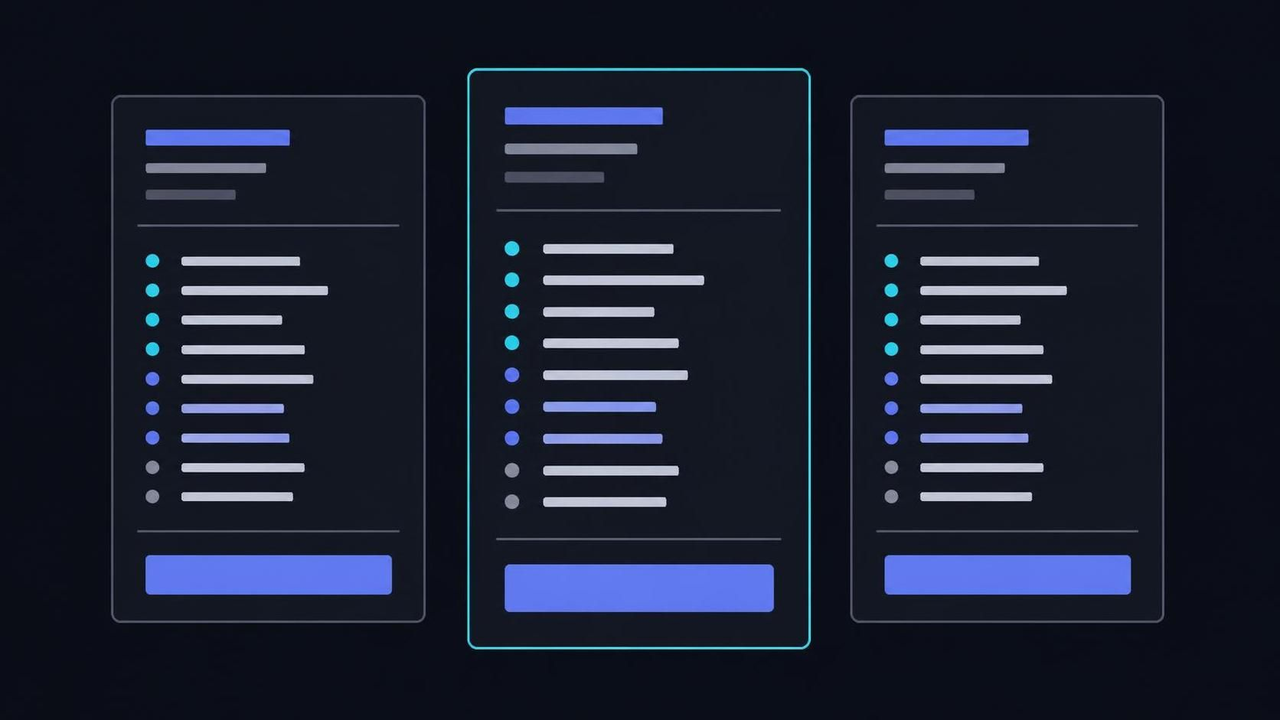
The three tiers cover the usual climb: a 2 vCPU entry box on a Ryzen 9 9950X at 4.3–5.7 GHz, a 4 vCPU middle rung, and an 8 vCPU EPYC 9354P build with 32 GB of ECC memory for workloads that outgrow slices. Each row carries its deploy link, so plan, flag and coin are picked in one pass on one screen.
| Plan | List | Annual-eff | vCPU | RAM | NVMe | Port | |
|---|---|---|---|---|---|---|---|
| Core | $6.00 | $4.80 | 2 | 4 GB DDR5 | 80 GB | 1 Gbps | Deploy Core, pay in crypto |
| Prime | $12.00 | $9.60 | 4 | 8 GB DDR5 | 160 GB | 2.5 Gbps | Deploy Prime, pay in crypto |
| Titan | $24.00 | $19.20 | 8 | 32 GB DDR5 ECC | 320 GB | 10 Gbps | Deploy Titan, pay in crypto |
Match the flag to the requirement, not to the flag's marketing
Start from the law. Iceland pairs a deep free-speech tradition with no mandatory data retention, and bills at +20 percent. Switzerland runs civil-law privacy under the FADP, outside EU process, at +35 percent. Luxembourg contributes a Tier IV site under the EU data-trust regime at +15 percent, while Amsterdam and Frankfurt shoulder the peering load at base list through AMS-IX and DE-CIX.
The APAC quarter of the map — Tokyo, Singapore, Hong Kong and Taipei — sits outside the Western alliances and peers through JPIX, SGIX, HKIX and TWIX. Measured from Amsterdam, Reykjavik reads about 18 ms, Frankfurt about 8 ms, Singapore about 180 ms and Tokyo about 230 ms, so the distance penalty is predictable before you order rather than a surprise on the first traceroute after it.
Eight of the twelve cities bill identical base list, and the four premiums are printed at checkout before payment rather than negotiated by mail afterward. The coin menu — 19 ways to settle, from Bitcoin to GRAM — is identical everywhere, so moving a workload from Zurich to Singapore changes the flag and the latency and nothing at all on the invoice.
Checkout in five fields, identity never enters
The form asks for five things: inbox or token, password, plan, flag, coin. No passport scan, no utility bill, no phone verification — the account is the token, and the token is the account. Provisioning starts the moment the payment watcher credits the chain, and root SSH typically opens about 60 seconds later. If you prefer the inbox over the token, the email variant asks for 12 characters in the password and nothing else about you.
The image side is KVM on ECC memory and local NVMe, with nested virtualization and custom ISO mounts enabled by default — the two features offshore projects ask about first. DDoS filtering ships included at every location, the port is unmetered, and the fleet SLA reads 99.95 percent. When a workload outgrows slices entirely, the dedicated line adds IPMI on every tier under the same contract.
Term discounts apply uniformly across the map: 10 percent on the quarterly term, 20 percent on the annual. A Core box in Oslo on the annual term prices the same as a Core box in Helsinki — the flag changes the law and the latency, and only the four premium sites move the number at all.
The honest section: what offshore VPS will not do for you
First: offshore is not a cloak. Your account is a token or an email address and the server IP is registered to that account; paying in Monero, Bitcoin or USDT changes the payment rail and nothing else. The KYC that an exchange ran when you bought the coins stays on the exchange's books, upstream, and no hosting contract reaches it — but nothing about this service erases the payment either.
Second: the law that applies is the law of the facility location, not the law of nowhere. A rack in Frankfurt answers to German courts, a rack in Reykjavik to Icelandic ones, and genuine process from those jurisdictions works exactly as it would against any host. A US DMCA template, by contrast, is recorded against the file and shut without action at these sites — it is paperwork, not process — but that distinction only ever matters for copyright-only mail.
Third: the AUP travels with every flag. CSAM, phishing, spam and network attacks are banned everywhere on this network, abuse reports backed by evidence draw enforcement, and the offshore label provides no exception and was never meant to. This is a hosting product with a published acceptance policy, not a lawless one, and treating it otherwise ends in a closed account.
Fourth: the map is twelve cities, and that is the whole map. There is no flag in the Americas, none in Africa, none in the Middle East; if your project needs one of those, this catalog cannot sell it to you, and the honest advice is to look elsewhere rather than to pretend a European rack is something it is not. Scarcity is the trade: fewer flags, each one earning its place.
What offshore will not mean here: no law-free zone. The local jurisdiction of the facility governs every rack, the AUP bans the usual abuse categories, and the premium on an Iceland or Switzerland site buys power, cooling and law quality, not secrecy. A crypto invoice changes checkout, not the courts.
How this catalog sits in the offshore field
Three catalogs dominate this keyword, so they deserve a dated comparison rather than a shrug. NulNet spans 40 flags from $3 — more map, but annual-only billing, so offshore becomes a 12-month commitment there by default. NovaVPS shares the Saint Kitts lineage and the no-KYC posture across 21 locations, yet publishes no per-location price mechanism, so the premium question gets answered after signup rather than before.
BitVPS claims four datacenters behind a trust record no scanner vouches for: ScamAdviser puts the domain in the near-zero band and Trustpilot threads describe servers that never arrived and tickets that never got answers. A $39 dedicated sticker is not a reason to wire coins into a checkout nobody stands behind, and no ranking on this site lists it as a pick.
Against that field, the differences here are structural: four published premiums instead of hidden ones, month-to-month billing on every tier, twelve elite sites instead of forty grey pins, and a checkout that prints the flag, the coin and the network on one invoice. Whether that trade suits you depends on whether you value knowing the price before paying more than having the longest map.
Overpayment, refunds and the edge of irreversibility
Crypto transfers do not reverse, and any honest offshore page says so plainly. The refund policy therefore runs as goodwill rather than as a chargeback: unused prepaid time credits your account balance, and an on-chain return goes out within 48 hours of a ticket approval. There is no auto-renewal on the annual term, so the surprise-bill scenario does not exist here by construction.
Overpayment resolves the same way — the watcher credits what the chain confirms, and if you send more than the invoice named, the difference lands on the balance for the next renewal. Send less, and the invoice waits rather than half-provisions. The practical habit worth building: read the invoice's network line twice before signing, because the only unrecoverable mistakes in this checkout are made on-chain, by the sender, in the first seconds.
Where a workload outgrows the ladder entirely — whole cores, IPMI, RAID across paired NVMe drives — the same SKN contract continues onto dedicated servers from $39.20/mo annual-eff, with no new account, no re-verification and no new payment setup at the boundary. The Forge tier at that entry price carries 16 cores and 32 threads of a Ryzen 9 9950X with 2 × 1 TB of NVMe.
Twelve jurisdictions, one SKN contract, Core from $4.80/mo
Compressed to its parameters: twelve elite locations from Reykjavik to Taipei, one Saint Kitts and Nevis contract, nineteen coins, and a Core tier at $4.80/mo on the annual term — $6.00 list — with no KYC at any stage and no auto-charges on the year. Four of the twelve flags carry published premiums; the other eight bill base list, and the discount terms span the whole ladder.
If jurisdictional distance plus a law-first map is what you came for, the next step is one screen: pick the plan, pick the flag, pick the coin. The invoice prints the network, the watcher credits it on confirmations, and root SSH follows in about a minute, on any of the twelve sites.
Two reminders before you go: the flag decides the law, so choose it for the workload rather than for the flag's marketing, and read the network line on the invoice before signing — those two choices are the whole contract, and both are printed before any payment moves an inch.
Nothing here bills by surprise: the annual term is one payment covering twelve months, the quarterly one covers three, and neither renews itself without a fresh click. If a rung stops fitting, the move up or down is a reboot on the same account — the flag, the coin and the contract stay exactly as you set them on day one.
Is the virtual machine located in Saint Kitts?
No. The contract company is registered there; the CPU, RAM and disk sit in one of the twelve facility cities and answer to that location's local law, exactly as the rack does. Nothing about the VM ever touches the Caribbean.
Are Iceland and Switzerland really available?
Both sit in the location picker at their published premiums — 20 percent and 35 percent over base list — with the same image list, the same 19 coins and the same token-or-inbox signup as every other city on the map.
Do all locations cost the same?
Eight bill identical base list. Iceland, Norway, Switzerland and Luxembourg add their stated premiums, and term discounts — 10 percent quarterly, 20 percent annual — apply uniformly across the map, premiums included.
Is this hosting for illegal projects?
No. The AUP applies at every location: CSAM, phishing, spam and paid attacks are banned, enforcement runs on evidence, and abuse handling follows the law of the facility's jurisdiction — the offshore label changes none of that.
When does offshore outgrow a VPS?
Whole-core databases and compilers belong on <a href="../dedicated/">dedicated metal from $39.20/mo annual-eff</a>, and terabyte-scale archives fit Summit's 2 × 2 TB of NVMe — both under the same SKN contract, with the account and the invoice unchanged.
What happens if I overpay or change my mind?
Crypto transfers are irreversible, so returns run as goodwill: unused prepaid time credits your account balance, and an on-chain refund goes out within 48 hours of a ticket approval. Nothing renews without you asking it to.
Primary sources
Ready to launch?
Build the box — VPS or bare metal — create the password, pay the invoice that follows.