 VPSbit
Bitcoin vs Monero for VPS payments — which coin and when
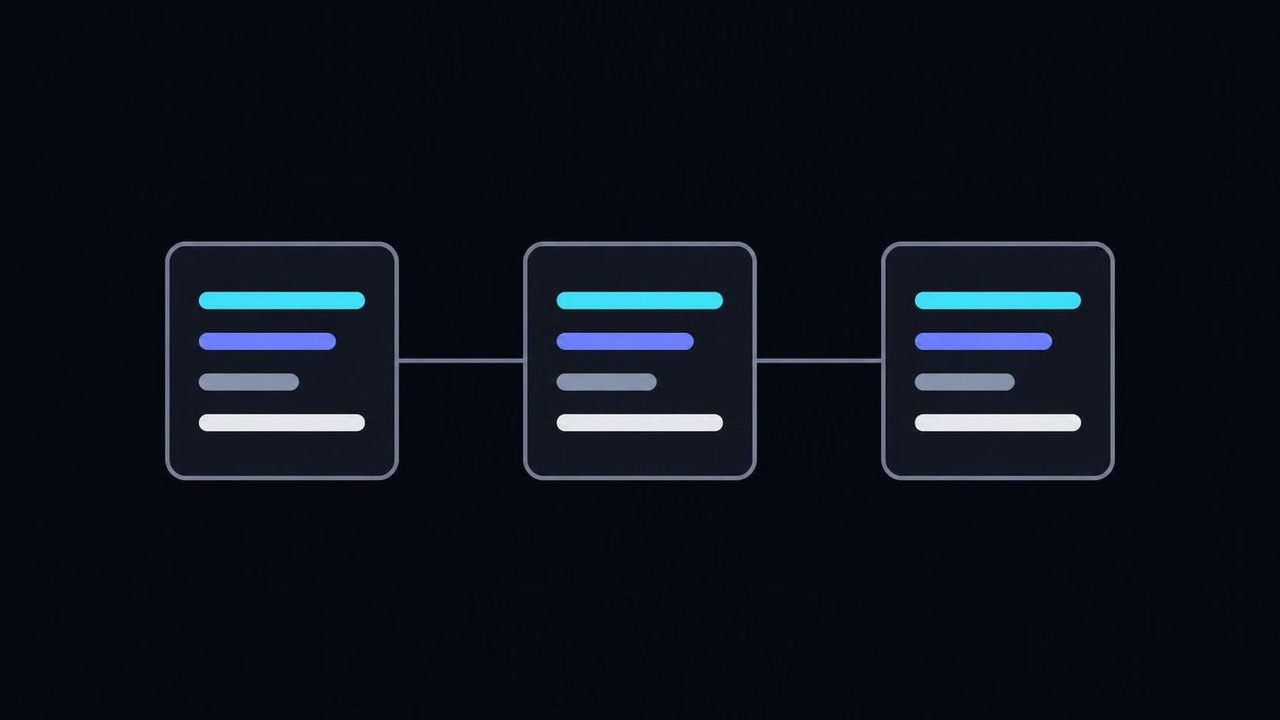
BTC vs XMR on a hosting invoice: public ledger vs opaque one, fee shape, confirmation depth, provisioning clock. VPS Core from $4.80/mo annual-eff, no KYC.
BTC vs XMR on a hosting invoice: public ledger vs opaque one, fee shape, confirmation depth, provisioning clock. VPS Core from $4.80/mo annual-eff, no KYC.
The public ledger is the feature and the liability
The counter-intuitive truth about choosing Bitcoin over Monero for a hosting invoice is that both choices are privacy decisions — including the Bitcoin one. Paying BTC does not keep the payment quiet; it publishes it, permanently, to every node and every explorer on the planet. Whether that publication is a feature or a liability depends entirely on who is allowed to learn what you run, and the answer differs more between buyers than between coins.
The ledger mechanics are unforgiving. Every Bitcoin transaction carries its inputs and outputs in the clear, so addresses chain together by use; an analyst — or a random person with an explorer tab — can link your hosting payment to whatever else those addresses ever touched. The model is described honestly in the Bitcoin whitepaper itself: the separation between keys and identities is a best-effort firewall, never a construction-grade wall, and a decade of chain-analysis practice has proven the point repeatedly.
Monero starts from the opposite axiom. RingCT hides amounts, ring signatures blur the spender among decoys, and every payment lands on a one-time stealth address, as the original RingCT paper specifies. The opacity is carried by the chain itself — not by a mixer bolted on afterward — which is why there is no Monero equivalent of a public address-history page to cluster across invoices, months or hosting providers.
Where the reasoning breaks: buyers treat BTC privacy as a knob they can turn later. They cannot. Once a hosting invoice is paid from an address that later appears next to a KYC'd exchange withdrawal, the link is permanent and public, and no future caution can unsay it. The break is symmetric, too — treating Monero as making a named, public project disappear. It does not; it removes the payment trail only. Operational identity lives above the chain, in DNS, in content, in habits.
So the first question is not which coin is better but what your payment is allowed to say, and to whom. A treasury on public infrastructure answers one way; a personal endpoint answers the other. Everything else on this page — fees, confirmation depth, wallet coverage — is downstream of that single question, and the sections that follow take each difference apart in the order a buyer actually meets them.
VPS from $4.80* — Core on the annual term (list $6/mo), one invoice for 12 months, no auto-charges. Dedicated with IPMI from $39.20/mo. Crypto invoice, no KYC.
Launch nowConfirmation depth is the only speed difference that exists
Here is a claim worth testing against your own orders: between BTC and XMR, provisioning speed differs only before the credit, and only through confirmation depth. The watcher credits an invoice when the chain has buried the payment deeply enough — 2 blocks for Bitcoin, 10 for Monero — and from that instant both coins behave identically. Nothing downstream of the credit knows or cares which rail paid for the box.
The numbers translate into wall-clock windows this checkout prints plainly: Bitcoin's 2 blocks typically mean 10–60 min, swinging with mempool pressure, while Monero's 10 blocks clear in 2–20 min on its steadier cadence. Read both as windows, not promises. At a fee-spike hour, a low-fee BTC transfer can sit unconfirmed past the top of its window; Monero's depth requirement is numerically higher, but its variance is lower, which in practice often makes the deeper chain the punctual one.
After the credit, the clocks converge to the second. A VPS images in about a minute; the payment-to-SSH window runs near 60 s counted from the credit; dedicated metal racks for 2–4 h with IPMI handed over last, on Forge through Monolith alike. The coin affected the timeline up to the watcher's decision and never again. Anyone selling a coin choice as a provisioning edge is selling air, and the invoice engine is the proof: it treats all nineteen assets identically the moment the match fires.
The mistake lives in fee estimation, not in chain choice. A BTC wallet set to a stale low fee during congestion turns the 10–60 minute window into hours, and the buyer blames the host for a wallet decision made days earlier. The mirror error is overpaying the fee to be safe, which on a $6 invoice can approach the product price itself. Set fees from live mempool data if you stay on Bitcoin, or let Monero's flat, protocol-priced fee do the estimating on your behalf.
Match depth to patience: if the box is needed inside the hour and the mempool is hot, the opaque chain is also the punctual one. The coin-specific walkthrough at pay with Monero carries the XMR-side detail, and the same logic runs in reverse for anyone whose treasury insists on Bitcoin's auditability.
The heavier chain is the cheaper one to spend
The counter-intuitive fee fact is that the chain with the bigger security budget usually costs less to spend. Monero fees sit at cent level regardless of congestion — the protocol prices them, not an auction. Bitcoin fees clear a mempool auction, which is why the same transfer can cost the equivalent of a few cents at a quiet hour and several dollars mid-surge. On hosting-sized invoices, that difference is not rounding; it is a line item.
Put the fee next to the product price and the rail starts to outsize the rack. A several-dollar BTC fee against a Core-sized invoice is a tax north of half the order; a cent-level XMR fee is noise. So size the order as Core at $4.80/mo annual-eff against the $6 list before you pick the rail — because at these prices the network can cost more than the gap between tiers. The old checkout wisdom holds: pick the network before the plan, and check the mempool before the network.
Fee shape differs by spending pattern too. A BTC wallet consolidating several UTXOs during congestion pays a signature cost for every input it sweeps; the same consolidation on a quiet night costs a fraction of that. Monero's per-transfer cost barely moves with amount or ring size, so decisions about batching and splitting carry almost no price consequence. For recurring invoices — monthly terms instead of annual — the stable-fee rail compounds its advantage on every cycle, predictably, without anyone watching an auction.
The break is comparing sticker fees across chains while ignoring the exit. Custodial exchanges charge their own withdrawal fee for BTC, often above the on-chain cost at quiet hours, and they charge for XMR too — so the real comparison is exit fee plus on-chain fee against the invoice's printed figure. The second break: assuming fee predicts speed. An overpaid BTC fee buys auction priority, but Monero's flat fee already clears inside its 2–20 minute window without bidding for anything.
Price the rail like a line item, not a rounding error: at hosting prices, fee design is a bigger variable than tier design. The recurring questions live in the crypto VPS FAQ, and the arithmetic there holds for every tier from the smallest slice to the largest metal box on the menu.
What the watcher checks — and what it refuses
Both coins credit through the same narrow door: the invoice stores an exact amount, a server-side watcher matches amount and transaction on the public chain, and a transaction ID that already credited another invoice is refused. There is no manual review queue, no scoring step, and no screening product sitting between your transfer and the credit — the same for BTC and for XMR, at any hour, on any tier.
That absence is worth stating plainly, because third-party processors have trained buyers to expect AML analytics on every payment. Here there is none: the checkout cannot deanonymize either coin, because it never examines anything except the printed amount, the printed address and the chain itself. Wallet screening, risk scores, source-of-funds questionnaires — none of that machinery exists on this path, which is precisely why the signup can hold at token-or-email with a 12-character password floor and no identity fields behind it.
What the watcher does refuse: replayed transaction IDs, under-amounts, wrong-asset arrivals, and transfers to an address that has already been consumed. Each refusal is mechanical, which is what makes them predictable. The address generated per invoice is single-use; a transaction that credited invoice A cannot credit invoice B; a transfer of 0.9x the printed figure is a mismatch, not a partial credit. Understanding the refusal list explains most unpaid-invoice tickets in one paragraph, before any human gets involved.
The mistake is treating the no-screening property as an invitation to sloppiness that then costs time: sending from a wallet that batches withdrawals, or reusing last month's address from history because it looks familiar. The watcher matches the printed pair — amount and address — and nothing else will ever satisfy it. If either half of the pair is off, the credit lands on no invoice at all, and the payment waits on a ticket instead of a block.
The door is narrow but fully predictable: one amount, one address, one transaction, one credit. Every stall story reduces to one of those four being wrong, and the general flow at buy a VPS with crypto shows the same door from the checkout side, coin by coin, so you can verify your own payment against it before writing to support.
Traceability has an afterlife; opacity has a present cost
A Bitcoin payment is a permanent public document. Years after the box is gone, the address that paid the invoice still sits on the chain with its full history attached, linkable both backwards and forwards. Monero buys the opposite property — unlinkable, one-time destinations — and pays for it in the present tense: thinner exchange listings and one extra acquisition step in some places. Neither cost is hypothetical, and neither is reversible after the fact.
The afterlife is concrete, not rhetorical. Companies publish treasury addresses; researchers cluster address graphs; chain-analysis firms sell attribution as a product. A hosting invoice paid from a reused address joins every other act of that address forever, in public, in order. Monero's stealth-address design means each payment generates a fresh one-time destination and RingCT conceals the amount, so there is no public history page to cluster — the construction is formalized in the RingCT paper and rests on curve mathematics specified in RFC 7748.
The present cost is availability, not mechanics. Acquisition takes one to two steps depending on where you live, and non-KYC P2P desks plus swap services cover the gap the delistings left. Wallet support closed the gap years ago: the official GUI on desktop, Monerujo and Cake on mobile, hardware-wallet signing, all documented in the project's user guides. The curve underneath — Curve25519 — is the same family of construction the wider industry standardized on, not something exotic.
Two breaks in the reasoning deserve their own warning. First: assuming BTC privacy via fresh addresses is equivalent — change outputs and timing correlation undo it more often than users expect, as the developer reference makes clear in its change-address sections. Second: assuming XMR removes all linkage — the off-chain trail you create by buying XMR with a card at a KYC desk attaches to you regardless of chain design. The chain hides the graph; it cannot unsay what you told the exchange, and the graph is only ever half the story.
Decide which cost you prefer to carry: a permanent public record, or a slightly longer road to acquire the coin. Both are real, both are priced in, and neither one negotiates after the transaction confirms — which is why this page is a decision guide and not a payment guide in the mechanical sense.
Wallet coverage: the gap that closed
The old argument against Monero — there is no wallet for it — died years ago and survives only as folklore. Today the official GUI runs on desktop, Monerujo and Cake cover mobile, most hardware wallets sign XMR, and the recovery flows are documented in the same user guides as everything else. Bitcoin obviously runs everywhere; the real question is whether XMR runs everywhere you need it to, and for most buyers the answer has been yes for a while.
Acquisition is the residue. Some exchanges delisted XMR under regulatory pressure; others never listed it. Non-KYC P2P desks and swap services cover the rest, at a spread you pay once per acquisition. Compare that to BTC, buyable at every on-ramp on the planet, and the honest statement is: BTC is one step from anywhere, XMR is one to two steps. If you already hold XMR, the second step is free and the argument evaporates entirely — you are one transfer from a paid invoice.
For the payment itself the two coins demand identical discipline: send from a wallet whose keys you hold, at the exact printed amount, in one transfer, with the fee on top. Both chains charge the fee separately from the amount; both credit through the same watcher; both refuse replays and under-amounts the same way. The wallet is a vehicle, and the invoice does not care about the badge on it — only about the confirmation depth arriving: 2 blocks on one rail, 10 blocks on the other. The per-coin walks are at pay with Bitcoin and pay with Monero.
The mistake is letting wallet convenience decide a question wallet convenience should not answer. A wallet that happens to hold USDT is a reason to pay USDT; it is not a reason to accept a public trail on a private box. Installing the wallet the decision needs costs minutes — the GUI and the mobile apps are a download away — and the hard part was never installation but deciding, in advance, what the payment may reveal and to whom.
Coverage is a solved problem on both rails; acquisition friction is XMR's remaining toll, and holding the coin in advance pays that toll down to zero. Treat wallet availability as a settled variable in the comparison and spend the decision-making budget where it actually changes outcomes: traceability, fees, and the audience question waiting in the last section.
USDT when the number must not move
The BTC-versus-XMR framing misses the third party in the room. When the actual concern is neither publicity nor privacy but price stability across the confirmation window, the answer is USDT — the dollar-pegged rail that keeps a Core at $4.80 annual-eff reading as exactly $4.80 while the blocks tick by. This checkout takes it on 7 networks, from TRC-20 through SPL, and the choice among them matters more than most buyers expect.
The volatility being avoided is real and mechanical. Between the moment you open the invoice and the moment the watcher credits it, market prices move; with a volatile coin the printed coin-amount is fixed but the dollar value behind it drifts with the market, and a slow confirmation window widens the gap. With USDT the dollar figure is the asset itself, so what you planned to spend is what arrives. For a $6 monthly slice the drift is trivia; for a Monolith at $119.20 annual-eff it is a line item worth stabilizing, and the arithmetic scales in between without surprises.
Network choice inside USDT is its own decision. TRC-20 is the cheapest network for it on this checkout; ERC-20 inherits Ethereum's fee hours and congestion; BEP-20, Polygon, Arbitrum and Optimism sit in between on cost and speed; SPL rides Solana. The dedicated walkthrough at pay with USDT covers the whole list. The rule mirrors the rest of this page: the invoice binds one asset on one network, so the label on your send screen has to match the invoice's label exactly — asset and network, both, every time.
Two breaks complete the picture. Treating USDT as private: it is a transparent token on transparent chains, so its traceability resembles BTC, not XMR — the peg buys stability, never opacity. And sending USDT on the wrong network to the right address is the classic wrong-asset case with a seven-way chance of getting it wrong; expand the wallet's abbreviated label, read the network name aloud, and match both strings before the finger reaches the button.
So the three-way choice compresses cleanly: BTC when public is acceptable or even wanted, XMR when linkable is the problem, USDT when stability is the problem. None of the three changes the provisioning clock, and none of them changes the account — which keeps the decision honest, small, and entirely about the payment rather than about the box on the other end of it.
One invoice binds one asset: splitting means two orders
An invoice binds one asset on one network at creation, and there is no mechanism for blending. Hold half your balance in BTC and half in XMR? The checkout will not merge them: place two orders, each with its own address, its own exact amount and its own confirmation depth — 2 blocks on the Bitcoin side, 10 on the Monero side. The binding is printed before you pay and cannot be renegotiated after.
This is less a limitation than a guarantee. The single-asset binding is what makes the watcher's match unambiguous: one printed figure, one address, one chain to search, one credit to fire. A mixed-payment design would need partial credits, tolerance bands and reconciliation logic — precisely the machinery that turns payment support into a human queue with a backlog. The binding instead keeps the failure modes enumerable: amount off, address off, asset off, depth unmet. Four ways to fail, all of them checkable by you before any ticket exists.
The practical workflow for a split budget: split the fleet, not the invoice. Put the VPS on one rail and the dedicated box on the other, each order paid whole from its own coin — the VPS on XMR for the opaque trail, the metal on BTC from the company wallet, for instance. A single box that wants a single payment from a mixed portfolio is better served by converting off-platform first, once, and then paying one clean invoice from one clean rail.
The break is the half-payment instinct: sending part of the figure now and adding the rest later from the other coin. The under-amount stalls the invoice, the second coin cannot attach to the same single-use address, and the eventual fix is a ticket plus patience that the two-minute decision upfront would have made unnecessary. Decide the rail before opening the invoice, because the invoice freezes the choice — the general walkthrough shows the sequence end to end so the ordering is obvious.
One asset, one network, one transfer, one credit: the constraint reads strict and works clean. Splitting at the order level keeps it that way, and the two orders you end up with are each simpler than the blended one would have been — which is the general shape of every good decision on this checkout, payment or otherwise.
Match the coin to the audience, not to the fear
The decision collapses to one question: who is allowed to learn what you run? A public budget paying for public infrastructure loses nothing on Bitcoin and gains its liquidity plus universal wallet support. Personal infrastructure — a VPN endpoint, a private node, a family service — gains nothing from an auditable trail and takes on lasting risk from one, which is the Monero case stated without decoration. Between those poles, the mixed cases deserve their own names.
A funded open-source project with published sponsors makes sense on BTC — the trail is part of its accountability, and donors can verify spending. A journalist's research box inverts it entirely. A business that must reconcile books against bank statements may actually want USDT's stable, semi-traceable figure on the TRC-20 rail. The account-level exposure behind all of these — what the signup holds instead of identity — is mapped in the no-KYC requirements guide, and it is thinner than most people assume.
Jurisdiction rides alongside the coin question rather than replacing it. Iceland's +20% premium and Zurich's +35% buy legal posture, not payment privacy; the coin decides what the payment graph shows, while the flag decides what the facility must answer for and under which law. Order the decisions: workload first, location second, coin third — the jurisdiction-first guide argues the ordering case in full, and the same ordering holds for metal as for slices.
The recurring mistake is inverting the stack: choosing XMR first and then shipping the box to a location whose law contradicts the workload's needs, or paying BTC for a sensitive endpoint because the wallet was already funded. Coin, flag and workload are three decisions; convenience chains them into one bad composite that satisfies none of the three. Unchain them and each becomes a five-minute question with a durable answer you can write down and reuse on every future order.
Size the personal endpoint as Core at $4.80/mo annual-eff against the $6 list, pay it in XMR, and the public record of it stays empty. Write the audience down before the wallet comes out — the coin that fits is usually obvious the moment the audience is named, and the moment of naming costs nothing.
The coin choice, in the order to run it
Run the decision in a fixed order. Name the audience and what it may learn; that names the coin — BTC for the auditable and public, XMR for the unlinkable, USDT for the stable, with nineteen options behind them. Then pick the term: the annual run takes 20% off the USD total and quarterly takes 10%, applied before conversion on every rail. Then pick the flag — one list price across twelve sites, with Iceland +20% and Zurich +35% the only published premiums. The invoice comes last and freezes all three decisions at once.
Pay in one motion: fund a self-custody wallet, open the invoice, send the exact printed amount in a single transfer with the fee on top. The watcher waits for 2 blocks on Bitcoin — a 10–60 min window — or 10 blocks on Monero at 2–20 min. From the credit, a VPS images in about a minute and SSH answers near 60 s after payment clears; metal racks for 2–4 h regardless of rail. The two clocks — confirmation and provisioning — never talk to each other, and confusing them is the root of most impatience.
When something sticks, diagnose in the same order the payment ran: wallet history first, chain explorer second, then a ticket carrying the transaction ID. Never resend to the single-use address, and never split one invoice across two coins — the binding is one asset, one network, one credit. The refusals the watcher runs are enumerable, which is why every stall has a short list of causes and an equally short list of fixes, all of them cheaper than panic.
The compare-and-contrast pages carry the coin-specific depth: Bitcoin, Monero, USDT, plus the minimum-data checkout for the account-level view of what is and is not held. Dedicated rails get their own walk at dedicated servers with crypto. Whichever coin you pick, the account itself still asks only for a token or an email plus a 12-character password — the identity surface stays exactly as small as the day you opened it, and the decision that mattered stays between you and the chain.
Is Monero harder to buy than Bitcoin?
It takes one extra step in places: major exchanges list XMR widely, and non-KYC P2P desks plus swap services cover the rest at a spread. Wallet-wise the gap closed years ago — the official desktop GUI, Monerujo and Cake on mobile, and hardware-wallet support all exist and are documented in the project's own user guides.
Can I split one invoice across two coins?
No. An invoice binds one asset on one network at creation, and the watcher matches that exact pair. Holding half in BTC and half in XMR? Place two orders — each gets its own address, its own exact amount and its own confirmation depth of 2 or 10 blocks respectively, and each credits independently of the other.
Which coin is cheaper in network fees?
XMR, nearly always: fees sit at cent level regardless of congestion, while BTC fees track mempool pressure and can spike past several dollars during busy hours. On a $6 Core invoice the rail choice can outsize the product price — set the network before the plan, and check live mempool data before signing if you stay on Bitcoin.
Does either coin change provisioning speed?
Only through confirmation depth. Bitcoin needs 2 blocks at a 10–60 minute ETA; Monero needs 10 blocks at 2–20 minutes. Once an invoice credits, a VPS images in about a minute and dedicated metal takes 2–4 hours of racking — the coin affected the clock up to the credit and never after it, on any tier.
Which coin for a dedicated server?
The same three-way answer as for a VPS. Forge through Monolith bill on the identical invoice engine, $49–$149 list and $39.20–$119.20 annual-eff, and the coin changes neither the 2–4 hour racking clock nor the IPMI hand-over — so pick by traceability and fee shape, exactly as you would one tier down the ladder.
Primary sources
More ways to pay
Pay with Bitcoin · Pay with Monero · Pay with USDT (TRC-20/ERC-20/SPL) · Pay with Litecoin · Pay with Ethereum · Pay with Solana · Pay with x402 · Pay with Dogecoin · Pay with XRP · Pay with TRX · Monero on bare metal · Dedicated servers with crypto · Pick the jurisdiction first.
Ready to launch?
Build the box — VPS or bare metal — create the password, pay the invoice that follows.