 VPSbit
Best Privacy Jurisdictions for Hosting
Best privacy jurisdictions for hosting, scored for 2026: SKN entity plus Iceland, Switzerland and Finland racks. Core $4.80; Forge $39.20 annual-eff.
Best privacy jurisdictions for hosting, scored for 2026: SKN entity plus Iceland, Switzerland and Finland racks. Core $4.80; Forge $39.20 annual-eff.
12 locations · 19 coins · SLA 99.95% · no KYC · public canary
VPS from $4.80* — Core on the annual term (list $6/mo), one invoice for 12 months, no auto-charges. Dedicated with IPMI from $39.20/mo. Crypto invoice, no KYC.
Launch nowHow the jurisdiction scores were built
Jurisdiction marketing sells flags; this page scores mechanics. Four checks build each row: what the facility's retention law actually mandates, which alliances the country belongs to, how due process behaves when someone with a claim comes asking, and where the billing entity sits. You can disagree with the weights, but every cell in the matrix below cites something checkable — a statute, a court line, or a published facility spec.
The matrix is operator orientation compiled on 2026-09-13 and re-verified on 2026-10-10 — retention and alliance facts drift as laws move, so re-verify before any decision that matters. Sources of record for this edition: the IMMI tradition in Iceland, the Swiss FADP, and the CJEU retention line in Europe, plus the FATF virtual-asset guidance that shapes crypto checkout everywhere. Nothing here is a statute book; it is a map with the date printed on it.
One structural choice frames the whole table: contract venue and facility law are scored as separate facts, because they are separate facts. The invoice comes from Meridian Node Ltd. in Saint Kitts and Nevis; the racks stand under Icelandic, Swiss, Finnish and nine other flags. A one-country host welds those layers together and leaves you one pressure point instead of two — the matrix refuses that weld on principle.
VPSbit rows carry cons like everyone else's. The SKN entity does not lift you above your own local law, criminal process aimed at a rack still lands wherever the rack stands, and a small Caribbean court is unfamiliar terrain for a civil claimant — which cuts both ways if you ever are the claimant. Read the matrix as a tool for choosing between honest options, not as a talisman.
What a jurisdiction buys — and what it leaves with you
A jurisdiction answers three questions: who can compel your provider, how quickly, and subject to which review. It never lifts you above your own local law — sitting in Reykjavik does not legalize anything that is illegal at your kitchen table. What it sets is the friction and the paperwork: which court, which standard, how many weeks, and whether a rubber-stamp inbox or an actual judge stands between a claim and your server.
The 2026 table therefore keeps three facts in separate columns — facility law, alliance membership, and the contract entity — because buyers who blur them either over-trust a flag or overlook the entity that actually holds the relationship. Saint Kitts and Nevis hosts the contract; Iceland, Switzerland and Finland host the racks most privacy-first operators want. The pattern to copy: the company lives in one country, the racks go wherever law and latency agree.
Latency belongs in the same sentence as law, because both are physical. Reykjavik's Tier IV floor sits roughly 18 ms from Amsterdam over FICIX; Zurich holds a competitive ~9 ms class toward AMS-IX on many paths; Helsinki runs about 25 ms from the same reference point. Those numbers make a privacy flag usable as a primary location, not just a compliance costume — your European users will not feel the detour.
What no jurisdiction buys: immunity from the AUP, immunity from criminal process, or anonymity from your own habits. Abuse is handled under the law of the facility location, and valid local process aimed at the rack lands wherever the rack stands. The matrix below is for choosing between honest options — it is not a get-out-of-law card, and this page will not pretend otherwise at any point.
The 2026 jurisdiction matrix
Six rows anchor the matrix: the contract entity plus the five flags this page scores highest for hosting workloads in 2026. The alliance column comes first, because alliance membership is the fact most often blurred in competitor marketing; retention comes second; process quality third; and the final column tells you where each row lives in this catalog. Prices carry the published premiums where they exist — nothing is hidden at checkout.
| # | Jurisdiction | Alliance | Retention | Process quality | On VPSbit |
|---|---|---|---|---|---|
| 1 | Saint Kitts & Nevis (contract) | None | No retention mandate | Foreign civil claims litigate in SKN courts | Billing entity — Meridian Node Ltd. |
| 2 | Iceland | None | No mandatory retention | Strong IMMI speech tradition | Reykjavik rack |
| 3 | Switzerland | None | No bulk host retention | FADP + judicial overlay | Zurich rack |
| 4 | Finland | None | No mandatory retention (post-2014 line) | EU process | Helsinki rack |
| 5 | Luxembourg | None | EU-adjacent regime | EU process, strong secrecy statutes | Luxembourg rack |
| 6 | Netherlands | 9 Eyes | EU regime | Fast, formalized | Amsterdam — latency pick |
The pattern worth copying from the top four rows: entity split from rack, facility law judged apart from contract venue. NovaVPS runs the same playbook as an independent vendor — an SKN invoice with racks in Iceland, Switzerland and Romania across 21 locations, each publishing tier, uplink and applicable law. When two operators converge on the same doctrine from opposite ends of the market, the doctrine probably works.
The bottom two rows are trades, not traps. Luxembourg pairs EU-process facility law with strong secrecy statutes and central-EU latency at a modest premium (+15% per the locations table). The Netherlands is the peering champion — AMS-IX and DE-CIX on a 40 Gbps uplink — with 9 Eyes adjacency priced in as the cost of the best-connected rack in the catalog. Neither pretends to be Reykjavik; both say plainly what they are.
The SKN entity, in plain terms
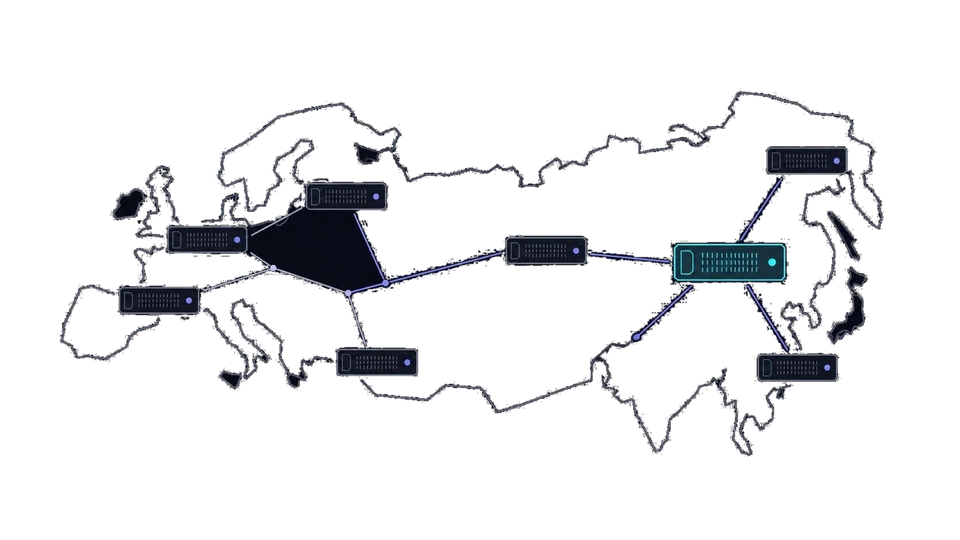
Saint Kitts and Nevis is where the contract lives — not a magic cloak. What it changes: a foreign civil claimant must argue in a small Caribbean court rather than mail demands to a rubber-stamp inbox, which raises the cost of fishing expeditions considerably. What it does not change: facility criminal process in Iceland, Switzerland, or Finland — valid local process aimed at the rack still lands, on schedule and with force.
SKN entity pros
- No retention mandate at the entity layer
- Foreign civil claims litigate in SKN courts
- Contract venue deliberately split from facility law
- No KYC file attached to the billing relationship
SKN entity cons
- Criminal process at the rack still lands under local law
- Never lifts you above your own jurisdiction
- Small-court venue cuts both ways in a dispute
- Alliance-free does not mean process-free
Paying in crypto never voids a warrant; it only means no card processor ever held your passport. That sentence is the whole model in one line — the checkout removes the identity trail that card rails create, while the legal structure puts contract disputes in Basseterre instead of behind a compliance desk in the vendor's home country. Both layers are ordinary law, deliberately chosen and publicly documented.
Practical consequences follow for daily operation. Relocating a server from Amsterdam to Reykjavik never rewrites the entity — you redeploy, move the data, update DNS, and the SKU price, the Monero rails and the AUP hold still. Nothing about the move opens a KYC file, because no KYC file was ever created. The entity is constant; the geography is a decision you can remake every quarter if your traffic shifts.
One honest limit to keep in view: an SKN venue is a friction advantage, not an immunity. Claims that matter still get litigated, and litigation can go either way — the structure buys you process, not outcomes. Operators who internalize that distinction write better terms of service, keep cleaner content policies, and sleep better than the ones shopping for lawlessness.
Inside the flags: Iceland and Switzerland
Iceland wins speech-adjacent workloads because nothing in its retention regime resembles the classic EU telecom mandates, and the IMMI-era expectations around source protection still shape how requests are handled. Geothermal power and a small legal market supply the folklore; the usable parts are process culture and a Tier IV floor on FICIX. Criminal law exists — this is no legal void — yet for publishers the flag is the cleanest in the catalog.
Iceland pros
- No mandatory data retention
- Strong IMMI speech tradition
- Tier IV / N+1, 10 Gbps on FICIX
- ~18 ms to Amsterdam — usable as primary
Iceland cons
- +20% published premium on the location
- 10 Gbps is the smallest flagship uplink in the catalog
- Criminal law applies like anywhere else — no legal void
Zurich sits outside the EU, runs the FADP, and puts a judicial overlay on data requests — a court, not a queue, decides. Routes toward AMS-IX hold a competitive ~9 ms class on many paths, which lets Switzerland pair process quality with usable round-trips for European audiences. The hydro-powered marketing is scenery; what you actually buy is the judicial habit, and the habit is the product.
Switzerland pros
- Non-EU placement with FADP and judicial overlay
- No bulk host retention
- Tier IV / 2N+1, 100 Gbps on SwissIX / DE-CIX
- ~9 ms class to AMS on many paths
Switzerland cons
- +35% published premium — the steepest in the catalog
- Judicial process cuts both ways when a court orders disclosure
- Premium adds $7.20/mo to a $24 Titan ($32.40 total)
Choose between them on the workload, not the folklore. Speech-first publishing — sources, whistleblowing, contested commentary — leans Reykjavik, where the tradition itself is the protection. Financial or legal-adjacent infrastructure leans Zurich, where the question is process quality rather than speech history. Both flags bill above base list, and the premiums are printed on the location pages before checkout, never after.
Pick the rack that fits the brief — Reykjavik, Zurich or ten others on one SKN invoice, from $4.80 Core to $39.20 Forge annual-eff. Launch now
The EU rows: Finland, Luxembourg, Netherlands
Finland holds the post-2014 retention posture that the CJEU's Digital Rights Ireland line and its national follow-through left behind: no mandatory retention for hosts, inside EU address space. Helsinki's Tier III / 2N floor runs 20 Gbps on FICIX, roughly 25 ms from Amsterdam, on a nuclear-hydro grid. Tor non-exits, seedboxes with legal content and quiet personal infrastructure all fit when EU membership is wanted without Frankfurt's optics.
Finland pros
- No mandatory retention (post-2014 line)
- EU process with real judicial habits
- Base-list pricing — no location premium
Finland cons
- EU membership carries EU-regime optics
- Retention posture is case-law dependent and can shift
- 20 Gbps uplink is mid-table at best
Luxembourg plays the EU-adjacent companion: EU-process facility law, central-EU latency, strong secrecy statutes, and the same SKN invoice. The floor is Tier IV / 2N+1 with 40 Gbps on LU-CIX and AMS-IX, and the location carries a modest +15% premium. For workloads that need EU legitimacy without German or Dutch adjacency, Luxembourg is the compromise that actually has a doctrine behind it.
Luxembourg pros
- EU process with strong secrecy statutes
- Tier IV / 2N+1, 40 Gbps on LU-CIX / AMS-IX
- Modest +15% premium, central-EU latency
Luxembourg cons
- EU-adjacent regime means EU retention themes still apply
- Smaller peering footprint than AMS-IX or DE-CIX proper
- Premium over base list
The Netherlands stays the throughput-and-peering pick: Tier III+ / 2N, 40 Gbps, AMS-IX and DE-CIX on the uplink, and a fast, formalized EU process that is honest about being fast. The matrix ranks it sixth because 9 Eyes adjacency is a real trade, not a style note. You take Amsterdam for latency and density, and you write that trade down so it stays deliberate a year from now.
Netherlands pros
- Best peering in the catalog — AMS-IX and DE-CIX
- Fast, formalized EU process
- Tier III+ / 2N reliability at base-list pricing
Netherlands cons
- 9 Eyes alliance membership
- EU retention regime applies
- Wrong primary for speech-first workloads
Three EU rows, three temperaments: Finland for quiet, Luxembourg for doctrine, Amsterdam for speed. All three bill under the same SKN entity and take the same nineteen coins, so mixing them on one account is a checkout choice, never a contract change. Rank them against the adversary you actually have — retention, alliance adjacency, peering, then your own local law.
Entity versus rack: how the split works
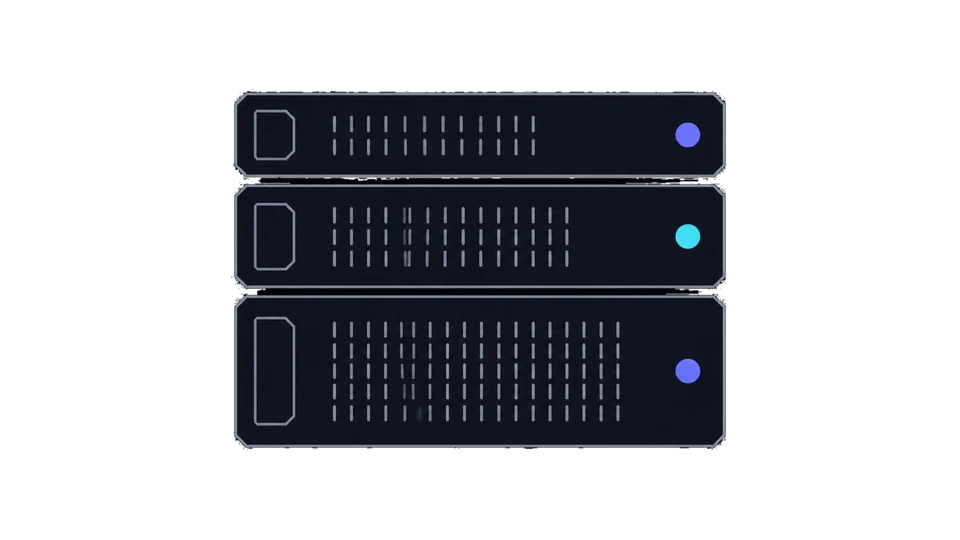
The invoice is issued by Meridian Node Ltd. in Saint Kitts and Nevis. The RAM itself may sit in Reykjavik, Zurich, Amsterdam, Frankfurt, Tokyo, Singapore or any of the twelve elite locations. Civil claimants chasing the company meet the SKN venue; whoever compels the hardware travels through facility jurisdiction. One-country offshore hosts fuse both layers into a single story — simpler marketing, weaker instrument.
The split pays off at every lifecycle event. Relocating later never rewrites the entity: you redeploy, move the data, update DNS — SKU prices hold, the Monero rails hold, the AUP holds, and the change is purely physical. Scaling from a $6.00 Core box to a $119.20 Monolith changes the invoice total, not the legal structure. Growth and retreat both stay private, quiet moves between racks rather than corporate events.
Compare the fused alternative. A host whose company, racks and bank all sit in one country offers one story and one pressure point: whatever compels the company compels everything behind it. The split design forces a claimant to run two tracks — contract venue for the relationship, facility process for the hardware — each with its own costs and timelines. Friction is the feature; the invoice does not advertise it because it does not need to.
Rank jurisdictions against the adversary you actually have — alliance adjacency, retention themes, peering, then your own local law — rather than in the order slogan blogs prefer. If unsure, bring up the privacy primary first, Iceland or Switzerland, and only then bolt on the latency replica. One SKN account, one price list, and no second identity file to maintain anywhere in the sequence.
The lifecycle, as it actually runs:
- Redeploy to the new flag — SKU price unchanged
- Move the data, snapshot first
- Update DNS records
- Entity, coins and AUP hold still throughout
Combinations operators run in practice
Speech-first publishing looks like this: a Reykjavik Titan at $24.00 paid in XMR, a privacy registrar or no domain at all, and the SKN invoice behind both. When EU-adjacent latency starts to matter, fail over to Zurich, where FADP-minded process remains the requirement and the ~9 ms class toward AMS-IX keeps European readers comfortable. The contract never changes; only the rack moves.
The EU family privacy hub runs differently: a Zurich Titan or Prime carrying WireGuard, the password manager and mail submission, with an optional Amsterdam Core at $6.00 as the labeled AMS-IX replica for a public static site — one that never shares an IPv4 with the mail machine. Write the Eyes trade down on the replica so the choice stays deliberate a year from now, when the original reasoning has faded from memory.
Quiet EU IP workloads — monitoring, personal dashboards, automation — fit Helsinki or Luxembourg, where lighter retention optics come with EU address space and the same $6.00–$24.00 VPS ladder. Frankfurt enters only when DE-CIX density dominates the brief and the trade is accepted in writing. Asia flags — Hong Kong, Singapore, Tokyo, Taipei — complete the regional map at identical list prices, under the same entity.
Whatever the mix, the operating rules hold:
- Company in one country, racks wherever law and latency agree
- Privacy primary first — Iceland or Switzerland
- Latency replica second, trade written down
- Geography reviewed quarterly, not per news cycle
- No identity file to reopen, because none exists
Re-check IMMI, FADP and retention themes as laws move; this ranking is operator orientation stamped with the dates above, not eternal counsel handed down once.
Build the two-layer design in one sitting — privacy primary plus latency replica on a single no-KYC account. Launch now
Red flags and drift: what to re-verify
Jurisdiction pages rot faster than any other hosting copy, so treat staleness as the first red flag — including on this page. Retention statutes, alliance memberships and case-law lines all move; the matrix carries compile and re-verification dates for exactly that reason. Any privacy ranking you read without dates is decoration, and a host that will not date its legal claims is telling you how it treats the rest of its documentation.
The structural red flag is fusion. A provider that sells one-country everything — entity, racks, bank, compliance desk — has welded contract venue to facility law and left you a single pressure point dressed up as simplicity. Ask two questions of any host: where is the billing entity, and where does the rack stand? If the answer is one country twice, the pitch is simpler and the instrument is weaker.
Behavioral red flags follow the same logic. Headline-driven panic moves — yanking workloads across the planet every time a treaty trends — create more operational risk than they remove, and the data you drag along is itself the exposure. A deliberate design writes the trade-offs down once, keeps a privacy primary and a latency replica, and changes geography at a review cadence rather than at news-cycle speed.
Last, the honesty checks:
- Premiums printed before checkout, never after
- AUP and enforcement language that survives a careful read
- An entity name you can look up
- Abuse handled under facility-location law, stated plainly
- Dated legal claims on every jurisdiction page
VPSbit prints Iceland at +20%, Switzerland at +35% and Luxembourg at +15% on the location pages, and abuse is handled under the law of the facility location — stated plainly, in those words. Anything fuzzier than that is the red flag itself.
How to keep reading on the privacy shelf
This matrix is one page in a wider privacy shelf, and the surrounding rankings translate the same facts for different briefs. The best anonymous VPS for Europeans works the matrix from a European angle — latency to users, EU address space, and the quiet flags that suit a privacy hub on one account. Monero VPS covers the payment rail this design assumes, and Best Monero VPS 2026 ranks the vendors that settle in it without identification anywhere in the funnel.
The checkout and category references complete the picture. The best crypto-only VPS grades the payment architecture — nineteen assets, live-rate invoices, no card form — which is the layer that keeps the SKN relationship free of card-rail identity trails. The cheapest no-KYC VPS prices the entry rung honestly, and the best no-KYC dedicated servers covers the metal tiers above it, from Forge at $49.00 list to Monolith with its L3/L7 scrubber.
The structural shelf, in one list:
- Offshore VPS — entity and facility design
- VPS vs dedicated bare-metal — tier selection
- Best no-KYC VPS 2026 — the category ranking
- FAQ: crypto VPS — checkout questions answered
Read the matrix with dates attached, re-verify before decisions that matter, and rank against the adversary you actually have rather than the one slogan blogs prefer. That discipline travels further than any single flag on this table — and it is the one habit that survives every change of law this page will ever need to re-verify. Keep a privacy primary and a latency replica, write the trade-offs down once, and let the entity stay constant while the geography follows your traffic.
Does an SKN entity mean lawless hosting?
No. Foreign civil claims end up before Saint Kitts and Nevis courts, criminal process that genuinely targets the rack lands under the facility's local law, and the AUP applies at every location. The entity adds friction for claimants and splits the pressure points; it does not suspend law.
Iceland or Switzerland — which one wins?
Iceland holds the freer speech tradition and the IMMI-era expectations, so speech-first workloads lean Reykjavik; Switzerland holds the cleaner judicial process, so legal-adjacent infrastructure leans Zurich. Both carry published premiums — +20% and +35% respectively — and many operators end up running one of each.
Can I move the location later?
Yes — redeploy to any other flag, move the data, and update DNS; the entity, the SKU prices and the coin rails hold still throughout. The move opens no KYC file because none was ever created, and migration of the data itself stays your part of the job.
Why does Amsterdam rank near the bottom?
Amsterdam takes peering and gives some of it back in the matrix: the rack is the best-connected in the catalog — AMS-IX and DE-CIX on a 40 Gbps uplink — while the Netherlands sits in the 9 Eyes. It is the latency pick, deliberately labeled, with the privacy primary kept elsewhere on the same SKN account.
Is the KYC policy identical at every location?
Yes — token-only or email plus a password, with a crypto invoice, holds at every rack, Reykjavik and Taipei alike. What varies by location is the published premium — Iceland +20%, Switzerland +35%, Luxembourg +15% — and the facility law that governs the hardware itself.
Where should a European start?
Zurich or Reykjavik when the design is privacy-first, since both pair no-mandatory-retention regimes with usable latency to EU users. Amsterdam the moment latency and peering dominate the brief — with a Zurich or Reykjavik twin for sensitive services on the same account, since the SKN invoice follows the account, not the flag.
Primary sources
Ready to launch?
Build the box — VPS or bare metal — create the password, pay the invoice that follows.