 VPSbit
Buy a VPS With Crypto — Live-Rate Invoice, No ID
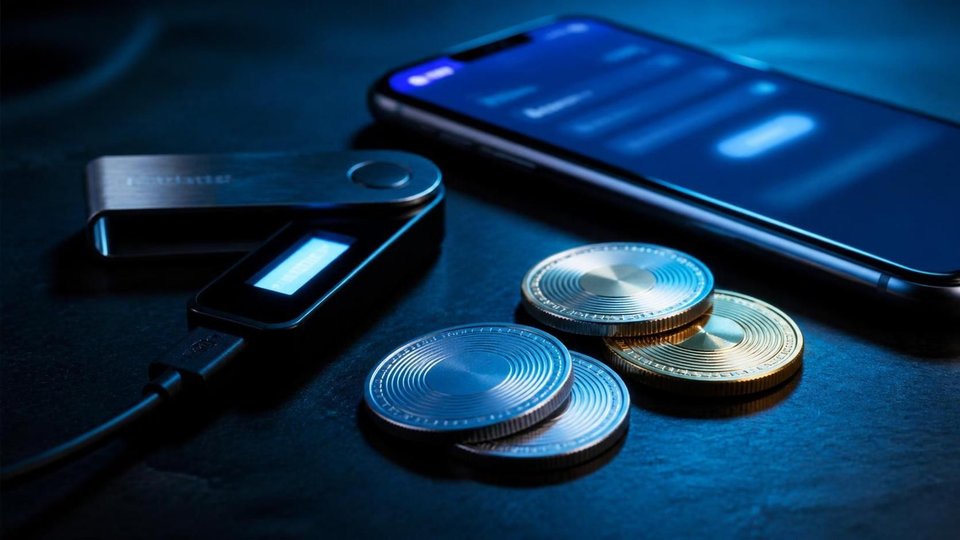
Buy a VPS with crypto at VPSbit: inbox or token, live-rate invoice in 19 coins incl. BTC, XMR and USDT on seven networks. No card form, no ID, no KYC step.
You pick a plan and one of 12 locations, register with an inbox or a bare token, and pay a live-rate invoice in any of 19 coins — no card form, no ID, no threshold. Core costs $4.80/mo on the annual term and root lands about 60 seconds after payment.
12 locations · 19 coins · SLA 99.95% · no KYC · public canary
VPS from $4.80* — Core on the annual term (list $6/mo), one invoice for 12 months, no auto-charges. Dedicated with IPMI from $39.20/mo. Crypto invoice, no KYC.
Launch nowHow to buy a VPS with crypto
One invoice, one transfer, zero documents. You pick any of twelve facilities from Reykjavik to Taipei, size the box from Core at $6/mo list — $4.80* on the annual term, one 12-month invoice with no auto-renewal — to Titan at $24, and settle in any of nineteen coins at the live rate printed on the invoice. Signup asks for an inbox or a bare token plus a 12-character password, and no KYC step waits after any spending threshold, because no threshold exists. The sequence, in order:
- Choose plan, term and one of 12 locations
- Register inbox plus password, or a bare token
- Pick one of 19 coins on the invoice page
- Send the exact amount once — SSH in about 60 seconds
The mechanics around the invoice stay identical whichever asset you pick. Each order binds a fresh single-use address to an exact amount, the watcher matches the received figure against the quote, and the image builds about a minute after credit — no manual review exists anywhere in the chain, because there is no paperwork to review. What the checkout asks, and what it never asks:
- Signup: inbox or token, 12-character password
- Payment: live-rate invoice, 19 coins
- Delivery: about 60 seconds to SSH
- Documents: none, at any spend level
- Card fields: absent entirely

The pages around this one cover the corners: the no-KYC page handles the identity question, the crypto hosting page frames the rail as the product, and the Monero page covers the private end of the menu. This page stays on the purchase itself — what you click, what you send, and what lands on the other side about a minute later.
Plans you can pay for with crypto
Every plan on the ledger takes the same nineteen coins — crypto is the default rail here, not a tier or an upsell. The VPS line runs on named silicon: Core at $6/mo list with 2 vCPU, 4 GB DDR5 and 80 GB NVMe on a 1 Gbps unmetered port; Prime at $12 doubling across the board; Titan at $24 stepping up to an 8-core EPYC 9354P with 32 GB ECC and a 10 Gbps pipe. The ladder, in dollars:
| Plan | Cores | RAM | NVMe | Uplink | List $/mo | Annual $/mo | Order |
|---|---|---|---|---|---|---|---|
| Core | 2 vCPU, Ryzen 9 9950X | 4 GB DDR5 | 80 GB | 1 Gbps | $6.00 | $4.80 | Order Core |
| Prime | 4 vCPU, Ryzen 9 9950X | 8 GB DDR5 | 160 GB | 2.5 Gbps | $12.00 | $9.60 | Order Prime |
| Titan | 8 vCPU, EPYC 9354P | 32 GB DDR5 ECC | 320 GB | 10 Gbps | $24.00 | $19.20 | Order Titan |
- Forge: $49 list, $39.20 annual-eff, Ryzen 9 9950X, IPMI
- Summit: $89 list, $71.20 annual-eff, EPYC 9354P, 10 Gbps
- Monolith: $149 list, $119.20 annual-eff, dual EPYC 9554P, 25 Gbps
Discounts apply the same way regardless of coin: annual billing takes 20% off list, quarterly takes 10%, and no asset carries a surcharge or a discount of its own — one ledger, one price. If a shared kernel will not do, the dedicated line above bills through the identical invoice, ships IPMI on every box, and racks 2–4 hours after the payment credits on any of the twelve flags.
When the plan is already decided, the purchase is four clicks deep: plan, flag, coin, transfer. The invoice prints the exact figure before anything moves, and root follows the credit by about a minute. Buy a VPS with crypto
Which coin to pick at checkout
All nineteen coins settle the same invoice, but they are not interchangeable when privacy is the point. Monero is the one first-class private coin on the menu: ring signatures obscure sender, receiver and amount on-chain, which matters the moment chain analysis enters your threat model. Bitcoin is the most accepted coin in hosting and the least private — its ledger is fully public, so treat every output as traceable unless you break the link yourself. USDT buys stability rather than privacy: a dollar-pinned quote on seven networks, each as attributable as BTC. The menu, honestly labeled:
- XMR: sender, receiver, amount obscured on-chain
- BTC: deepest acceptance, fully public ledger
- USDT: dollar-stable, transparent, seven networks
- ETH, SOL, LTC, XRP, BNB: payment rails, not private
- DOGE, DASH, ADA, GRAM, TRX: rails only, same caveat
Two honest footnotes belong here. DASH privacy mode is opt-in and unevenly used, so it never reaches XMR defaults, and no coin on a public chain does either. The checkout itself asks nothing beyond a token or an email and password — which is why the coin choice, not the form, is where most of your payment privacy actually gets decided, invoice by invoice.
Locations without a paper trail
Paying with crypto gets you an account with no KYC; the location you pick decides which jurisdiction the hardware sits in. The roster holds twelve sites, and the multipliers — x1.15 to x1.35 — are published price adjustments on top of plan list for the Tier IV and premium-exchange facilities, while the rest bill at base. The operator behind the racks is Meridian Node Ltd., incorporated in Nevis; the jurisdiction page lays out what that does and does not mean for your contract. The twelve:
- Reykjavik: Tier IV, FICIX, x1.2
- Amsterdam: Tier III+, AMS-IX / DE-CIX, base
- Zurich: Tier IV, SwissIX / DE-CIX, x1.35
- Hong Kong: Tier III+, HKIX, base
- Tokyo: Tier III+, JPIX / JPNAP, base
- Frankfurt: Tier III+, DE-CIX, base
- Singapore: Tier III+, SGIX, base
- Stockholm: Tier III, NetNod, base
- Helsinki: Tier III, FICIX, base
- Oslo: Tier III+, NIX, x1.2
- Luxembourg: Tier IV, LU-CIX, x1.15
- Taipei: Tier III+, TWIX, base
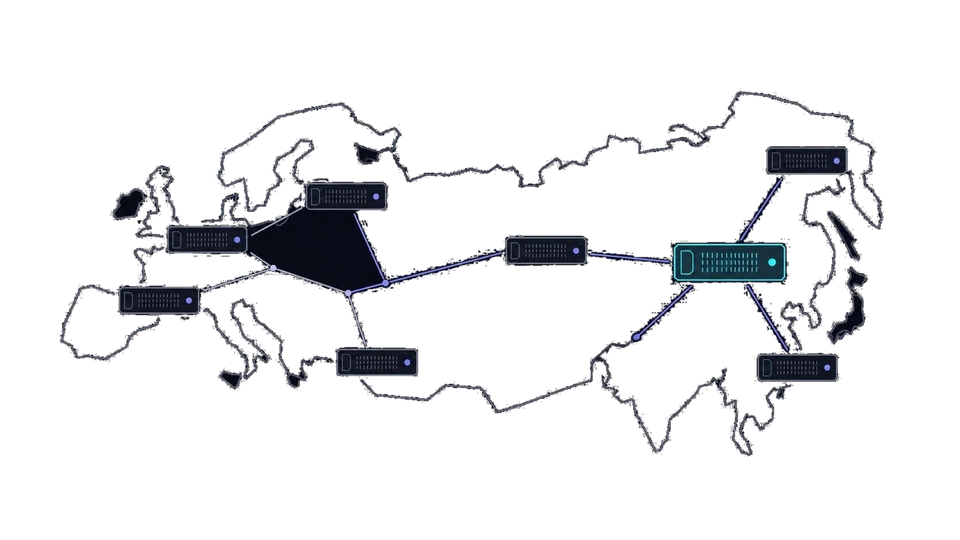
Region matters for latency and legal exposure alike: EU peers argue for Frankfurt or Amsterdam, APAC traffic for Tokyo or Singapore, Greater China edges for Hong Kong or Taipei. Picking a site is a trade-off you make once at deploy, so choose against your threat model, not just your ping — the flag decides which law reads the rack long after the invoice fades from the chain.
From confirmation to SSH in about a minute
The checkout is deliberately thin: a token, or an email and a password, is the entire identity the account ever has. After payment confirms, provisioning takes roughly 60 seconds from settlement to an SSH prompt — no verification queue, no document upload, no manual review step that exists to collect paperwork. Ports are unmetered on every plan, so no traffic ledger sits beside your payment ledger; DDoS filtering is included by default rather than sold as an add-on; and every dedicated box ships IPMI, so you reach bare metal out-of-band without filing a ticket. What the minute buys:
- No verification queue, no upload step
- Unmetered port on every plan
- DDoS filtering included by default
- IPMI on every dedicated box
- A server with no name attached
What the minute does not buy matters just as much: crypto payment removes identity collection at signup, but it does not hide traffic on the wire and it does not excuse content from the abuse rules. When the payment layer must be private end to end, pair a private coin with careful operational practice — the coin carries the invoice, the habits carry the rest, and the Monero page details that pairing.
What buying a crypto VPS will not do for you
Honesty first: an anonymous payment is not a content waiver. The AUP bans CSAM, phishing, spam and network attacks without carve-outs on every tier, and an account crossing those classes loses the box however quietly it paid. The law that applies is the law at the facility — Icelandic in Reykjavik, Swiss FADP in Zurich, APPI in Tokyo — and no coin, contract clause or checkout trick relocates a rack. A DMCA notice is acknowledged, timestamped and archived: bookkeeping, never adjudication.
Payment privacy has its own walls. The account is a token, and the IPv4 it hands you is registered to that token in records anyone can query; a transparent coin leaves a public trail from your wallet to the payment address, and even Monero leaves the fact, the hour and the amount. The box keeps a public IP and whatever you serve on its ports — encrypt at rest inside the guest when your threat model calls for it, and keep the registered inbox pseudonymous. What holds after payment:
- AUP classes: banned, no carve-outs
- Governing law: the facility location
- DMCA: acknowledged and archived only
- IPv4: registered to the token
- Traffic: attributable to the address you ordered
When a crypto payment goes wrong
Failure modes deserve pricing in advance, so here they are. An under-send leaves the invoice open — complete it or ticket the txid, and never broadcast a second transfer at the same address. A send on the wrong network is gone, and nobody on any side of the checkout can unwind it. Each invoice binds a fresh address to an exact amount, which is precisely what lets the watcher credit transfers without manual review and without a finance desk in the loop. The modes, itemized:
- Under-send: invoice stays open, ticket the txid
- Wrong network: unrecoverable, every time
- Address reuse: rejected by exact-amount match
- Second transfer, same address: never
- Expired invoice: expires quietly, no charge behind it
Refunds follow the same honesty. Crypto transfers are irreversible, so a return is goodwill rather than a chargeback: unused prepaid time lands on the account balance, and an approved on-chain return runs through a support ticket processed within 48 hours. Write tickets like invoices — amounts, txids, plan names — and keep the operational detail out of them, because the queue reads exactly what you send it.
What people run on these boxes
The workload list is ordinary, which is the point. Self-hosted WireGuard endpoints — the protocol Mullvad, Proton VPN and IVPN also document — Minecraft and CS2 servers, a pruned Bitcoin node, Matrix homeservers, legal adult CMS installs and plain websites. You rent root; the payload stays yours, and official install docs are linked from the playbooks on this site. Disk-heavy projects size up to Titan 320 GB of NVMe, whole-core ones to dedicated metal from $39.20/mo annual-eff — both settle through the exact invoice described above. Seen in the wild:
- WireGuard endpoints, self-hosted
- Minecraft and CS2 servers
- Pruned Bitcoin node, Core or Titan
- Matrix homeservers
- Ordinary sites and legal adult CMS
Related reading keeps the picture whole: the USDT walkthrough covers the dollar rail, the Monero page the private one, and the pricing page carries the full ladder with terms. Buy once, and the same invoice page handles every renewal after — the coin can change each cycle, and the file never grows a column you did not choose.
The whole purchase still fits in one sentence: two fields, one invoice, about a minute to root, no identity anywhere in the flow. When that is the deal you came for, the picker is open. Open checkout
Plans you can pay for with crypto
Every plan on the ledger takes the same 19 coins — crypto is not a tier or an upsell, it is the default rail. The VPS line runs on Ryzen 9 9950X silicon across the board: Core at $6/mo list ($4.80 effective annual) with 2 vCPU, 4 GB DDR5 and 80 GB NVMe on a 1 Gbps unmetered port; Prime at $12 ($9.60 annual) doubling to 4 vCPU, 8 GB, 160 GB and 2.5 Gbps; Titan at $24 ($19.20 annual) stepping up to 8 EPYC 9354P cores, 32 GB ECC, 320 GB NVMe and 10 Gbps.
If a shared kernel will not do, the dedicated line also bills in crypto: Forge at $49 ($39.20 annual) — full Ryzen 9 9950X, 32 GB, 2x1 TB NVMe in RAID, IPMI and DDoS filtering included; Summit at $89 ($71.20) — EPYC 9354P, 64 GB ECC, 2x2 TB, 10 Gbps; Monolith at $149 ($119.20) — dual EPYC 9554P, 128 GB ECC, 4x2 TB, 25 Gbps, IPMI on the board.
Discounts apply the same way regardless of coin: annual billing is −20% off list, quarterly −10%. No crypto surcharge, no fiat discount — one ledger, one price.
Which coin to pick at checkout
All 19 supported coins settle the same way, but they are not interchangeable if anonymity is the point.
- Monero (XMR) — the only first-class private coin on the list; ring signatures obscure sender, receiver and amount on-chain. If the threat model includes chain analysis, this is the pick.
- Bitcoin (BTC) — the most accepted coin, but its ledger is fully public; treat every satoshi as traceable unless you break the link yourself.
- USDT — supported across TRC-20, ERC-20, BEP-20, Polygon, Arbitrum, Optimism and SPL; useful for stable pricing, but a stablecoin on a public chain is as attributable as BTC.
- ETH, SOL, LTC, XRP, BNB, DOGE, DASH, ADA, GRAM, TRX — fine as payment rails, none of them private by default.
Honest limits: DASH's privacy mode is opt-in and unevenly used; no coin on a public chain gives XMR-grade defaults. The checkout itself asks nothing more than a token — or an email and password if you want a reusable account — so the coin choice is where most of your privacy is actually decided.
Locations reachable without leaving a paper trail
Paying with crypto gets you an account with no KYC; the location you pick decides what jurisdiction the hardware sits in. The roster is 12 sites: Reykjavík (Tier IV, FICIX, x1.2 multiplier), Amsterdam (Tier III+, AMS-IX/DE-CIX), Zürich (Tier IV, SwissIX/DE-CIX, x1.35), Hong Kong (Tier III+, HKIX), Tokyo (Tier III+, JPIX/JPNAP), Frankfurt (Tier III+, DE-CIX), Singapore (Tier III+, SGIX), Stockholm (Tier III, NetNod), Helsinki (Tier III, FICIX), Oslo (Tier III+, NIX, x1.2), Luxembourg (Tier IV, LU-CIX, x1.15) and Taipei (Tier III+, TWIX).
Multipliers — the x1.15–x1.35 marks — are the price adjustments on top of plan list for the Tier IV and premium-exchange sites; the rest bill at base rate.
Two things follow for a crypto buyer. First, the operator itself is incorporated in Nevis (Meridian Node Ltd.), so the contractual jurisdiction is already outside the usual disclosure-treaty mesh — the jurisdiction page on this site lays out what that does and does not mean. Second, region matters for latency and legal exposure alike: picking a site is a trade-off you make once at deploy, so choose against your threat model, not just your ping.
From coin confirmation to SSH in about a minute
The no-KYC checkout is deliberately thin: hand the form a token, or an email and a password, and that is the entire identity the account has. After payment confirms, provisioning takes roughly 60 seconds from settlement to an SSH prompt — no verification queue, no document upload, no manual review step that exists to collect your paperwork.
- Ports are unmetered on every plan — no traffic ledger sitting next to your payment ledger.
- DDoS filtering is included by default, not sold as a add-on that requires knowing who you are.
- Every dedicated server ships with IPMI, so you control the bare metal out-of-band without filing a ticket.
The honest boundary: crypto payment removes identity collection at signup — it does not make traffic invisible on the wire, and it does not excuse content from the abuse rules. If you need the payment layer to be private end-to-end rather than merely anonymous at the account level, pair a private coin with careful operational practice. What the minute-long path buys you is simple: a server that exists without a name attached, in about the time a normal host spends sending a welcome email.
Can I buy a VPS with crypto without any ID?
Yes. Checkout accepts a bare token or an email-plus-password pair — no KYC, no documents, no threshold. Provisioning takes roughly 60 seconds from payment confirmation to SSH on any of the 12 locations: <ul><li>Signup: token or inbox</li><li>Documents: none requested</li><li>Delivery: about 60 seconds</li></ul>
Is paying with Bitcoin anonymous?
Not by default. The Bitcoin ledger is public and permanent, so BTC payments are traceable unless you break the link yourself — Monero is the private option among the 19 supported coins, and the <a href="../monero-vps/">Monero VPS</a> page walks that workflow.
Do you ask for my real name?
No. Signup is an inbox plus password or a bare token, and nothing on the invoice page requests a legal name, an ID document or a phone number — the panel shows the mailbox handle you chose, never a name.
Does exchange KYC follow my coins here?
Coins bought on an exchange carry that exchange KYC upstream — the exchange knows what it knows — but it never reaches this checkout, which still asks for an inbox or a token and nothing more. Withdraw through a wallet you control first when the linkage bothers you.
What if I overpaid or changed my mind?
Crypto transfers are irreversible, so a refund is goodwill rather than a chargeback: unused prepaid time lands on the account balance, and approved on-chain returns via a support ticket process within 48 hours.
Dedicated instead?
Whole metal takes the identical rail: <a href="../buy-dedicated-server-with-crypto/">buy a dedicated server with cryptocurrency</a> from $39.20/mo annual-eff, no KYC at any tier, on the same account as your VPS — IPMI console included, racking in 2–4 hours.
Can I buy a VPS with crypto without giving any ID?
Yes. Checkout accepts a bare token or an email-plus-password pair — no KYC, no documents. Provisioning takes roughly 60 seconds from payment confirmation to SSH access on any of the 12 locations.
Is paying with Bitcoin actually anonymous?
Not by default. Bitcoin's public ledger links every transaction permanently, so BTC payments are traceable unless you break the chain yourself. Monero is the private option among the 19 supported coins; see the Monero VPS page for that workflow.
Primary sources
Ready to launch?
Build the box — VPS or bare metal — create the password, pay the invoice that follows.