 VPSbit
Crypto VPS Hosting from $4.80* — 19 Coins, No KYC

Crypto VPS hosting at VPSbit: 19 coins incl. XMR and USDT on seven networks, live-rate invoice, no card form, no ID. Plans list $6–24/mo, 12 locations.
Crypto VPS hosting here means every invoice settles on-chain: 19 coins including Monero and USDT on seven networks, quoted at a live rate, with no card form and no identity step. Plans list from $6 to $24 per month across 12 locations.
12 locations · 19 coins · SLA 99.95% · no KYC · public canary
VPS from $4.80* — Core on the annual term (list $6/mo), one invoice for 12 months, no auto-charges. Dedicated with IPMI from $39.20/mo. Crypto invoice, no KYC.
Launch nowCrypto-only is the product
The billing rail is the product line here: nineteen assets, one checkout, and no card form hiding behind a Bitcoin badge. Renting on this site means crypto end to end — signup, renewal, add-ons — and the identical rail settles VPS slices and dedicated metal alike. Accountants who need a fiat invoice with a VAT line should buy elsewhere, because that document does not exist in this shop; what exists is a live-rate invoice, an exact amount and a watcher that credits without a finance desk. What the rail covers:
- Signup: token or inbox, no card
- Invoices: one asset each, live USD quote
- Renewals: same 19-coin menu, fresh pick
- Add-ons: same rail as the server
- Dedicated metal: identical checkout from Forge up
- Fiat invoices with VAT lines: not issued
Under the invoice sits standard infrastructure, not an experiment: KVM slices with DDR5 memory and ECC where the silicon carries it, local NVMe, unmetered ports from 1 to 10 Gbps, and DDoS filtering inside the base price. Nested virtualization, custom ISOs, Tor exits and VPN endpoints are allowed on the AUP, and provisioning targets roughly 60 seconds after the watcher credits your transfer — the rail changes the billing file, never the box itself.
The nineteen coins on the invoice
The menu reads: BTC, XMR, ETH, BNB, SOL, LTC, TRX, XRP, DOGE, DASH, ADA and GRAM on the TON rail — plus USDT on seven networks: TRC-20, ERC-20, BEP-20, Polygon, Arbitrum, Optimism and SPL. One asset per invoice, quoted at a live USD rate, with network fees belonging to the sender — send enough that the received figure matches the quote, or the invoice stays open until you complete it. The network printed on the invoice is the only network that address lives on; the dollar-rail walkthrough lives on the buy VPS with USDT-TRC20 page. By rail:
- Majors: BTC, ETH, BNB, SOL, ADA
- Payments: LTC, XRP, TRX, DOGE, DASH, GRAM (TON)
- Private by default: XMR only
- USDT: TRC-20, ERC-20, BEP-20, Polygon, Arbitrum, Optimism, SPL
- Quote: live USD rate, printed at invoice time
One asset per invoice is what keeps the exact-amount matching honest — splitting a bill across coins means two invoices, and every billing cycle reopens the full menu anyway. Nineteen assets sound like abundance; in practice you will use two or three and ignore the rest, which is exactly fine. The menu exists for the month your preferred rail is congested, not for daily variety.
Plans and terms on this rail
List runs $6 to $24/mo across three KVM plans, and the terms discount from there. Core holds the floor with 2 vCPU of Ryzen 9 9950X, 4 GB DDR5, 80 GB NVMe and a 1 Gbps unmetered port; Prime doubles the cores, memory and disk on a 2.5 Gbps port; Titan tops the line with an 8-core EPYC 9354P, 32 GB ECC, 320 GB NVMe and a 10 Gbps pipe. The ladder:
| Plan | vCPU | RAM | NVMe | Port | List $/mo | Annual $/mo | Checkout |
|---|---|---|---|---|---|---|---|
| Core | 2 vCPU, Ryzen 9 9950X | 4 GB DDR5 | 80 GB | 1 Gbps | $6.00 | $4.80 | Core |
| Prime | 4 vCPU, Ryzen 9 9950X | 8 GB DDR5 | 160 GB | 2.5 Gbps | $12.00 | $9.60 | Prime |
| Titan | 8 vCPU, EPYC 9354P | 32 GB DDR5 ECC | 320 GB | 10 Gbps | $24.00 | $19.20 | Titan |
- Monthly: list price
- Quarterly: 10% off list
- Annual: 20% off — the $4.80* figure
- Coin: any of 19, discount unaffected
- Reykjavik: x1.2
- Oslo: x1.2
- Zurich: x1.35
- Luxembourg: x1.15
- Eight remaining flags: base list
Storage-heavy jobs size up the ladder — Titan carries 320 GB of NVMe — and metal opens at $39.20/mo annual-eff with IPMI on the board and DDoS filtering included, from the Forge tier upward. When plan and term are decided, the invoice is one picker away. Open crypto checkout
Which coin credits fastest
Credit speed differs by rail, and impatient buyers should read this before picking. USDT on TRC-20 and SOL usually land in one to three minutes; BTC waits on two confirmations, roughly 10 to 60 minutes depending on mempool pressure; XMR credits at ten confirmations, which on Monero means minutes. The invoice prints its network, the fee belongs to you as the sender, and the image builds about 60 seconds after any credit. Windows, by rail:
- USDT-TRC20: one to three minutes
- SOL: one to three minutes
- BTC: two confirmations, 10–60 minutes
- XMR: ten confirmations, minutes
- Image build: about 60 seconds after credit
Choosing by situation is simpler than it looks: XMR when the payment graph should say the least, USDT-TRC20 when the quote must hold through a volatile week, BTC when liquidity and acceptance matter most. The remaining assets share the identical checkout page, and switching between cycles costs nothing — BTC for the annual invoice, XMR for the monthly test box, USDT when the budget wants a fixed figure. The rail is a tool per invoice, not an identity.
Choosing a datacenter when the invoice is on-chain
Paying in Monero does not make one rack better than another — location still decides who can subpoena the operator, which exchanges your latency patterns touch and what local law considers routine access. Twelve facilities answer the picker, and the notable ones read like this: Reykjavik, Tier IV on FICIX at x1.2 — cold, geographically awkward, jurisdictionally interesting; Zurich, Tier IV on SwissIX and DE-CIX at x1.35 — the premium pick, priced like one; Luxembourg at x1.15 and Oslo at x1.2. The multipliers are stated plainly, never buried in a quote. The twelve, with tiers:
- Reykjavik: Tier IV, FICIX, x1.2
- Amsterdam: Tier III+, AMS-IX / DE-CIX, base
- Zurich: Tier IV, SwissIX / DE-CIX, x1.35
- Hong Kong: Tier III+, HKIX, base
- Tokyo: Tier III+, JPIX / JPNAP, base
- Frankfurt: Tier III+, DE-CIX, base
- Singapore: Tier III+, SGIX, base
- Stockholm: Tier III, NetNod, base
- Helsinki: Tier III, FICIX, base
- Oslo: Tier III+, NIX, x1.2
- Luxembourg: Tier IV, LU-CIX, x1.15
- Taipei: Tier III+, TWIX, base
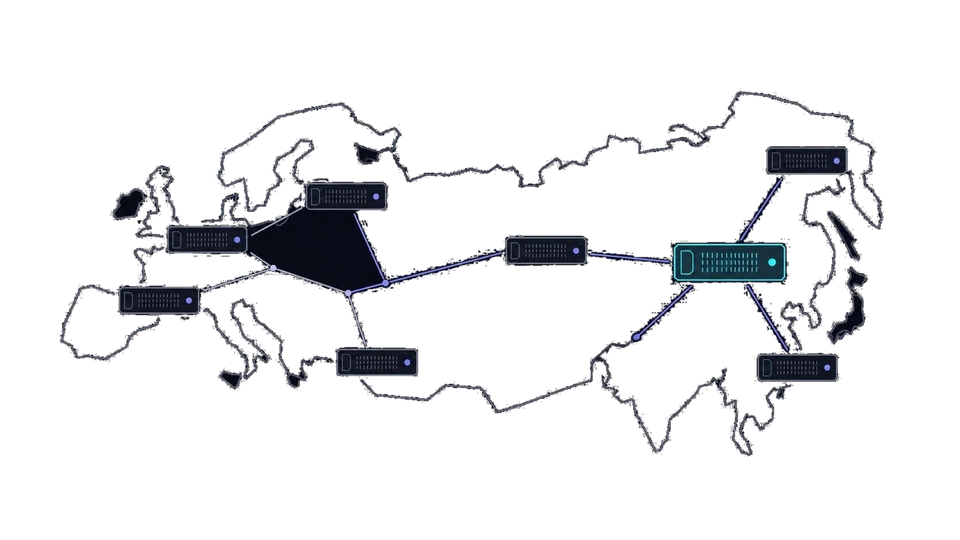
The brand entity behind the racks is Meridian Node Ltd., registered in Nevis — disclosed, not hidden. How each legal environment behaves is the subject of the jurisdiction page, the full list with details lives on the locations page, and the offshore VPS page covers when offshore actually helps versus when it is marketing.
Where the rail meets abuse policy
Crypto-friendly and no-KYC checkout attracts a specific clientele — some of it legitimate: self-hosters, privacy-conscious developers, people in over-restrictive payment corridors. Some of it is not, and the line is explicit: abuse-tolerant hosting and its synonyms are forbidden territory on this platform. No-KYC means identity is not collected at signup; it does not mean abuse reports stop arriving, network-layer filtering stops applying, or upstream pressure evaporates. DDoS scrubbing is included because it protects other tenants — not because the network is permissive. The policy lines:
- Identity: not collected at signup
- Abuse reports: still processed
- Network filtering: still applies
- DDoS scrubbing: protects other tenants
- Abuse-tolerant hosting: forbidden territory
For the operator actually building things, the checklist is short. Match the plan to the workload — a hobby blog on Titan is money burned, and a database that wants ECC does not belong on Core; the VPS and dedicated pages split that decision. Assume the deployment itself is on you: a full stack from a repo lands on a fresh box in minutes through deploy. Keep operational security realistic, because the payment rail hides the invoice, not the traffic your box emits.
Reading the price table without a fiat conversion
A crypto-first price list only works if the numbers survive scrutiny on their own — no convert-at-today-rate hedging, no surprise fee surfacing after the invoice. The catalog quotes flat list prices in USD and discounts on the invoice itself: annual terms take 20% off, quarterly takes 10%, and the discount is identical whether you settle in BTC, XMR or USDT, because the rail is not a pricing tier. The honest caveat: crypto is volatile, so the fiat value of what you hold when you pay varies — the invoice amount does not. Balance facts:
- Top-ups: $20 to $5,000
- Credits: never expire
- Renewals: draw from balance, no card
- Discounts: identical across all 19 coins
- Invoice amount: fixed at quote time
Funding a balance is the quiet upgrade: credit the account once in any listed coin, and future invoices draw down from it — top-ups run $20 to $5,000 and credits never expire. Nothing auto-charges, because no mandate exists anywhere in the system to charge. The result reads like a prepaid phone rather than a subscription: you pay when you want service, and silence costs you nothing.
What crypto hosting will not do for you
Crypto settles the invoice; it does not rewrite the surroundings. Transparent chains stay transparent — an exchange withdrawal ties the purchase to whatever that exchange knows about you, so sweep through a wallet you control when the linkage matters. No-KYC means no ID collected, never no rules: CSAM, phishing, spam and attacks stay banned at every tier, on every flag, in every facility. And the local law of the facility governs the rack no matter which coin paid for it — Reykjavik reads Icelandic law, Zurich reads the FADP.
What crypto-only genuinely deletes is the processor, the chargeback panic and the identity vendor — a thinner billing file, not a different legal universe. The boundary is written from other angles on the anonymous VPS and no-KYC pages, and it is the same boundary everywhere: the invoice changes the trail, never the law. Deleted, and untouched:
- Deleted: card processor and chargebacks
- Deleted: identity vendor and document scans
- Untouched: AUP classes
- Untouched: facility law
- Untouched: chain visibility of transparent coins
The rail is at its best when you use it knowingly: pick the coin for the job, the flag for the law, and the term for the discount — then let the invoice do the rest, with root following in about a minute. Deploy on the crypto rail
Reading the price table without a fiat conversion table
A crypto-first price list only works if the numbers survive scrutiny on their own — no "convert at today's rate" hedging, no surprise fees surfacing after the invoice. VPSbit quotes flat list prices in USD terms and then discounts them on the invoice, not at some theoretical exchange rate: annual terms take 20% off list, quarterly takes 10%. That discount applies the same whether you settle in Bitcoin, Monero, or USDT — the rail is not a pricing tier.
What that looks like across the VPS range:
- Core — $6 list, $4.80 effective annually — 2 vCPU Ryzen 9 9950X, 4 GB DDR5, 80 GB NVMe, 1 Gbps.
- Prime — $12 list, $9.60 effective annually — 4 vCPU, 8 GB, 160 GB, 2.5 Gbps.
- Titan — $24 list, $19.20 effective annually — 8 vCPU EPYC 9354P, 32 GB ECC, 320 GB, 10 Gbps.
- Dedicated Forge — $49 list, $39.20 annually — Ryzen 9 9950X, 32 GB, 2×1 TB NVMe RAID, IPMI.
Budget tiers are covered on /cheap-vps/; the full plan matrix lives on /pricing/. The honest caveat: crypto is volatile, so the fiat value of what you hold when you pay varies — the invoice amount does not.
Deployment speed and the parts that never touch your identity
The crypto checkout is deliberately thin: a token or an email and password — no KYC form, no document upload, no name fields sitting in a database waiting to leak. From confirmation of payment to a working SSH session, the quoted window is roughly 60 seconds, because provisioning is automated rather than gated on a billing review.
What that means operationally:
- Spin-up on demand — rebuild, redeploy, or move locations without re-negotiating a contract.
- IPMI on every dedicated box — you reach the bare-metal console directly, including for OS reinstalls that a shared panel would not allow.
- DDoS filtering included on every plan rather than sold as an add-on.
- Unmetered ports — traffic volume is not the metric the invoice cares about.
If anonymity rather than payment rail is the primary driver, the trade-offs specific to that goal are laid out on /anonymous-vps/ and /no-kyc-vps/. Crypto payment removes the financial paper trail — it does not magically anonymize what the server itself does; that part stays your responsibility.
Choosing a datacenter when the invoice is on-chain
Paying in Monero does not make one rack physically better than another — location still decides who can subpoena the operator, which exchange your latency patterns touch, and what local law considers routine access. VPSbit runs 12 locations, and the ledger of the notable ones reads like this:
- Reykjavík — Tier IV, FICIX, priced ×1.2 — cold, geographically awkward, jurisdictionally interesting.
- Zurich — Tier IV, SwissIX/DE-CIX, ×1.35 — the premium pick, and priced like it.
- Luxembourg — Tier IV, LU-CIX, ×1.15; Oslo — Tier III+, NIX, ×1.2.
- Amsterdam (Tier III+, AMS-IX/DE-CIX), Frankfurt (Tier III+, DE-CIX), Stockholm (Tier III, NetNod), Helsinki (Tier III, FICIX).
- Asia-Pacific: Tokyo (JPIX/JPNAP), Singapore (SGIX), Hong Kong (HKIX), Taipei (TWIX) — all Tier III+.
The multiplier locations cost more because premium jurisdiction and carrier density cost more — that is stated plainly, not buried. How each legal environment behaves is the subject of /jurisdiction/, the full list with details is on /locations/, and /offshore-vps/ covers when offshore actually helps versus when it is marketing. The brand entity behind all of this is Meridian Node Ltd., registered in Nevis — disclosed, not hidden.
Where this rail intersects abuse policy and self-hosting
Crypto-friendly and no-KYC attracts a specific clientele — some of it legitimate (self-hosters, privacy-conscious developers, people in over-restrictive payment corridors), some of it not. VPSbit's line is explicit: "bulletproof" hosting and its synonyms are forbidden territory. No-KYC means identity is not collected at signup; it does not mean abuse reports, network-layer filtering, or upstream pressure stop applying. Filtering for DDoS traffic is included because it protects other tenants — not because the network is permissive.
For the operator actually building things, the practical checklist looks like this:
- Match the plan to the workload — a Raspberry-Pi-class blog on a Titan is money burned; a database with ECC memory requirements does not belong on Core. /vps/ and /dedicated/ split that decision.
- Assume the deployment itself is on you — a full stack from a repo lands on a fresh box in minutes via /deploy/.
- Keep operational security realistic — the payment rail hides the invoice, not the traffic.
Honest framing: this is infrastructure with a privacy-first billing model, not an enforcement-free zone — and the distinction is exactly why the payment privacy can be offered without pretending the rest of the internet does not exist.
Can I split an invoice across coins?
No — one asset per invoice keeps the exact-amount matching honest, and two coins means two invoices. The rule is mechanical, not commercial: <ul><li>Assets per invoice: exactly one</li><li>Split payments: not supported</li><li>Two coins: two invoices</li></ul>
Which coin credits fastest?
USDT on TRC-20 and SOL usually land in one to three minutes, while BTC waits on two confirmations — roughly 10 to 60 minutes. XMR credits at ten confirmations, which on Monero means minutes, and the image builds about 60 seconds after any credit.
Do renewals need the same coin?
No. Every invoice picks fresh from the live menu — BTC this month and XMR next month costs nothing extra, and nothing is locked to the account. The menu reopens in full on every billing cycle, renewals included.
Can I fund a balance and settle from it?
Yes. Credit the account once in any listed coin and future invoices draw down from it: <ul><li>Top-ups: $20 to $5,000</li><li>Credits: never expire</li><li>Auto-charge: none, no mandate exists</li></ul>
Is there a card or PayPal fallback?
No. The catalog is crypto-only by design, which means no processor exists to fall back to — that absence is the point, not a gap. Nineteen assets across one invoice page cover the rail from BTC to GRAM.
Does the annual discount apply to crypto payments?
Yes — the 20% annual discount and the 10% quarterly discount apply regardless of payment method, to the cent. Pay one invoice covering the full term in any of the nineteen coins and the discounted rate holds: <ul><li>Annual: 20% off list</li><li>Quarterly: 10% off list</li><li>Coins: all 19 eligible</li></ul>
Can I pay for a full year upfront in crypto and still get the annual discount?
Yes — the 20% annual discount (10% quarterly) applies regardless of payment method. Pay one invoice covering the full term in Bitcoin, Monero, USDT, or any of the 19 supported coins and the discounted rate holds.
Is VPSbit bulletproof hosting?
No — "bulletproof" hosting is explicitly forbidden territory for us. We offer crypto payment and no-KYC signup on quality hardware, but abuse reports and network filtering still apply. See the warrant canary and jurisdiction pages for how the platform discloses legal requests.
Primary sources
Ready to launch?
Build the box — VPS or bare metal — create the password, pay the invoice that follows.