 VPSbit
VPS Without a Credit Card — Crypto-Only From $4.80
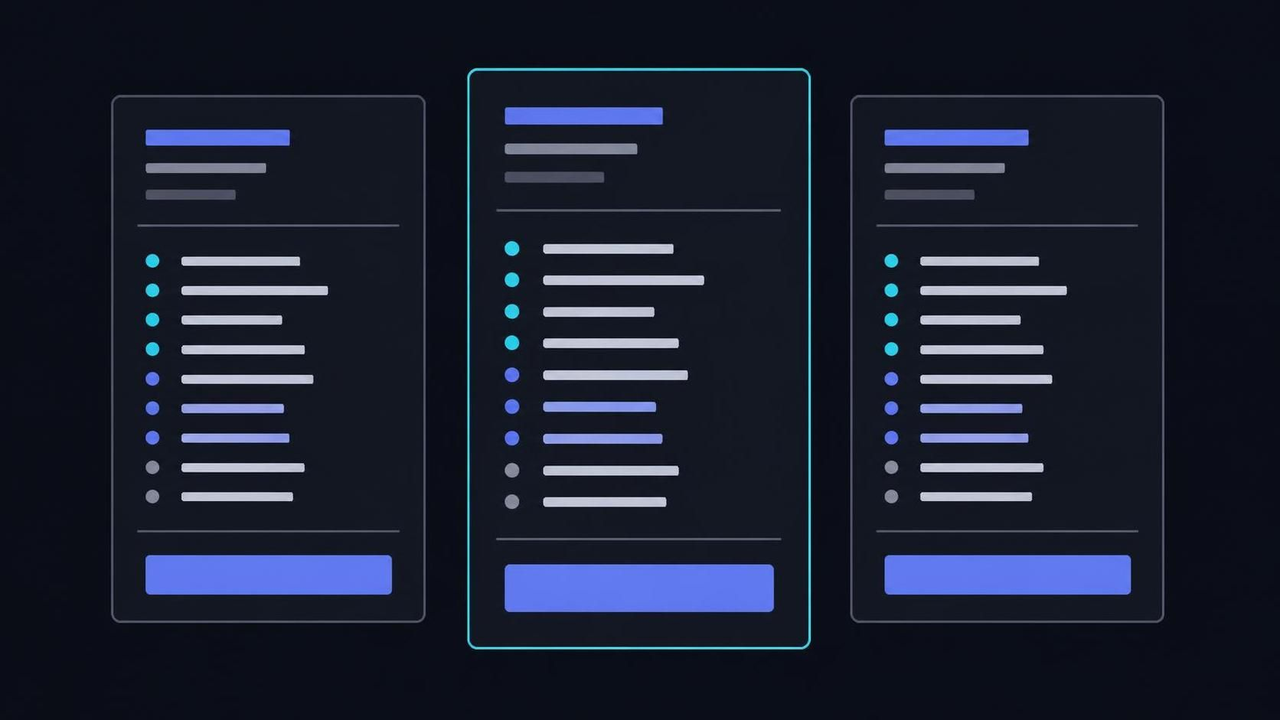
VPS without a credit card: no card field at signup or checkout. 19 coins settle the invoice, Core $6 list, $4.80 annual-eff, no KYC, 12 locations.
VPS without a credit card: no card field at signup or checkout. 19 coins settle the invoice, Core $6 list, $4.80 annual-eff, no KYC, 12 locations.
12 locations · 19 coins · SLA 99.95% · no KYC · public canary
VPS from $4.80* — Core on the annual term (list $6/mo), one invoice for 12 months, no auto-charges. Dedicated with IPMI from $39.20/mo. Crypto invoice, no KYC.
Launch nowThe case against card checkout
Paying by card leaves three traces you never control: a line on your bank statement that outlives the subscription by years, chargeback exposure that lets the merchant pull you into ID verification the moment a payment is disputed, and a dependency on rails the issuing bank can switch off overnight for reasons it never has to explain to you. Each trace is a record held by a third party with no contract obligation to your privacy.
Delete the card from the equation and that entire category of risk goes with it — no CVV waiting to leak from somebody's breach database, no auto-billing to contest through a call center, and no gatekeeper whose approval your server needs each month. A card-free VPS is not a workaround here; it is the only checkout this catalog has ever had, because the billing entity, Meridian Node Ltd. in Saint Kitts and Nevis, never contracted with a card processor in the first place.
The account side matches the payment side: a token or an email plus a 12-character password opens it, root SSH follows about 60 seconds after the invoice credits, and no KYC step exists anywhere in the flow to compensate for the missing card.
- Statement line: gone, no card ever filed
- Chargeback surface: none, crypto is final
- Auto-billing: none, every renewal is deliberate
- Approval gatekeeper: none, no bank in the loop
How checkout differs without a card
Stage by stage, the difference is structural rather than cosmetic. A card-based host asks for a full name and address at sign-up, runs a card form with 3-D Secure at payment, charges the card automatically at renewal, and holds service hostage when the card expires or gets blocked by the bank's fraud heuristics. Each of those stages writes a record somewhere you do not control, held by a party you did not choose.
The card-free path replaces every stage with a deliberate act: an email and a 12-character password at sign-up, a live-rate crypto invoice at payment, a re-payment you make by hand from any wallet at renewal, and — when something breaks — a top-up on your schedule with leftover time carrying over as balance rather than evaporating. The table below is the whole story in four rows, and each row is a category of record that either exists at a host or does not.
| Stage | Card-based host | VPSbit |
|---|---|---|
| Sign-up | Full name, address, often photo ID | Email plus a 12-character password |
| Paying | Card form with 3-D Secure | Live-rate crypto invoice |
| Renewals | Card charged automatically | You re-pay by hand, any wallet |
| When it breaks | Expired card — service at risk | Top up on your schedule; time carries over |
- Signup data: email + 12-character password
- Payment data: one wallet, one transfer
- Renewal data: none stored between invoices
- Failure mode: none — no card to expire
Which coins settle the invoice
An invoice can be drawn against 19 assets, which makes the card question moot long before the payment screen. Monero, Bitcoin and Ethereum lead the list, then Solana, Litecoin, Tron, XRP, BNB, DOGE, DASH, ADA and GRAM; USDT rides any of seven networks — TRC-20, ERC-20, BEP-20, Polygon, Arbitrum, Optimism and SPL. Each invoice carries exactly one asset, priced at live market rates and closed with a single exact-amount transfer.
Timing differs by rail, and knowing the rails saves an evening of wondering: USDT on TRC-20 posts at 19 confirmations and typically clears in 1-3 minutes; Bitcoin asks 3 blocks, which lands anywhere from 10 to 60 minutes depending on mempool weather. An invoice prices once at the live rate, stays open for three days, and settles with one exact-amount transfer — a short send keeps it open, a wrong-network send is unrecoverable by anyone.
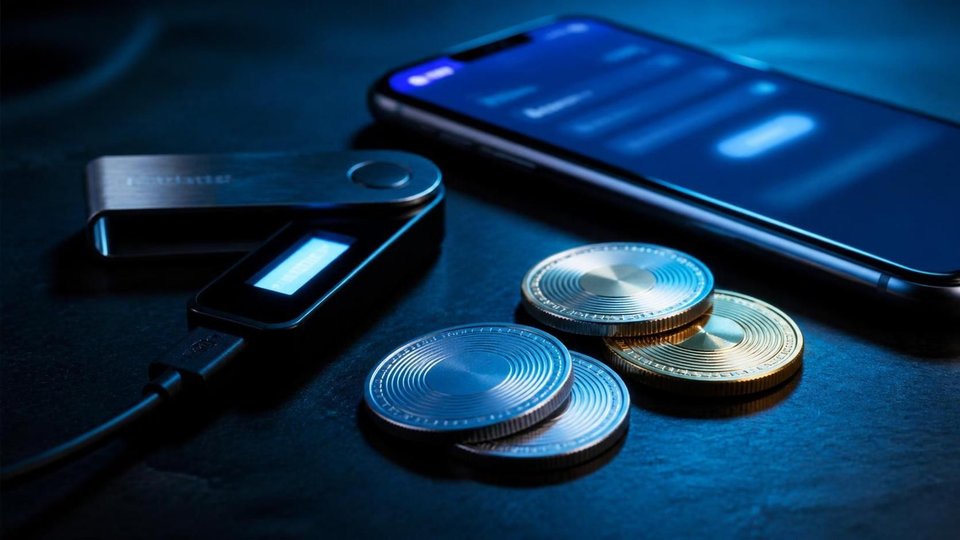
If the transfer itself should disclose as little as possible, XMR is the natural choice: sender, receiver and amount stay off the public record by design. Core costs $6/mo list, or $4.80/mo on the annual term, and that base figure holds at every base-list flag.
- Assets: 19, one per invoice
- USDT networks: TRC-20, ERC-20, BEP-20, Polygon, Arbitrum, Optimism, SPL
- USDT TRC-20: 19 confirmations, 1-3 minutes
- Bitcoin: 3 blocks, 10-60 minutes
- Invoice window: 3 days, live-locked rate
Who deliberately chooses a card-free host
The customer list is broader than the privacy stereotype, and every slice of it arrives for a reason the card system created. Customers whose bank declines hosting merchants or any foreign charge as a rule land here weekly, tired of calling to unlock payments they already budgeted for. Privacy-focused operators keep infrastructure off their card statement entirely, so the statement never becomes a public inventory of their servers, domains and projects.
Then there are the people a card system has already burned once: anyone whose card number leaked through a merchant breach and who would rather not donate a second number to the same machinery, and founders with no bank account — or deplatformed ones — rebuilding a project without a banking relationship that a platform can revoke by email. For all of them the point is not ideology but control: the invoice exists, you settle it deliberately, and no third party sits between intention and running server.
- Bank-declined customers: hosting merchants, foreign charges
- Privacy operators: statements stay clean
- Breach victims: no card number to leak again
- Unbanked or deplatformed founders: full access, no bank
Planning cash flow with prepaid crypto credit
Prepaid credit flips the usual cash-flow logic in your favor. You fund the balance when rates and timing suit you, not when a renewal deadline forces the issue at whatever the market happens to be doing that morning, and letting an invoice lapse is the whole cancellation procedure — time already paid for stays credited instead of becoming a dispute, a chargeback attempt, or a support negotiation. Longer terms remain purely optional discounts: 10 percent off quarterly, 20 percent off annual, with no commitment attached and no penalty for staying monthly forever.
The ladder in numbers, so the planning has anchors: Core — 2 vCPU on a Ryzen 9 9950X, 4 GB of DDR5, 80 GB NVMe, 1 Gbps unmetered — lists at $6 and runs $4.80 annual-eff. Prime — 4 vCPU, 8 GB, 160 GB NVMe, 2.5 Gbps — lists at $12, runs $9.60. Titan — 8 vCPU on an EPYC 9354P, 32 GB of DDR5 ECC, 320 GB NVMe, 10 Gbps — lists at $24, runs $19.20.
And when a workload outgrows its slice, the identical wallet covers bare metal from $39.20/mo annual-eff — Forge with IPMI on board, Summit above it, Monolith at the top on 25 Gbps, every tier on the same rails and the same account.
- Core: $6 list / $4.80 annual-eff
- Prime: $12 list / $9.60 annual-eff
- Titan: $24 list / $19.20 annual-eff
- Quarterly: 10% off; annual: 20% off, both opt-in
From checkout to SSH, no bank in the loop
The card-free path is short because nothing in it waits on a bank, an underwriter, or a fraud-score heuristic. You pick a plan, choose a coin from the 19 accepted, and send the invoice amount to the address shown on the screen. Once the transaction confirms on its chain, provisioning starts automatically — no KYC form, no identity check, no waiting for a human to wave the order through during business hours in some other timezone.
From payment confirmation to a working SSH endpoint, the quote is roughly 60 seconds, and that number is honest about its one assumption: the coin has settled. A Bitcoin transaction during a congested mempool period takes as long as its own confirmations take, which is a property of the chain rather than of the host, and no checkout design changes it. Faster-settling assets — Monero, USDT on TRC-20, Litecoin — are usually near-instant from a payer's point of view, which is why the rail choice is also a patience choice.
- Provisioning: about 60 seconds after credit
- No KYC form, no human approval step
- Fast rails: XMR, USDT TRC-20, LTC
- Slow rail: BTC under mempool congestion
What a card-free checkout will not change
Honesty section, because the card-free crowd attracts the most overclaiming of any product segment. Paying in crypto does not make the server lawless: each of the 12 sites operates under its own country's rules, abuse backed by evidence is enforced under the AUP, and the conduct the AUP bans — CSAM, phishing, spam, network attacks — stays banned at every tier on every coin without exception. A different payment rail changes the rail, not the rules.
It also does not launder an identity you attached yourself. An account tied to a reusable personal email is exactly as anonymous as that address, whatever the invoice settled in; the anonymous-signup walkthrough covers the mailbox and access-path discipline that does the real work. And Nevis incorporation does not exempt a rack from physics or from the facility's law — jurisdiction is worth reading per location on the table, not assumed global from the billing address.
What the card-free checkout delivers is exactly what it says: no card data anywhere, no statement line, no chargeback surface, and renewals that happen because you chose them.
- Not changed: facility law, AUP enforcement
- Not changed: your own email hygiene
- Delivered: no card data, no statement line, no chargeback surface
- Warrant canary: signed, checked regularly
19 coins, no card field, Core from $4.80/mo annual-eff. Open the card-free checkout
Paying from the checkout to SSH
The card-free path is short because nothing in it waits on a bank. You pick a plan, choose a coin from the 19 VPSbit accepts, and send the invoice amount to the address shown. Once the transaction confirms, provisioning starts automatically — no KYC form, no identity check, no waiting for a human to wave it through. Checkout asks only for a token or an email and password.
From payment confirmation to a working SSH endpoint, VPSbit quotes roughly 60 seconds. That number assumes the coin has settled; a Bitcoin transaction during a congested mempool period takes as long as its own confirmations take, which is a property of the chain rather than of the host. Faster-settling assets — Monero, USDT on TRC-20, Litecoin — are usually near-instant from a payer's point of view.
- 19 supported coins: BTC, XMR, USDT across TRC-20/ERC-20/BEP-20/Polygon/Arbitrum/Optimism/SPL, ETH, SOL, LTC, XRP, BNB, DOGE, DASH, ADA, GRAM, TRX
- No card data, no billing address, no chargeback surface
- Account creation is token or email + password — nothing more
If you want the deployment mechanics rather than the payment leg, they are documented separately on the deploy page.
What a Nevis jurisdiction means for you
VPSbit is operated by Meridian Node Ltd., registered in Nevis. For a card-free customer this matters in two concrete ways. First, the contracting entity sits outside the large surveillance-friendly jurisdictions, so data requests travel a different legal route than they would for a host incorporated in the US or EU. Second, the company publishes a warrant canary — a regularly signed statement that no warrant, gag order or secret compulsion has been received. If the canary ever stops updating or its statements change, that is the signal.
Honest limits apply. Nevis incorporation does not make a server exempt from physics or from the law of the location where the rack physically stands — each of the 12 sites operates under its own country's rules, which is why jurisdiction is worth reading per-location rather than assuming one global answer. Nevis also does not shield you from your own operational mistakes; an account tied to a reusable email address is only as anonymous as that address.
- Entity: Meridian Node Ltd. (Nevis)
- Signed warrant canary, checked regularly
- Per-location legal context documented on the jurisdiction page
Scaling beyond a single card-free VPS
Crypto checkout is not a promotion-tier gimmick at VPSbit — the same payment rail covers the whole catalogue. A single VPS Core instance at $6/month ($4.80 effective on annual billing, with 2 vCPU Ryzen 9 9950X, 4 GB DDR5 and 80 GB NVMe) is the entry point. When one machine stops being enough, the same coin balance moves you into Prime at $12/$9.60 with 2.5 Gbps ports, or Titan at $24/$19.20 with 8 EPYC 9354P vCPU threads, 32 GB ECC memory and a 10 Gbps uplink.
Above the VPS line, dedicated servers take the same coins: Forge at $49/$39.20 with IPMI on board, Summit at $89/$71.20, and Monolith — dual EPYC 9554P, 128 GB ECC, 4x2 TB NVMe and 25 Gbps — at $149/$119.20. Annual billing takes 20% off list, quarterly 10%, and both are payable in the same 19 currencies, so prepaid crypto credit scales with the workload instead of capping it.
- VPS: Core / Prime / Titan, 1–10 Gbps unmetered ports
- Dedicated: Forge / Summit / Monolith, IPMI and DDoS filtering included
- Same checkout, same coins, no card required at any tier — see dedicated for the bare-metal ledger
Where card-free VPS locations cluster
Payment privacy only matters if the network behind it holds up. VPSbit runs 12 locations: Reykjavik (Tier IV, FICIX), Amsterdam (Tier III+, AMS-IX/DE-CIX), Zurich (Tier IV, SwissIX/DE-CIX), Hong Kong (Tier III+, HKIX), Tokyo (Tier III+, JPIX/JPNAP), Frankfurt (Tier III+, DE-CIX), Singapore (Tier III+, SGIX), Stockholm (Tier III, NetNod), Helsinki (Tier III, FICIX), Oslo (Tier III+, NIX), Luxembourg (Tier IV, LU-CIX) and Taipei (Tier III+, TWIX).
A few sites carry a location multiplier on price — Reykjavik and Oslo at x1.2, Zurich at x1.35, Luxembourg at x1.15 — reflecting what power and transit cost in those buildings. The rest of the fleet prices at base. All ports are unmetered across every location, and DDoS filtering is included rather than sold as an add-on.
- 12 sites across Europe and Asia-Pacific, all Tier III or better
- Four Tier IV sites: Reykjavik, Zurich, Luxembourg — plus the strongest exchange fabric peering
- Latency-sensitive buyers should pick by region: HKIX, JPIX, SGIX and TWIX cover Asia; the European sites cover everything west of Taipei — the locations page carries the per-site detail
Is a fiat or card option available anywhere?
No — this catalog bills in crypto exclusively, and that is a deliberate design decision rather than a restriction support could lift: no card processor sits behind the checkout at all.<ul><li>Fiat rails: zero</li><li>Crypto rails: 19 coins</li></ul>
Does avoiding the card trigger extra identity checks?
No. An account here is an email inbox and a 12-character password — or just a bare token — and no step asks for a passport, a phone number or an uploaded ID.<ul><li>Requested: one credential pair</li><li>Not requested: ID, phone, card</li></ul>
How are renewals billed with no card saved?
Nothing gets stored, because the account holds no card in the first place. Every renewal is a fresh invoice that you settle on purpose, in whatever coin suits that month; defaults never auto-charge.<ul><li>Stored card: none exists</li><li>Auto-charge: never</li></ul>
Do I have to commit to a term?
No — month-to-month billing is available from the first invoice; the 3-month and 12-month options exist only as discount tiers of 10 and 20 percent, and skipping them costs nothing.<ul><li>Monthly: list price, always available</li><li>Quarterly: -10%, annual: -20%</li></ul>
What if a transfer fails or lands on the wrong chain?
A short payment keeps the invoice open — send the remainder or pass the txid to support. A transfer sent over the wrong network is unrecoverable, so confirm the chain name on the invoice before sending.<ul><li>Short send: invoice stays open</li><li>Wrong network: unrecoverable</li></ul>
Can I pay with USDT, and on which networks?
Yes. USDT is accepted on TRC-20, ERC-20, BEP-20, Polygon, Arbitrum, Optimism and SPL. TRC-20 is usually the cheapest to send; ERC-20 works when your balance is stuck on Ethereum.
Do I need to verify my identity before provisioning?
No. Checkout requires only a token or an email address and password; once your coin payment confirms, provisioning starts automatically and SSH is typically ready about 60 seconds later.
Can I pay VPSbit with USDT, and on which networks?
Yes. USDT is accepted on TRC-20, ERC-20, BEP-20, Polygon, Arbitrum, Optimism and SPL. TRC-20 is usually the cheapest to send; ERC-20 works when your balance is stuck on Ethereum. All 19 supported coins settle through the same card-free checkout.
Do I need to verify my identity before my server is provisioned?
No. Checkout requires only a token or an email address and password — no KYC documents, no card details. Once your coin payment confirms, provisioning starts automatically and your SSH endpoint is typically ready about 60 seconds after payment.
Primary sources
Ready to launch?
Build the box — VPS or bare metal — create the password, pay the invoice that follows.