 VPSbit
Cheap VPS — from $4.80/mo, no KYC
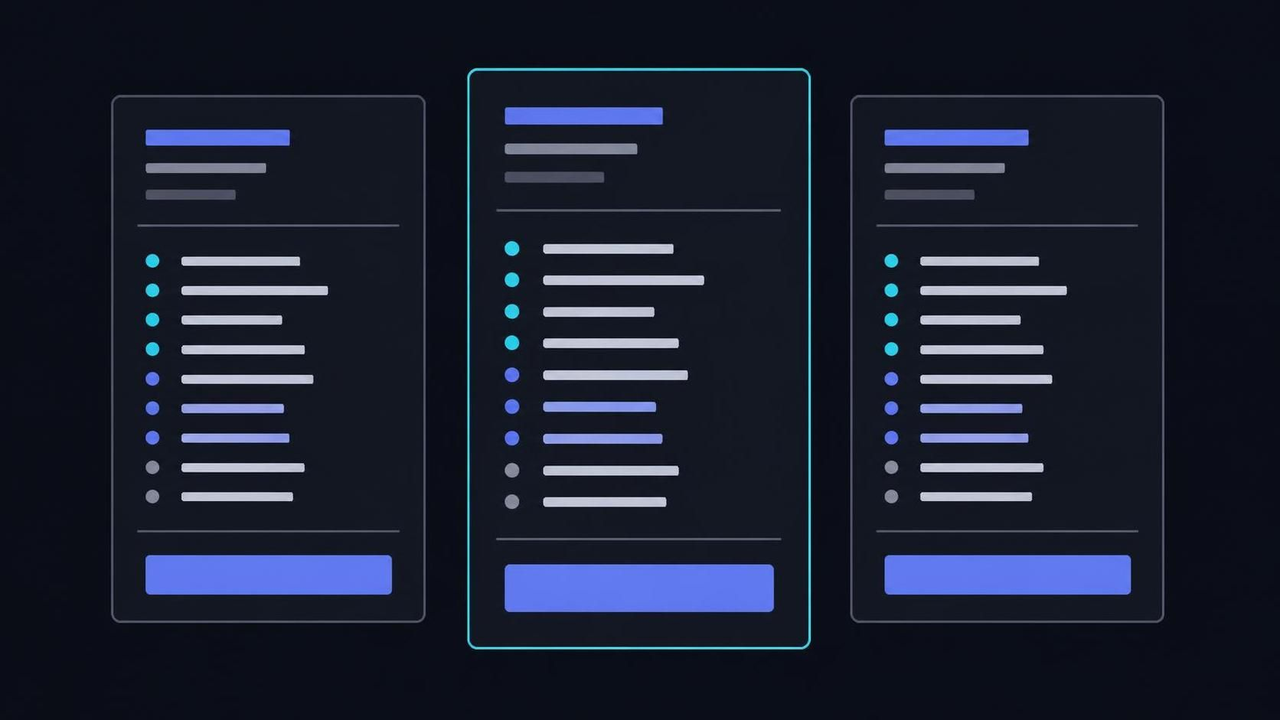
Cheap VPS with premium parts in the base price: Core $6 list, $4.80/mo annual, KVM, DDR5, NVMe, DDoS included, crypto-only, no KYC, 12 locations.
Cheap VPS with premium parts in the base price: Core $6 list, $4.80/mo annual, KVM, DDR5, NVMe, DDoS included, crypto-only, no KYC, 12 locations.
12 locations · 19 coins · SLA 99.95% · no KYC · public canary
VPS from $4.80* — Core on the annual term (list $6/mo), one invoice for 12 months, no auto-charges. Dedicated with IPMI from $39.20/mo. Crypto invoice, no KYC.
Launch nowWhat the entry price actually buys
Core is the floor of this catalog, and the floor is worth reading carefully before the word cheap does the deciding. It lists at $6.00 per month: 2 vCPU on an AMD Ryzen 9 9950X at 4.3-5.7 GHz, 4 GB of DDR5, 80 GB of NVMe, an unmetered 1 Gbps port, one IPv4 address and a /64 IPv6 block. The annual term takes 20 percent off — $4.80/mo, one invoice for 12 months, no auto-charges — and the quarterly term takes 10.
What the price does not contain is the usual fine print: no setup fee, no contract clause, no identity step, and no metered-traffic trap waiting in month two. Checkout is crypto-only across 19 coins, the account is a token or an email plus a 12-character password, and root SSH opens about 60 seconds after the invoice credits. Compare that against the entry SKUs of the market, where setup fees, ID checks and per-gigabyte metering quietly re-price the sticker within a billing cycle.
The positioning matters more than the word cheap suggests: this is the entry rung of a closed-capacity catalog on named Ryzen and EPYC silicon across 12 elite locations. The capacity behind the price is the same capacity every other page on this site sells, with the same DDoS filtering and the same unmetered ports — the discount lives in the term, never in the parts list.
- CPU: 2 vCPU, Ryzen 9 9950X, 4.3-5.7 GHz
- RAM: 4 GB DDR5
- Disk: 80 GB NVMe
- Port: unmetered 1 Gbps
- Network: 1x IPv4 + /64 IPv6
The full price ladder, list against annual-eff
The ladder has three rungs, and the arithmetic is the same on each: list price, then annual-eff at 20 percent off for the 12-month term, then quarterly at 10 percent off. Storage scales with the plan — 80 GB on Core, 160 GB on Prime, 320 GB on Titan — so the disk grows with the compute instead of becoming an add-on cart item at checkout. Every plan runs at every one of the 12 locations, and the tier, the flag and the coin are chosen on one screen without a sales call.
| Plan | List | Annual-eff | vCPU | RAM | NVMe | Port |
|---|---|---|---|---|---|---|
| Core | $6.00 | $4.80 | 2 | 4 GB DDR5 | 80 GB | 1 Gbps |
| Prime | $12.00 | $9.60 | 4 | 8 GB DDR5 | 160 GB | 2.5 Gbps |
| Titan | $24.00 | $19.20 | 8 | 32 GB DDR5 ECC | 320 GB | 10 Gbps |
Titan steps onto different silicon by design: 8 vCPU of AMD EPYC 9354P at 3.25-3.8 GHz with 32 GB of DDR5 ECC, aimed at databases and mirrors that want server-grade memory behind them. Crypto billing covers every rung identically, so moving up never means re-qualifying the account or swapping payment rails.

- Core: $4.80, 2 vCPU / 4 GB / 80 GB
- Prime: $9.60, 4 vCPU / 8 GB / 160 GB
- Titan: $19.20, 8 vCPU / 32 GB ECC / 320 GB
- Terms: monthly, quarterly -10%, annual -20%
Where the floor of this niche actually sits
Three offers set the niche's floor as of the 2026-09 check, and each earns a sentence of honesty. NulNet advertises from $3 — a real figure, but only as annual billing across 40 flags, so month-to-month simply is not on its menu for any money. NovaVPS headlines $3, which turns out to be the annual-eff of a $5.49-list Nano: 1 vCPU, 2 GB and 40 GB of NVMe — a smaller box than Core, honestly priced as far as it goes, and worth saying so plainly.
BitVPS undercuts nobody credibly: four claimed datacenters on a trust record that ScamAdviser scores in the near-zero band and that Trustpilot threads describe through undelivered servers and unanswered tickets. A sticker price is not a reason to wire crypto into a checkout nobody vouches for, and a $39 dedicated banner does not change that arithmetic one cent.
Against those three, the $4.80 annual-eff floor here buys 2 vCPU, 4 GB of DDR5, 80 GB of NVMe, unmetered 1 Gbps and included DDoS filtering, with monthly rolling available and no setup fee on any term. The next rung up is metal at $39.20/mo annual-eff on the dedicated ladder, which bounds how far this catalog has to stretch before VPS ends.
- NulNet: from $3, annual-only, 40 flags (checked 2026-09)
- NovaVPS Nano: $3 annual-eff, $5.49 list, 1 vCPU / 2 GB
- BitVPS: near-zero trust scores, undelivered-server reports
- This floor: $4.80, monthly rolling, no setup fee
Cheap versus free versus the ID-gated giants
Free VPS offers monetise the user or collapse under overselling, and both outcomes cost more than the sticker ever saved. The monetisation kind trades your data or your idle resources for the box; the oversold kind delivers a fraction of the promised performance at the exact moment your workload finally matters — a launch day, a traffic spike, the one afternoon the cache misses. Neither variant is cheap by any honest accounting, and both charge in currencies you cannot invoice.
The budget giants can undercut per-euro figures while asking for ID at signup, packing workloads into containers instead of full KVM, and metering every gigabyte past the first few. Those three moves are exactly how a $2 box becomes a $9 box with a KYC dossier attached, and a comparison that looks close on the price line falls apart on the next three lines of the invoice.
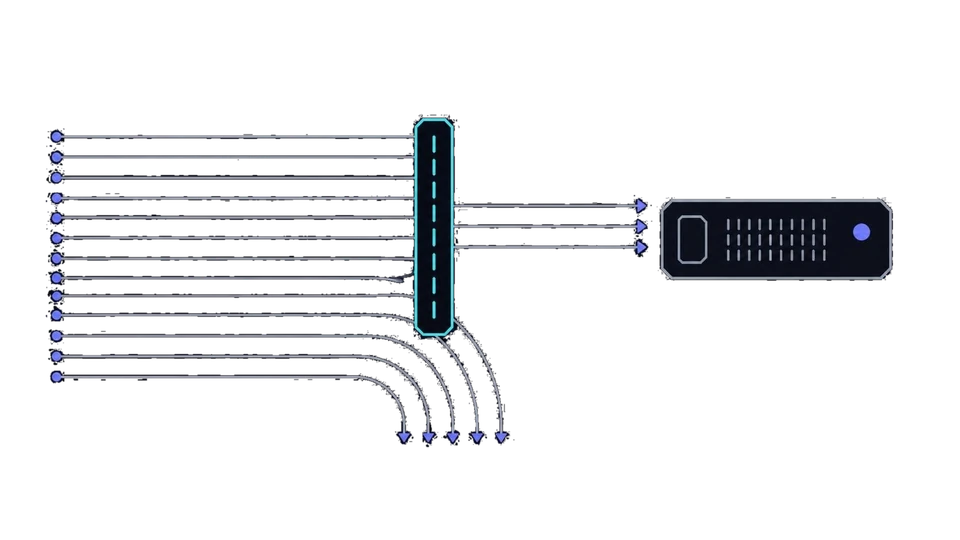
The floor here is the cheapest configuration that still ships KVM isolation, unmetered traffic, included DDoS filtering and crypto-only no-KYC billing — the four line items that usually turn into add-ons elsewhere. If a competitor undercuts $4.80, the missing ingredient sits on one of those lines, and it will be sold back to you at renewal.
- Free tier catch: your data, or oversold cores
- Budget-giant catch: ID at signup, metered traffic
- Here: KVM, unmetered, DDoS, no-KYC in the base
What a cheap VPS will not do for you
Start with the things a cheap VPS cannot be here, because the cheap tier attracts the most wishful thinking of any product page. It cannot be anonymous by price alone: your account is a token or an email, the server IP is registered to that account, and paying in crypto — Monero included — changes the payment rail, not the registration. The KYC an exchange ran on your coins stays upstream on the exchange's records, where this contract cannot reach it and no host's contract ever could. The retention page spells out exactly what is and is not stored, down to the 24-hour metadata cap.
It cannot be above the law: the local statute of the facility governs every rack, genuine court process from that jurisdiction is complied with, and a US DMCA template is recorded and closed as paperwork because it holds no standing there — a statement about copyright mail, not about law as a whole. Abuse backed by evidence is enforced under the AUP at every location, on every tier, so a $4.80 box draws the same response to a phishing kit that a dedicated server does.
And it cannot be everywhere: the catalog is 12 locations — eight at base list, four with published premiums — and no thirteenth flag exists at any price. Monero is accepted on the same invoice as Bitcoin and USDT, but the map is the map.
- Not anonymous: crypto changes the rail, not the registration
- Not above law: facility statute governs, evidence-based enforcement
- Not AUP-exempt: CSAM, phishing, spam, attacks banned
- Not everywhere: 12 sites, no thirteenth at any price
Where the price goes if you stay
Staying costs less by design: the quarterly term removes 10 percent of list, the annual term 20, and both discounts span the whole ladder rather than the entry tier alone. There are no loyalty tiers to unlock, no promo codes to chase and no renewal cliff hiding in month thirteen — the price you signed is the price you keep for the length of the term, and the term is yours to pick again each cycle.
Location pricing stays flat across eight of the 12 sites; Iceland, Norway, Switzerland and Luxembourg publish their premiums at checkout — 20, 20, 35 and 15 percent — and nothing else moves the invoice for any plan at any flag. Every plan ships root access, custom ISO mounts, an editable PTR record, an open port 25 and Tor allowed, none of it gated behind a higher tier or a support negotiation.
On the payment side, checkout carries 19 coins from Bitcoin and Monero through seven USDT networks, with live-rate invoices and no card rail anywhere in the flow. Switch from monthly to annual later and the discount applies going forward; the account, the inbox and the flag all stay exactly as they were, which is the quiet half of a fair renewal policy.
- Quarterly: 10% off list, whole ladder
- Annual: 20% off list, whole ladder
- Premium sites: Iceland +20%, Norway +20%, Switzerland +35%, Luxembourg +15%
- Included at every tier: root, custom ISO, PTR, port 25
When cheap is the wrong axis
Two workload families outgrow the VPS ladder for reasons no discount can fix. Databases and compilers that want whole cores with zero steal belong on dedicated metal, where a 16-core Ryzen 9 9950X starts at $39.20/mo annual-eff with IPMI in the invoice — dedicated servers, same checkout, same 19 coins, same account, racking in 2-4 hours. No scheduler tweak on a shared node substitutes for a core nobody else shares.
Archives, media libraries and backup targets measure in terabytes, and the answer there is Monolith: 4 x 2 TB of NVMe Gen4 in RAID 0/1/5/10 behind dual EPYC 9554P at 25 Gbps unmetered, 128 GB of ECC memory for the filesystem cache. A bigger slice of a shared host is the wrong tool for that job, and no price makes it the right one.
For everything else — web serving, CI runners, game servers, VPN endpoints, small databases with hot caches — the ladder holds. The honest way to use it: start on Core, watch the metrics, and step up when the numbers say so rather than when a discount does. The move between rungs is a reboot on the same account, not a migration project.
- Whole-core workloads: Forge dedicated, $39.20 annual-eff
- Terabyte archives: Monolith, 4 x 2 TB NVMe Gen4
- Fits the ladder: web, CI, game servers, VPN endpoints
- Step-up trigger: your metrics, not a promo
Core from $4.80/mo — Ryzen 9 cores, NVMe, twelve cities
The whole offer fits in one line: Core at $4.80/mo annual-eff ($6.00 list), 2 vCPU of Ryzen 9 9950X, 4 GB of DDR5, 80 GB of NVMe, an unmetered gigabit port, DDoS filtering included, 12 elite locations and 19 coins at checkout — with no KYC, no setup fee and no auto-charges on the annual invoice. It is the same sentence the catalog has printed all year, which is itself part of the value.
If the price was the filter and the specs cleared it, the deploy screen is the next step: pick Core or a rung up, pick the flag, pick the coin. The invoice prints the network, the credit registers on confirmations, and root SSH follows in about a minute — the fastest step in the whole pipeline, and the one that never waits on a human.
Two cautions close the page, as they opened it: a cheap tier is still a contract with an AUP and a jurisdiction, and the only unrecoverable error in the checkout is on-chain — read the network line before you sign. The door stays open in both directions afterwards: a rung up when the metrics say so, a rung down when they do not, both on the same account and the same invoice. Loyalty is not a tier here; the discount already lives in the term you picked at signup.
- Core: $6 list, $4.80 annual-eff, $5.40 quarterly-eff
- No setup fee, no auto-renewal charge
- Rungs up: Prime $9.60, Titan $19.20 annual-eff
- Read the network line before sending
Core from $4.80/mo on the annual term, no KYC, crypto only. Launch Core
What is the cheapest VPS here?
Core at $6.00/mo list — 2 vCPU on a Ryzen 9 9950X, 4 GB of DDR5, 80 GB of NVMe — falling to $4.80/mo on the annual term: one invoice for twelve months, no setup fee, no auto-renewal.<ul><li>CPU: 2 vCPU Ryzen 9 9950X</li><li>RAM: 4 GB DDR5</li><li>Disk: 80 GB NVMe</li></ul>
Is a cheap VPS good enough for production?
For most small services, yes: KVM isolation, DDR5 memory and local NVMe are the production-grade parts of the stack. Judge by your own workload metrics and step up the ladder when monitoring says so, not before.<ul><li>Fits: web, CI, VPN, small databases</li><li>Watch: CPU steal, memory pressure, disk I/O</li></ul>
Why is it cheaper than some hosts and pricier than others?
Because the floor already includes DDoS filtering, unmetered traffic and crypto-only no-KYC billing. Hosts undercutting this usually remove one of those line items and sell it back to you later as an add-on.<ul><li>Included here: KVM, unmetered, DDoS, no-KYC billing</li><li>Common add-ons elsewhere: traffic, filtering, ID-free checkout</li></ul>
Are there setup fees or contracts?
None. Monthly rolling is the default, longer terms only add discounts, and unused prepaid time after a cancellation you initiate is credited back to the account balance. No clause locks a plan, flag or term in place.
What if I overpay or change my mind?
Crypto transfers are irreversible, so a return is goodwill rather than a chargeback: unused prepaid time lands on the account balance, and an on-chain refund runs within 48 hours of an approved support ticket.<ul><li>Overpayment: lands on account balance</li><li>Refund path: approved ticket, 48 hours</li></ul>
Do the twelve locations cost the same?
Eight sites bill the same base list; Iceland and Norway add 20 percent, Switzerland 35 percent and Luxembourg 15 percent. Term discounts apply everywhere, so Core stays $4.80/mo annual-eff on any of the eight base flags.
Primary sources
Ready to launch?
Build the box — VPS or bare metal — create the password, pay the invoice that follows.