 VPSbit
Best No-Email VPS 2026 — Token-Only Signup
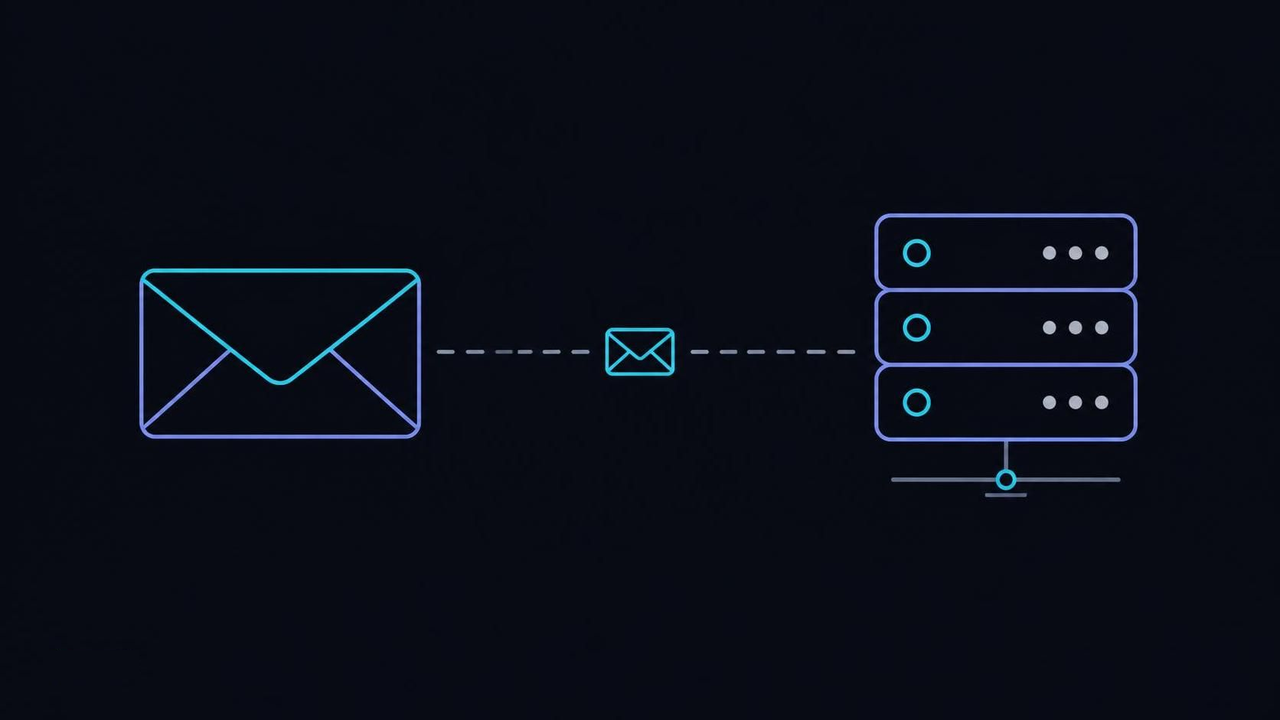
Ranked no-email VPS hosts for 2026: token-only signup, 19-coin crypto invoices, no KYC — Core from $4.80/mo annual-eff, Forge metal $39.20.
Ranked no-email VPS hosts for 2026: token-only signup, 19-coin crypto invoices, no KYC — Core from $4.80/mo annual-eff, Forge metal $39.20.
12 locations · 19 coins · SLA 99.95% · no KYC · public canary
VPS from $4.80* — Core on the annual term (list $6/mo), one invoice for 12 months, no auto-charges. Dedicated with IPMI from $39.20/mo. Crypto invoice, no KYC.
Launch nowHow this no-email ranking was scored
Most roundups hand you a podium first and a method never, and this one reverses that order on purpose, because a ranking you cannot audit is an advertisement with a table attached. Five weights decide the 2026 order, printed below so you can rerun the math in a few minutes with your own priorities. Where a weight disagrees with your threat model, change it — the cells below still name their sources, and your arithmetic is the one that pays.
- No-inbox signup: 30%
- Payment privacy: 25%
- Entry price: 20%
- Location footprint: 15%
- Recovery honesty: 10%
Recovery honesty is the weight most tables skip, so it gets a definition before it gets a score. A host that collects your inbox and then quietly depends on it for resets has not solved account recovery; it has outsourced the problem to your mailbox provider. The ten percent rewards hosts that document, in plain language, what happens on the day the one credential you hold goes missing. You will meet that boundary again further down this page, stated in public rather than buried in a footer.
Every candidate was read against its own published documentation rather than forum folklore. VPSbit numbers come from the live checkout and the fact sheet behind it; rival figures come from the pages those hosts publish about themselves, and where a rival declines to state a price, the table prints Higher or Varies instead of a guess — a fabricated figure helps nobody moving real money across a chain. Coin menus and intro prices drift quietly in this market, so re-check the price cells before you pay anything; the weights hold, the cells move.
One disclosure belongs before the table: VPSbit publishes this page, and the scoring sheet is what keeps the home advantage measurable instead of rhetorical. Token-only signup on every tier, a nineteen-coin invoice with Monero first-class, twelve elite locations and a $4.80 annual-eff entry on Core are checkable claims, each tied to a number you can verify at checkout in about 60 seconds from payment to SSH. Check them yourself — that is the entire spirit of the exercise, and a page that resents being checked has told you something too.
What a no-email VPS actually is
A no-email VPS is an account whose entire life — signup, payment, renewal, even a support ticket — never asks for an inbox. Authentication rests on a high-entropy token instead, and the whole billing record holds three items, listed below. No name field, no phone number and no document upload appear anywhere in that row, and nothing about the account depends on a mailbox you may or may not still control on the day it matters.
- The token itself
- One crypto transaction ID per invoice
- The invoice history
The definition matters because marketing has stretched the phrase thin. Some hosts mean you can skip the newsletter while the account still refuses to activate until you click a confirmation link — an email-gated signup wearing privacy language, and it scores zero under the strictest row of this table. The test is short enough to memorize: if a dead mailbox means a dead server, the host is not no-email, whatever the landing page claims. Run that test on every vendor you consider, including the ones this page ranks highly.
What the provider does keep is stated rather than implied: the transaction ID behind each invoice, the actions taken in the panel, and connection metadata aged out inside 24 hours. No payload or guest traffic logs exist at any tier. That retention list is short enough to read in one breath, and it holds identically across all 12 locations, from Reykjavik to Taipei, under one Saint Kitts and Nevis contract entity — the same paper, whichever flag your iron sits behind.
Email has one remaining job on the modern web — receiving password resets — and removing the inbox removes the reset, which is why the token displays exactly once, at signup. Treat it like a seed phrase: a password manager first, an offline copy second, ideally both. Nineteen coins can settle the invoice and not one of them asks the payer for a name, so the mailbox simply never enters the loop. Keep the definitions separate while you shop: no-KYC means no documents collected, no-email means no mailbox collected — this checkout does both at once, and the no-KYC VPS grid scores the documents half alone.
The 2026 table, scored and ordered
Run the five weights across the privacy market and the order below falls out of the data. VPSbit leads on a signup that never requests an inbox at any tier, a nineteen-coin invoice with Monero first-class, and a recovery trade-off documented in public rather than buried in a footer. The three names behind it all answer the inbox question with something less than a token, at prices their own pages set. Every non-VPSbit figure in the table traces to a host's published page, checked against its most recent self-description.
| # | Provider | No-email? | Entry |
|---|---|---|---|
| 1 | VPSbit | Token-only | $4.80/mo |
| 2 | Njalla | Partial | ~EUR 15+ |
| 3 | FlokiNET | Email/cash culture | Higher |
| 4 | 1984 Hosting | Mid |
Reading the cells: token-only is the only full-credit answer in the no-email column, because it deletes the mailbox from signup, billing and support at once. Njalla earns its partial verdict through a genuine feature — an inbox-optional account — that arrives at a higher price point. FlokiNET and 1984 Hosting both run honest, conventional email accounts inside genuinely privacy-respecting operations; their culture is the draw, not their signup form. None of that is a knock on them; it is a boundary, and you should know exactly where each one sits before you fund anything.
Price cells carry published figures rather than promotional ones. The $4.80 entry is VPSbit Core on the annual term — list $6 per month for 2 vCPU of Ryzen 9 9950X at 4.3–5.7 GHz, 4 GB of DDR5, 80 GB of NVMe and an unmetered 1 Gbps port. Rival cells stay in their native currencies, because converting them manufactures precision nobody checked. For wider reading, this table is the no-email slice of a bigger pie: the anonymous VPS ranking grades identity files across eight providers, and it keeps every definition straight from zero when the categories start blurring together.
Every host in the table, pros and cons
Four ledgers follow, and the cons are the providers' own documented trade-offs — the publisher's included, because a ranking that hides its leader's weaknesses is selling a fantasy. Strengths print first, trade-offs second, same order for every row. Read the VPSbit ledger first and hold the other three against it; each entry pairs what a host does well with what it will cost you in money, patience or exposure.
VPSbit opens the table with token-only signup on every tier behind a 32-character credential, a nineteen-coin checkout with XMR first-class, and Core at $4.80 annual-eff — $6 list — on named Ryzen silicon across twelve elite locations. The cons are structural and printed in public: a lost token is a lost panel with no reset path by design, Iceland and Switzerland racks carry +20% and +35% premiums, and support runs through panel tickets rather than a phone queue. The recovery boundary is documented precisely so you never meet it by surprise at the worst possible moment.
- Token-only signup on every tier, 32-character credential
- Nineteen-coin checkout, XMR first-class
- Core $4.80 annual-eff ($6 list): 2 vCPU, 4 GB DDR5, 80 GB NVMe
- Twelve elite locations under one SKN entity
- Recovery boundary published in plain language
- Lost token means a lost panel — no reset path by design
- Iceland +20% and Switzerland +35% rack premiums
- Support through panel tickets, not a phone queue
Njalla brings a domain-privacy pedigree built over years, an inbox-optional account that is a real feature rather than a slogan, Monero on the invoice, and instant name recognition in this market. The concessions: entry sits near EUR 15 — roughly three times this table's leader — coverage is partial rather than total, the compute catalog runs narrow once a project outgrows a small VM, and the privacy-first path is not the default at signup. Registration strength does not fully carry over to the server line, whatever the brand suggests.
- Domain-privacy pedigree built over years
- Inbox-optional account, a real feature
- Monero accepted
- Instant name recognition
- Entry near EUR 15, roughly 3× the leader
- Coverage partial, not total
- Compute catalog runs narrow
- Privacy-first path is not the signup default
FlokiNET keeps a cash-by-mail habit that is genuine privacy craft, Iceland and Romania among its flags, Monero support, and a long reputation with operators who predate this entire niche. The concessions are temporal and procedural: cash by mail runs slower and costlier than a chain settlement, signup centers on an ordinary email account, entry pricing sits above the leader's, and the manual side of onboarding adds waiting time no crypto invoice carries. The culture is real; the form still asks.
- Cash by mail, genuine privacy craft
- Iceland and Romania flags
- Monero supported
- Long reputation with veteran operators
- Cash by mail slower and costlier than a chain settlement
- Signup centers on an email account
- Entry pricing above the leader's
- Manual onboarding adds waiting time
1984 Hosting carries a fifteen-year Icelandic free-speech record that no newcomer can counterfeit, mid-range pricing, and a straightforward conventional account. The concessions: signup is email-first with no token alternative, XMR and BTC settle payments while the inbox stays on file, the footprint concentrates on one jurisdiction, and nothing in the product removes a mailbox from the billing row once entered — no reset path avoids it. You are buying heritage and jurisdiction, and paying for both with one form field.
- Fifteen-year Icelandic free-speech record
- Mid-range pricing
- Straightforward conventional account
- Signup email-first, no token alternative
- XMR and BTC settle, but the inbox stays on file
- Footprint concentrates on one jurisdiction
- No reset path avoids the mailbox
Notice what the pattern says: one host removed the mailbox and priced the recovery trade openly, three kept the mailbox and priced nothing. When you rerun the weights with your own numbers, that single column decides most of the order, which is why it carries thirty percent of the sheet. Your threat model decides whether that weight is too low — and if it is, you know exactly which cell to change before you rerun the table.
No-email VPS from $4.80/mo annual-eff. Token-only signup, nineteen-coin invoice, root in about 60 seconds from payment, no KYC at any tier.
Token versus inbox: the honest trade
Recovery cuts both ways, so weigh it before you check out rather than after a loss. A token lost is a credential with no reset path — the price of holding no address, and the reason recovery honesty carries its own weight in the table above. The inbox route resets by mail and inherits whatever fate that mailbox meets, from a provider breach to a forgotten secondary address nobody has opened since 2021. Both failure modes are real; only one of them gets advertised on the signup page.
Correlation is quieter but just as real. An inbox lives on as a string in a billing row long after the invoice closes, and mailbox providers answer legal process under their own jurisdictions, whatever your host promises you about its own records. A token points to nothing outside the panel. If your threat model includes someone subpoenaing a mail provider years from now, the token route removes that entire branch of exposure for zero extra cost — the cheapest risk reduction on this page, and it is not even close.
Phishing surface shrinks toward zero without a mailbox. No password-reset mail can be spoofed, no fake hosting invoice can bait you, and no lookalike domain can ride an expected message into your morning reading. Token accounts receive SSH details inside the panel exclusively; the mailbox route emails credentials out, which means your credential delivery rides the same channel every phishing campaign in the world already uses. Channel discipline is a small thing that compounds quietly for years.
The trade is not symmetric for every buyer, and pretending otherwise would fail the honesty test this page keeps citing. If you rotate credentials carelessly or administer dozens of accounts, a host with real mail-based resets may cost you less grief than a lost token would; if you hold one or two servers and guard credentials like house keys, the token wins outright. One hybrid deserves naming: take the token now, attach an inbox weeks later once the server is stable, and keep the option to delete it again — the catalog never changes with the mailbox, as the No-KYC VPS primer confirms, and you keep every exit open.
The token flow, from order to root
The sequence below is the entire funnel, and nothing in it asks who you are — only what you intend to run and where. The screenshots-level version lives in the sign up without email walkthrough, and the four steps below are the spine it walks; treat them as your checklist and tick them in order. From first click to root keys, you are inside two minutes.
- Configure the order: plan, billing term, one of 12 locations
- Take the 32-character token path at registration
- Fund the live-rate invoice from your own wallet
- Log in with the token; root keys issue in about 60 seconds
The string displays a single time, so handle it like cash: password manager first, offline copy second. No reset link exists, because there is no address it could be sent to — that is the deal, stated up front rather than discovered later. The picker shows the named silicon behind each tier before you pay, so you know whether the box runs a Ryzen 9 9950X or an EPYC 9354P; the choice of plan never reintroduces the form field you just escaped, at any price point on the ladder.
The payment watcher credits the chain on its own — no form asks you to paste a transaction ID. Cards are not offered, so no card network ever touches the order; the quote is a live rate with a validity window, and one exact-amount transfer from your own wallet closes it. Wallet hygiene, fee planning and change addresses are covered in the Buy a VPS with crypto primer, and they matter more in this flow than anywhere else on the site, because there is no support desk holding a second copy of your credential.
From there the account behaves like any other: snapshots, IPv4 add-ons, redeploys, a DDoS-filtered port on every tier. An inbox can be attached later from the panel — optional, reversible, notifications only — and the token remains the login secret either way. Two habits make the flow forgiving: verify the token copy before closing the tab, because display-once is enforced without exceptions, and test a panel login from a second device the same day, so you learn the credential works before any workload depends on it.
Coin invoices with no mailbox in the loop
Every invoice sits in the panel with its amount, coin, fresh address and validity window. One asset per invoice, quoted at a live rate, settled with a single exact-amount transfer from your own wallet; the address is new every time, and the watcher credits it without any confirmation mail, because there is no address to mail one to. Cards are not offered anywhere in the checkout, so no card-network statement ever references the order you just placed, however small it was.
Coin choice is a privacy dial you control per invoice, and it deserves two sentences before the list. Monero is the default recommendation when the payment itself should say as little as possible, because amounts and counterparts stay off public ledgers; BTC offers the deepest liquidity along with a public trail anyone can read forever, so spend it when the trail costs you nothing. The dial, in short:
- XMR: amounts and counterparts off public ledgers
- USDT on TRC-20: dollar figure pinned, cent-level fees
- BTC: deepest liquidity, public trail forever
- ETH, SOL, LTC, BNB, TRX, XRP, DOGE, DASH, ADA, GRAM
- USDT across seven networks, TRC-20 through SPL
- Nineteen assets total; none triggers a verification mail
Renewals run through the same panel, which is what makes long-term token-only living practical: fund the balance, let each invoice draw against it, and the server keeps its IP and its disks without a mailbox nagging you from a spam folder. The Pay with Monero guide covers rate handling and change addresses for anyone settling in XMR month after month. Keep your own records, because the panel will not mail you a year-end summary — there is no address to mail one to — so export the invoice history periodically and store it beside your token backup; a tidy local archive answers settlement questions that memory cannot, and the export takes one click.

Red flags when a host advertises no-email signup
The phrase sells, so counterfeit versions circulate, and you deserve better than to fund one. The flags below repeat across the market, and every one of them hides behind a plausible storefront with clean design and confident copy. Run the list before you pay, not after the first renewal fails and the ticket queue tells you what "optional" meant.
- An "optional" address that gates activation via confirmation link
- Card processors hiding behind crypto branding
- KYC thresholds that sleep until renewal or first ticket
- Marketing promising traffic that can never be tied to you
- "Zero records" claims from a host running invoices and DDoS filters
- A no-email tier quietly provisioning half the advertised RAM
Unpack the quiet ones. An intermediary in the payment path collects exactly the data the coin menu implied was skipped; a KYC gate that wakes after ninety days is still a gate, merely one with better manners at signup. A host stating that connection metadata is kept for 24 hours is being honest with you; a host claiming zero records of any kind while running invoices, abuse desks and DDoS filters is not. The retention list at this catalog is short and public — transaction IDs, panel actions, connection metadata aged inside 24 hours, and no payload or guest traffic logs at any of the 12 facilities — and that boundary holds the same way for every signup path, token or inbox alike.
Price honesty has nothing to do with privacy and everything to do with whether the vendor respects you: a no-email tier that quietly provisions half the advertised RAM fails the SKU-honesty check and will fail your projects too. Boot the box, run a memory and disk audit, and compare the numbers against the invoice before any refund window closes; the audit itself doubles as your acceptance checklist. Then look for a canary: a warrant canary updated on schedule beside a published 99.95% SLA tells you the operator has thought about compulsion. Silence on both fronts is just silence, and it deserves less of your money than a published statement does.
One token up the ladder: bigger disks, then metal
The same token works above VPS class, which matters the day a project outgrows 80 GB of NVMe. Prime moves you to 160 GB, 8 GB of DDR5 and a 2.5 Gbps unmetered port at $12 list, $9.60 annual-eff; Titan follows with 320 GB, 32 GB of DDR5 ECC and 10 Gbps at $24 list, $19.20 annual-eff. Identical token login, identical nineteen-coin menu at every rung, and no rung asks the question you escaped at signup. The ladder, in short:
- Core: 2 vCPU, 4 GB, 80 GB NVMe, $4.80 annual-eff
- Prime: 4 vCPU, 8 GB, 160 GB NVMe, $9.60 annual-eff
- Titan: 8 vCPU, 32 GB ECC, 320 GB NVMe, $19.20 annual-eff
- Forge metal: 16c/32t, 2×1 TB NVMe, IPMI, $39.20 annual-eff
Compute-heavy workloads graduate to dedicated metal inside the same account. Forge starts at $49 list, $39.20 annual-eff: sixteen cores and thirty-two threads of Ryzen 9 9950X, 32 GB of DDR5, two 1 TB NVMe drives behind RAID 0 or 1, an unmetered 1 Gbps port, and IPMI with DDoS filtering included. Summit and Monolith climb from there into dual-EPYC territory with 10 and 25 Gbps uplinks, ECC memory standard, and four-drive RAID flexibility at the top — same door, same coins, same single credential.
Metal changes the operational picture in two ways worth planning for: racking runs two to four hours from payment, so stage your deployment script before you order rather than after, and IPMI hands you console-level access that turns a broken firewall rule into a browser tab instead of a rescue-mode lottery. Snapshots and IPv4 add-ons carry over from the VPS tiers unchanged, and no rung reintroduces the mailbox — one credential set covers VPS and dedicated alike. If you are weighing slices against metal, the VPS vs dedicated comparison lays out the crossover points in table form, and the Offshore VPS guide covers the entity questions that arrive with real assets.
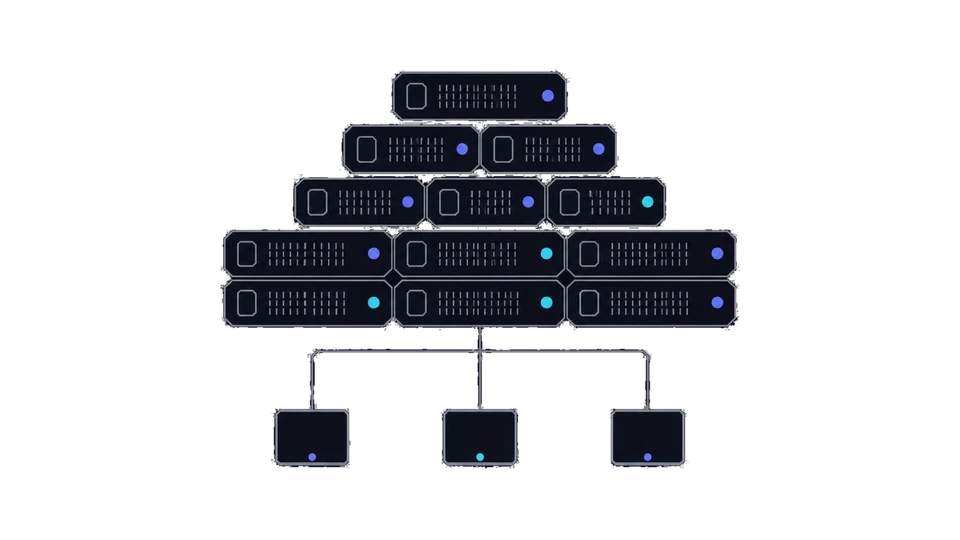
One token, the whole ladder. Core $4.80, Prime $9.60, Titan $19.20 annual-eff, Forge metal from $39.20 — the mailbox never enters the flow.
Can an inbox be attached afterwards?
Yes — the panel accepts an inbox at any later point and uses it for notifications only. The token stays the login secret, and removing the address later returns the account to its original shape.
Does token-only mean the same as no-KYC?
No. No-KYC means no identity documents collected; token-only means no mailbox collected. This catalog does both at once — a 32-character token or an inbox plus a 12-character password, and no passport, phone or card at either fork.
What if the token goes missing?
With no email on file there is nothing to send a reset to, so a lost token is a lost panel. Store the string like a seed phrase — password manager plus an offline copy — or attach the optional inbox as a second layer before you need it.
Do all nineteen coins work on a no-email account?
Every one of them, from BTC and XMR to USDT across seven networks, and not a single asset triggers a verification mail. Choosing a coin changes the payment rail only — never the account or its features.
Does the $4.80 rate hold on the token path?
Yes — Core lists at $6 and runs $4.80 on the annual term, identical for token and email signups. There is no surcharge for skipping the inbox, and the same holds up the ladder: Prime $9.60, Titan $19.20, Forge from $39.20.
Can I run a mail server from a no-email account?
Yes — every plan ships port 25 open with an editable PTR, so the box sends and receives for your own domains. Running mail takes a domain and reputation work, not an inbox on the hosting account.
Primary sources
Ready to launch?
Build the box — VPS or bare metal — create the password, pay the invoice that follows.