 VPSbit
What Is an Anonymous VPS — Setup and Honest Limits

Anonymous VPS at VPSbit: token or inbox signup, 19 coins incl. Monero, no payload logs, 12 elite locations. Core from $4.80/mo annual. Honest limits included.
An anonymous VPS at VPSbit is a server rented with a token or an inbox and one crypto invoice — no name, phone or document field exists at signup, on any tier. Core starts at $4.80/mo on the annual term across 12 locations, with Monero among 19 accepted coins.
12 locations · 19 coins · SLA 99.95% · no KYC · public canary
VPS from $4.80* — Core on the annual term (list $6/mo), one invoice for 12 months, no auto-charges. Dedicated with IPMI from $39.20/mo. Crypto invoice, no KYC.
Launch nowWhat anonymous means on this checkout
An anonymous VPS here is a token or an inbox, nineteen coins, and zero identity fields: the billing file holds a credential and a txid, nothing else. You choose a plan and a flag, you pay from a wallet, and root reaches you about a minute after the chain confirms. At no point does a form ask for a name, a phone number or a document — the promise is structural, not a mood.
The claim is checkable rather than atmospheric. Signup takes a 12+ character password beside an inbox or a bare token, and the panel then shows the mailbox handle you picked, never a legal name. No payload or guest-traffic logs are written, connection metadata ages out within 24 hours, and billing records consist of amount, coin, address and txid. Twelve elite locations sit behind that one form — Reykjavik, Zurich, Tokyo and Singapore among them — each with a published tier, uplink and governing law. The whole file itemizes in six lines:
- Signup credential: token, or inbox plus 12-character password
- Payment record: amount, coin, address, txid
- Panel identity: the mailbox handle you chose
- Payload logs: none written, any tier
- Guest-traffic capture: none
- Connection metadata: dropped after 24 hours
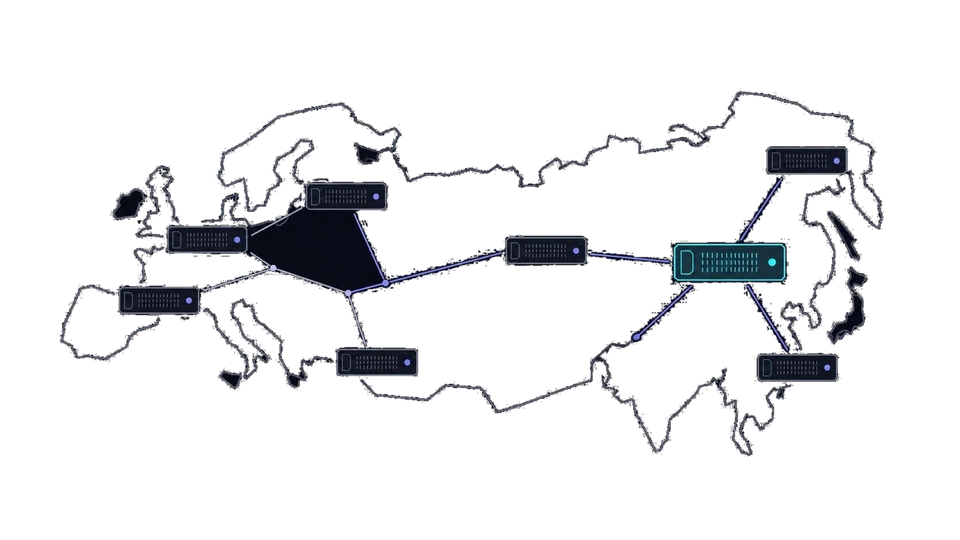
The honest line comes first because it matters more than any badge: crypto checkout removes what this host would hold, not the traces you create yourself. Wallet hygiene and DNS choices stay yours, and no plan pretends otherwise. What you buy is a thinner file on named silicon and a closed catalog of twelve facilities, each one auditable — never a long tail of flags nobody has checked, whatever the banner above it says.
The ladder and its prices
Anonymous does not mean improvised. The same closed-capacity ladder carries this checkout as every other page on the site: Core opens at 2 vCPU and 4 GB of DDR5 behind an AMD Ryzen 9 9950X, Prime moves to 4 vCPU and 8 GB on a 2.5 Gbps port, and Titan brings an 8-core EPYC 9354P with 32 GB of ECC memory and a 10 Gbps pipe. Every rung is full KVM on local NVMe, with DDoS filtering inside the base price.
| Plan | vCPU | RAM | NVMe | Port | List $/mo | Annual-eff $/mo | Order |
|---|---|---|---|---|---|---|---|
| Core | 2 vCPU, Ryzen 9 9950X | 4 GB DDR5 | 80 GB | 1 Gbps | $6.00 | $4.80 | Deploy Core |
| Prime | 4 vCPU, Ryzen 9 9950X | 8 GB DDR5 | 160 GB | 2.5 Gbps | $12.00 | $9.60 | Deploy Prime |
| Titan | 8 vCPU, EPYC 9354P | 32 GB DDR5 ECC | 320 GB | 10 Gbps | $24.00 | $19.20 | Deploy Titan |
The entry promise survives contact with the table. Core at $6.00 list bills $4.80/mo on the annual term — one invoice covering twelve months, nothing auto-renewing — while the quarterly term takes 10% off instead. Iceland, Norway, Zurich and Luxembourg carry their published premiums of x1.2, x1.2, x1.35 and x1.15, and the other eight flags stay at base list. The terms reduce to five lines:
- Monthly: list price
- Quarterly: 10% off list
- Annual: 20% off, one invoice for 12 months
- Premium flags: x1.15 to x1.35, four of twelve
- Base flags: eight, including Tokyo and Frankfurt
Every rung accepts the same nineteen-coin invoice at the live rate you see before you transfer, and once the watcher credits the exact amount, the image builds about sixty seconds later. If you already know which box fits, the picker is one click away — plan, flag, coin, one transfer, root. Deploy Core, pay in crypto
Four steps from token to root shell
Four decisions and one transfer separate you from a running box, and the sequence contains no identity form, no verification queue and no manual review — the watcher matches arithmetic, not paperwork. You can run it in under five minutes with a warm wallet, and the panel stays optional afterward: reboots, reverse DNS, rebuilds and a second IPv4 wait there when you want them. The moves, in order:
- Pick plan, term and one of the 12 locations
- Register inbox plus 12-character password, or a bare token
- Choose one of 19 coins at the live invoice rate
- Send the exact amount once — SSH about 60 seconds later
Two details deserve a minute before you send. A self-hosted mail domain works as well as a throwaway inbox, provided it can receive the message carrying your root credentials; token-only signup skips the inbox entirely and keeps the credential in your password manager. And if the chain you chose later looks wrong for the job, the next invoice simply picks a different coin — XMR this month, USDT the next — with nothing configured in advance and no asset locked to the account.
Metal follows the same shape on a slower clock: a dedicated box racks 2–4 hours after the invoice confirms, and the IPMI console hands you the board out-of-band. Root on a VPS lands about 60 seconds after credit, which is the figure quoted across these pages. Either way the file you inherit holds a credential and a txid — the receipt stays exactly as thin as the signup was. The opt-in extras, for the record:
- Reboots and rebuilds: on demand from the panel
- Reverse DNS: editable PTR record
- Second IPv4: orderable per box
- PGP key: on file if you add one
What the billing file never contains
The negative space is the product, so the list below is complete rather than illustrative: no field, endpoint or retention job on this side of the checkout holds any of the following, at any tier, in any of the twelve locations. Read it against the signup form you actually fill — two fields — and against the twenty-column forms elsewhere in the market. Every absent column is one that cannot leak, cannot be sold and cannot testify later. The complete list:
- ID documents: no scan, no upload endpoint
- Selfies and liveness video
- Phone numbers for SMS or voice verification
- Street address, utility bill, proof of residence
- Legal name: the panel shows the handle
- Birth date, employer, source of funds, PEP screening
Two objects do exist, and honesty requires naming them: a reachable inbox for root credentials and invoices — throwaway and self-hosted domains both fine — and the on-chain payment itself, which is a public artifact by construction. A txid stays a public object, and an inbox you typed at signup is a string in a billing row. A personal mailbox at a big provider undoes a Monero invoice in a single hop, and no checkout field can repair that; those layers never cancel out, and this page will not pretend they do.
Beyond that pair, everything is opt-in and starts no review: a PGP key on file, an editable PTR record, a second IPv4 you order when a project needs its own address. The design principle is short enough to memorize — the host keeps what billing requires and nothing else, because every additional column is a liability even when it sits empty. You inherit a file that cannot betray what it never recorded.
Abuse mail, takedowns and genuine legal process
Abuse handling deserves exact words, because vague promises are how buyers get surprised later. Takedown and abuse mail gets action only from law enforcement of the facility jurisdiction; private senders and forwarded templates receive nothing at all. Genuine criminal process is a different category and always has been: a court order from the flag the rack stands in is obeyed, because the floor answers to the law under it — from Reykjavik to Taipei, across all twelve facilities on the map.
Copyright notices follow the same line. A DMCA notice is acknowledged, timestamped and archived; acknowledgment is a clerical act and carries no adjudication, so it never becomes a verdict against your server. What actually moves a box is the AUP or the law at the facility — both written down before you pay rather than invented after. Across the twelve racks, no precedent of a bare private takedown is on file. The queues sort like this:
- Private takedown mail: no action
- Forwarded template notices: no action
- Facility-jurisdiction court orders: obeyed
- DMCA: acknowledged, timestamped, archived
- AUP classes: CSAM, phishing, spam, attacks
The narrowness is deliberate. A host that promises to ignore everyone including courts is selling theater, while one that states its boundaries lets you plan around them — you know before you pay which notices are bookkeeping and which are process. That predictability is worth more than any promise of silence, and it is the part of the deal you can actually verify before you spend a cent.
What an anonymous VPS will not do for you
Start with what anonymity is not: it is not a waiver for content. The AUP bans CSAM, phishing, spam and network attacks without carve-outs, on every tier and every one of the twelve sites, and an account crossing those classes loses the box regardless of how quietly it paid. The law that applies is the law at the facility location — Icelandic law in Reykjavik, Swiss law in Zurich, Japanese law in Tokyo — and no contract clause relocates a rack.
Continue with what payment privacy is not. Paying in crypto is not anonymity: the account is a token, and the IPv4 it hands you is registered to that token where anyone can look it up. A transparent coin leaves a public trail from your wallet to the payment address, and even Monero leaves the fact that you paid, when, and how much. The box keeps a public IP, open ports and whatever you choose to serve on them — encrypt at rest inside the guest when your threat model calls for it.
Two more boundaries belong in plain text. The support queue reads whatever you send it, so write tickets like invoices — amounts, txids, plan names — and keep operational diaries out of them; the inbox you register holds its address in the file even when its contents stay yours. And the map is twelve locations, not everywhere: if your project needs a jurisdiction outside the catalog, this checkout cannot sell it to you, and saying so up front costs less than discovering it after launch. The walls, itemized:
- Content rules: AUP classes, no carve-outs
- Governing law: the facility location
- Public IPv4: registered to the account token
- Tickets: read whatever you send them
- Catalog: twelve flags, curated on purpose
Which coin carries which job
The payment graph should say the least, so treat the coin menu as a toolbox rather than a slogan. Monero hides sender, receiver and amount at the protocol level, which makes it the default when payment visibility worries you; the walkthrough on the Monero payment page of this site covers that rail end to end. USDT on TRC-20 pins a dollar quote at cent-level fees when the figure must hold still through a volatile month, and BTC carries the deepest liquidity of the nineteen assets on file — budget around mempool swings at peak hours.

- XMR: sender, receiver, amount hidden on-chain
- USDT-TRC20: dollar-pinned quote, cent-level fees
- BTC: deepest liquidity, public ledger
- USDT networks: TRC-20, ERC-20, BEP-20, Polygon, Arbitrum, Optimism, SPL
- Also on file: ETH, SOL, LTC, TRX, XRP, BNB, DOGE, DASH, ADA, GRAM
Every invoice picks its coin fresh, with nothing configured in advance and no asset locked to the account. The ladder prices stay in dollars either way, so the coin changes the trail, not the bill: a volatile week moves the amount you send, never the figure you budgeted. Whichever you pick, the amount is exact, the address is single-use, and the credit lands on the same watcher that images your box about a minute later — the mechanics never vary by asset.
Nineteen coins, twelve racks, one thin file
Everything above compresses into one line: nineteen coins at the invoice, twelve elite locations behind a two-field form, and a billing file that holds a credential and a txid — nothing else. Core sits at $4.80/mo on the annual term, $6 list by the month, on Ryzen 9 silicon with DDoS filtering folded into the base price. If your threat model wants the payment graph quiet, XMR sits first-class on the menu; if it wants a dollar pinned, USDT does that on seven networks.
Read the neighbors before you commit. The no-KYC page covers the checkout from the identity side, the crypto purchase page walks the invoice mechanics, and the crypto hosting page frames the rail itself as the product. Anonymity is a stack, not a checkout — but a checkout that refuses to hold identity artifacts is the layer you should never compromise on, and it is the layer this page guarantees in writing.
- Locations: 12, each with a published tier and law
- Coins: 19, XMR first-class
- Entry: Core $4.80/mo annual, $6 list
- Metal: Forge from $39.20/mo annual-eff
- File: credential plus txid, nothing else
Start on Core, scale when the workload says so, and the receipt stays as thin as the signup was — that consistency is the actual guarantee. Pick a flag, send the exact sum once, and root reaches the inbox you chose about a minute after the chain confirms. Open the deploy picker
Is an anonymous VPS legal?
In most jurisdictions, renting a server without showing identity documents is legal; what runs on the box answers to the AUP and to the law at the facility location. The edge cases are mapped in <a href="../guides/is-offshore-hosting-legal/">Is offshore hosting legal</a>, a guide written for exactly this question.
Will a phone number ever be required?
Never at signup and never later. The account is a credential plus a payment, and nothing else exists in the file, so there is no second column to fill under pressure — no SMS gateway and no voice-verification desk sits behind the form at any tier or location.
Which coin is most private for payment?
Monero — sender, receiver and amount stay hidden at the protocol level, not by host policy. The alternatives each trade privacy for something else: <ul><li>BTC: deepest liquidity, public ledger</li><li>USDT: pinned dollar quote, transparent chain</li><li>XMR: default when the trail matters</li></ul>
What can the host actually see about me?
A txid on a public chain, an inbox string in a billing row, and the IP traffic your server handles on its public ports. Everything beyond those three sits on your side of the line: <ul><li>Wallet hygiene: yours</li><li>DNS choices: yours</li><li>Login discipline: yours</li></ul>
Do logs exist at all?
No payload or guest-traffic capture exists anywhere. Connection metadata is held up to 24 hours for security work and then dropped, while billing records and panel actions stay on file as any ledger would: <ul><li>Payload logs: none</li><li>Guest traffic: not captured</li><li>Connection metadata: 24-hour ceiling</li></ul>
What if I overpaid or want out?
Unused prepaid time moves to the account balance by default, and an on-chain return happens only through an approved support ticket, processed within 48 hours — crypto transfers cannot be reversed the way card payments can. <ul><li>Default: unused time to balance</li><li>On-chain return: approved ticket, 48 hours</li><li>Chargebacks: nonexistent on this rail</li></ul>
Primary sources
Ready to launch?
Build the box — VPS or bare metal — create the password, pay the invoice that follows.