 VPSbit
Frankfurt XMR VPS — No KYC, DE-CIX, From $4.80
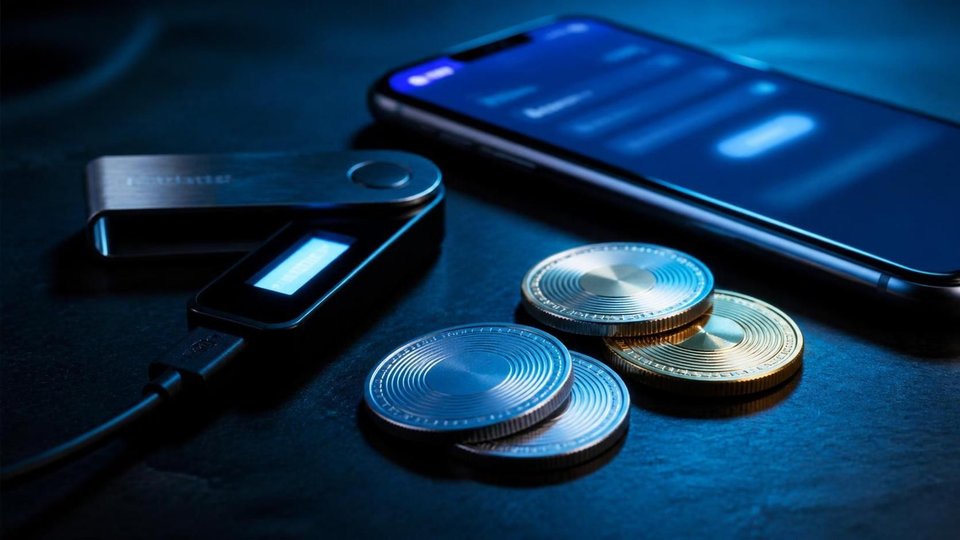
Frankfurt VPS paid in Monero: XMR credits at 10 confirmations (~20 min), DE-CIX fabric ~8 ms off the AMS anchor, 0 KYC, ~60 s to root. From $4.80/mo.
Frankfurt VPS paid in Monero: XMR credits at 10 confirmations (~20 min), DE-CIX fabric ~8 ms off the AMS anchor, 0 KYC, ~60 s to root. From $4.80/mo.
12 locations · 19 coins · SLA 99.95% · no KYC · public canary
VPS from $4.80* — Core on the annual term (list $6/mo), one invoice for 12 months, no auto-charges. Dedicated with IPMI from $39.20/mo. Crypto invoice, no KYC.
Launch nowPay XMR, land in Frankfurt
Monero pays and Frankfurt answers. The monero: URI invoice credits at 10 confirmations — the catalog window is 2-20 minutes — imaging takes about a minute, and root SSH follows immediately on a rack in the DE-CIX Frankfurt density belt, about 8 ms from the AMS anchor, fed by a 100 Gbps uplink that stands as the fattest pipe in the catalog's European tier. For a DACH-facing workload, the physics argument mostly ends there.
Core is $6/mo list and $4.80 on the 12-month term: 20 percent off, one invoice covering all twelve months, nothing auto-renews and no card exists to auto-charge. Zero KYC, crypto-only, no traffic logs — connection metadata expires within 24 hours, and payloads are never written anywhere on the platform at any tier.
Rail detail sits on the Monero VPS page, rack facts on the Frankfurt location page, and the click-by-click walkthrough in the Monero payment guide — three pages, three depths, same numbers underneath all of them.
- XMR credit: 10 confirmations, 2-20 minutes
- Imaging: about one minute
- Uplink: 100 Gbps, DE-CIX Frankfurt
- Latency: ~8 ms to the AMS anchor
- Core: $6 list, $4.80 annual term
The XMR mechanics on a German invoice
Scan the QR with any mainstream Monero wallet and send the exact amount once; the watcher credits at 10 blocks and the XMR figure never drifts while the invoice is open, because the rate locks at the moment of pricing rather than at confirmation. RingCT keeps sender, receiver and amount off the public record, which is why XMR is the first-class rail here — 19 coins bill the same rack, but only one of them keeps the payment opaque by design rather than by promise.
The privacy math is a smaller file, not a ghost, and saying so is the house style: billing records and panel actions persist, payload does not, and the limits page draws the line in full. Signup runs on a token or an email — no confirmation mail on either path — and the account opens with a 32-character token or an email plus a 12-character password. No passport, selfie or phone field exists anywhere in the flow, at any tier or any flag.

A Monero send cannot be reversed, so refunds are goodwill by design: approved VPS refunds return via support ticket within 48 hours of approval, and an overpayment rides the same path to the same wallet.
- Amount: computed once at invoice open
- Confirmations: 10 blocks for credit
- Privacy: RingCT hides sender, receiver, amount
- Refunds: ticket-driven, on-chain, within 48 hours
Frankfurt for DACH and EU paths
Frankfurt earns its keep on DACH reach, and the reach is measurable rather than rhetorical: about 8 ms off the AMS anchor and DE-CIX in-metro density put German, Austrian and Swiss-border users on short paths at base-list pricing — Frankfurt stays base while Zurich carries a 35 percent premium for the Swiss flag, a difference that compounds over every month of a term. The facility is Tier III+ with 2N redundancy and dual utility feeds in the Rhein-Main belt; German GDPR process reaches the rack, and US-form copyright mail is filed without action because it carries no standing there.
The traffic argument deserves one more sentence of honesty: proximity helps latency, never throughput caps, because every port in the catalog is unmetered at every flag. What Frankfurt adds over a farther flag is round-trip time and hop count, which matter for interactive protocols, database replication and market data — and matter not at all for backups that run overnight. Match the rack to the workload's clock, not to a marketing map.
The workloads that fit naturally read like a DACH portfolio: a WireGuard endpoint whose users sit along the corridor, a mail relay — port 25 open, PTR editable — feeding European recipients without reputation baggage, a self-administered Nextcloud, and CI runners close to the region's build targets. Trading and market-data nodes belong here too: the 100 Gbps uplink and the DE-CIX fabric keep exchange paths short without any location premium attached to the invoice.
- DACH latency: single-digit milliseconds
- Facility: Tier III+, 2N, dual utility feeds
- Law at the rack: EU GDPR / Germany
- Price: base list, no Frankfurt premium
- Contrast: Zurich +35% for the Swiss flag
Sizing a DE-CIX origin
Core — 2 vCPU, 4 GB DDR5, 80 GB NVMe — is the probe tier; Titan is the production floor: 8 vCPU EPYC 9354P, 32 GB DDR5 ECC, 320 GB NVMe and a 10 Gbps unmetered port at $24 list, $19.20 annual-eff. An XMR-paid node or a mail stack fits either rung: port 25 open, PTR editable, Tor relays allowed within the AUP with exits handled by ticket so the abuse desk knows what the traffic is.
| Rail | Credit depth | Catalog ETA |
|---|---|---|
| Monero | 10 blocks | 2-20 min |
| Bitcoin (on-chain) | printed on the invoice | 10-60 min |
| USDT (TRC-20) | 19 blocks | 1-3 min |
| Litecoin | 3 blocks | 2-15 min |
Sole-tenant needs climb to Forge dedicated — $49 list, $39.20 annual-eff, IPMI handed over 2-4 hours after credit; mining is dedicated-only by policy. The full rail lineup sits on the payment page, and every rung prices identically in Frankfurt to any other base flag, which is the whole point of a published catalog.
A sizing example makes the rungs concrete. A single-role mail relay with moderate volume fits Core comfortably and leaves NVMe headroom for the queue; a Nextcloud for a small team wants Prime's 8 GB and 2.5 Gbps before it wants more cores; a market-data consumer or a busy database belongs on Titan, where ECC memory and the 10 Gbps port absorb bursts that would queue on a smaller rung. Buy the metric you actually lack, not the one the ladder makes cheap.
- Core Frankfurt: 2 vCPU, 4 GB, 80 GB, 1 Gbps
- Titan Frankfurt: 8 vCPU EPYC, 32 GB ECC, 10 Gbps
- Forge: $49 list / $39.20 annual-eff, IPMI included
- Port 25: open, PTR editable
Frankfurt invoices in Monero, by the numbers
Frankfurt invoices keep the base-list contract without a local asterisk: Core $6/mo list, $4.80 on the 12-month term — 20 percent off, one invoice for all twelve months, no recurring charge — and Titan $24 list, $19.20 annual-eff. German GDPR applies at the facility and stops there; nothing migrates into the checkout, which never asks for a buyer's name, purpose, or company regardless of which flag racks the machine.
The XMR amount is computed once at invoice open, and the invoice prints the confirmation depth your payment must reach, so the waiting is bounded and visible rather than open-ended. The account opens on a 32-character token or an email plus a 12-character password, and German facility obligations govern the data center's own conduct, never the buyer's file — the limits page itemizes what is retained: billing rows and panel actions yes, payload never, connection metadata at most 24 hours.
Put the three numbers side by side and the Frankfurt story is complete: 8 ms to the AMS anchor, 100 Gbps of uplink, and a per-month figure that matches every base flag in the catalog.
One budgeting note closes the section: the only variables on a Frankfurt invoice are the plan, the term and the coin you choose on the deploy screen. There is no setup fee, no premium for the German flag, no metering on the port, and no add-on required to unlock port 25 or PTR editing — so the number you compute before paying is the number that clears on-chain, and the difference between list and annual-eff is exactly the published 20 percent, line for line.
- Core Frankfurt: $6 list, $4.80 annual
- Titan Frankfurt: $24 list, $19.20 annual
- Invoice: rate locked at open, depth printed
- Retained: billing rows, panel actions only
Guarantees, stated plainly
The guarantee sheet is short on purpose, because a promise a host cannot control is a liability dressed as a feature. Network and power carry a 99.95 percent monthly target, and downtime measured past it converts to pro-rated credits — the SLA page shows the meter and the exclusions in the open. L3/L4 DDoS filtering is included, not an upsell toggled at checkout; storage is local NVMe on every VPS; Titan's 32 GB is DDR5 ECC; and the warrant canary is public, dated, and checked on a schedule.
What will not be claimed, in the same plain register: nobody here administers your systems, approves your content, or overrides a court order — and no checkout coin changes that. German law reaches this rack exactly as far as German law reaches; the contract counterparty is Meridian Node Ltd. in Saint Kitts and Nevis; and the honest file boundary lives on the limits page where it can be read before you pay rather than after something breaks.
- SLA: 99.95% monthly, pro-rated credits
- DDoS: L3/L4 filtering included
- Storage: local NVMe, ECC on Titan
- Canary: public, dated, checked regularly
- Not promised: managed admin, content approval
What a Frankfurt XMR VPS will not promise
Against the field, honestly and without strawmen: VPSbit runs 12 elite locations on current-gen silicon instead of the longest flag wall in the market. NovaVPS reaches twenty-one facilities and is a serious operator — that rival fact stands as checked, and this page will not diminish it. The deciding trade for a Frankfurt box is DACH reach at DE-CIX density versus a broader-but-thinner map; if German law, 8-millisecond DACH latency and DDR5 on every SKU matter more than raw flag count, this catalog is built for exactly that choice.
What no page here will promise: anonymity against a court order, traffic confidentiality you did not configure yourself, or hosting for conduct the AUP bans. Monero hides the payment, not the payer's conduct — and the retention page spells out the smaller file you do get, class by class, before the invoice rather than after an incident.
Crypto-only checkout, no KYC at any tier, zero affiliate links on this site — the commercial incentives are on the page, not behind it.
- Rival fact: NovaVPS, 21 facilities, serious operator
- This trade: DE-CIX density over flag count
- Not promised: court-order immunity, free traffic secrecy
- Delivered: XMR rail, base-list DACH rack, 60 s to root
Core in Frankfurt, paid in XMR, from $4.80/mo annual-eff. Open checkout
Why VPSbit is the safe pick for Frankfurt workloads
Honest guarantees, sized to what a host can actually control. We operate the rack and the invoice, so the promises stay inside that line: 99.95% monthly SLA with bill credits, DDoS filtering included, local NVMe with ECC on the production tier, and a dated warrant canary published where anyone can read it. No identity at signup - a 32-character token or an email is the entire account; the invoice names no purpose and keeps no buyer profile. Monero settles first-class, Bitcoin and USDT ride seven networks, and the rate is locked the moment the invoice opens. Unused time returns to your balance; approved on-chain refunds land back in your wallet inside 48 hours.
Deliberately not promised: managed administration, content approval, or anonymity against a court order. Root is yours, hardening guides are published, the contract entity is Saint Kitts and Nevis - and the Frankfurt rack answers to German law. Written down before you pay.
Against the field: VPSbit runs twelve elite locations on current-gen silicon instead of the longest flag wall. NovaVPS reaches twenty-one facilities and is a serious operator. The deciding trade for a Frankfurt box is DACH reach at DE-CIX density versus a broader-but-thinner map - if German law, ~8 ms DACH latency and DDR5 on every SKU matter more than forty average flags, this catalog is the one built for that choice. Crypto-only checkout, no KYC at any tier, zero affiliate links on this site.
XMR confirmations for a Frankfurt order?
Ten — about 20 minutes wall-clock — then the box images in roughly a minute and root is live on the DE-CIX rack.<ul><li>Credit: 10 blocks</li><li>Wall-clock: about 20 minutes</li></ul>
Can I sign up without an email?
Yes. A 32-character token is the whole account; the email path exists for recovery and still sends no confirmation mail.<ul><li>Token path: 32 characters, no mailbox</li><li>Email path: no confirmation mail sent</li></ul>
What about refunds in Monero?
On-chain transfers are irreversible; approved VPS refunds return as ticket-driven crypto payments within 48 hours of approval.<ul><li>Trigger: approved support ticket</li><li>Window: 48 hours, on-chain</li></ul>
Does a German rack mean German KYC?
No. Facility law governs the data center's own obligations; signup stays a credential plus an invoice, with no identity documents anywhere in the flow.<ul><li>Facility law: GDPR obligations on the datacenter</li><li>Buyer file: credential plus invoice only</li></ul>
Latency from Frankfurt to my market?
About 8 ms to the AMS anchor and single-digit hops across DACH; DE-CIX keeps European paths short without any location premium.<ul><li>AMS anchor: ~8 ms</li><li>DACH hops: single-digit</li></ul>
Why pick Frankfurt over Amsterdam?
A 100 Gbps uplink and DE-CIX in-metro density for DACH audiences; Amsterdam answers sub-millisecond if the AMS anchor itself matters more to your users.
Is mining allowed on a Frankfurt VPS?
No — mining is dedicated-only by policy across the catalog; on a VPS tier it is declined regardless of coin or term.
Primary sources
Ready to launch?
Build the box — VPS or bare metal — create the password, pay the invoice that follows.