 VPSbit
Singapore VPS No KYC — Pay Crypto, Live in ~60 s
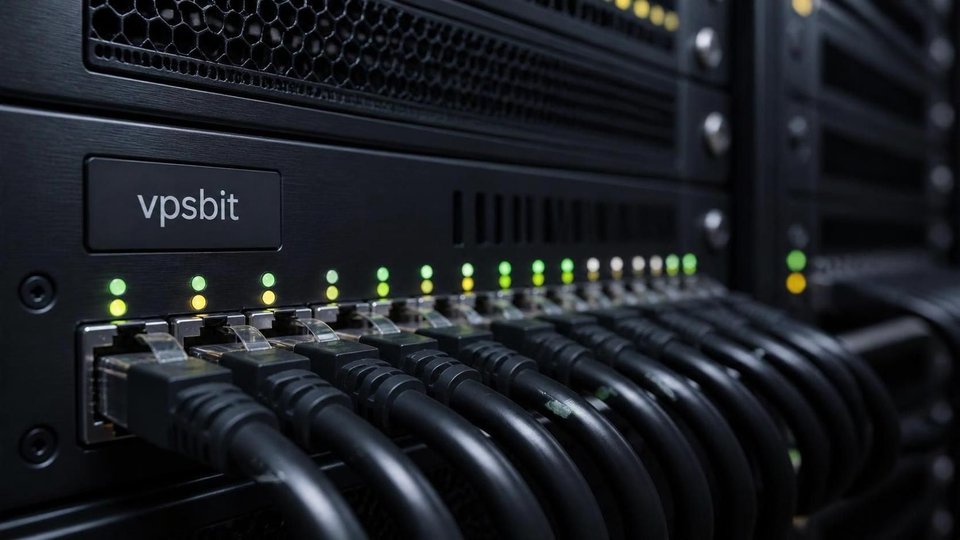
Singapore VPS with zero sign-up documents: an SGIX-peered, PDPA-governed site, four USDT rails or XMR, entry at $4.80/mo, root access in roughly a minute.
Singapore VPS with zero sign-up documents: an SGIX-peered, PDPA-governed site, four USDT rails or XMR, entry at $4.80/mo, root access in roughly a minute.
12 locations · 19 coins · SLA 99.95% · no KYC · public canary
VPS from $4.80* — Core on the annual term (list $6/mo), one invoice for 12 months, no auto-charges. Dedicated with IPMI from $39.20/mo. Crypto invoice, no KYC.
Launch nowA Singapore IP in a minute or so, no ID requested
No KYC · crypto-only billing · 12 sites · ~1 Tbps-class DDoS included
An account here is a token or an email address — no document, no selfie, no phone number exists anywhere in the flow. Billing runs in USDT on TRC-20, ERC-20, BEP-20 and Solana, next to XMR, BTC and 14 further coins. Meridian Node Ltd., Saint Kitts and Nevis: one contract, governed from there. Invoice paid to root SSH in about 60 seconds.
Inside Southeast Asia, the SG rack acts as the hub. Behind it: a carrier-hotel corridor with direct SGIX reach, Tier III+ / 2N redundancy, a 100 Gbps uplink, all within a PDPA jurisdiction. Your account reduces to a token, your payment to a chain, your access to plain root.
Singapore next to the racks that deserve a mention
Full facility breakdown: the Singapore location page. Deeper intent pieces: no-KYC Singapore VPS and USDT on a Singapore VPS.
The case for Singapore
- Local SGIX peering: SEA traffic meets its peers on local exchanges rather than making the long hop back to Amsterdam — the facility stands in the Jurong/Tuas carrier-hotel corridor.
- Intra-Asia numbers: count on ~40 ms to the Hong Kong node, while Taipei and Tokyo hold down the northern arc.
- PDPA framework: Singapore data law rules the site, and the operator agreement is drawn up as SKN under that same legal system.
- Typical uses: low round-trips for SEA users, trading bots (SG trading-bot VPS), a clean VPN exit on an SG address — plus dedicated servers (IPMI, ECC, RAID) once bare metal becomes the sensible choice.
Put as a decision rule: if your users draw a circle around the South China Sea, the SG rack sits near its centre — the ~40 ms hop covers the Hong Kong node, while Taipei and Tokyo hang off the same fabric to the north. Trading infrastructure cares about exactly that spread: an exchange-matching box in SG plus a second exit elsewhere keeps order paths short without a second compliance routine, since the token-and-chain checkout is identical at both ends.
Core to Titan — Singapore sits on the shared list
| Plan | Price | CPU | RAM | Disk | Network | |
|---|---|---|---|---|---|---|
| Core | $6/mo | 2 vCPU | 4 GB DDR5 | 80 GB NVMe | Unmetered / 1 Gbps | Deploy |
| Prime | $12/mo | 4 vCPU | 8 GB DDR5 | 160 GB NVMe | Unmetered / 2.5 Gbps | Deploy |
| Titan | $24/mo | 8 vCPU | 32 GB DDR5 ECC | 320 GB NVMe | Unmetered / 10 Gbps | Deploy |
Every one of the three plans is served from Singapore at the list price common to the other eleven sites. Top up $50+ and entry sits at $4.80* (Core $4.80/mo).
Monero or USDT — no second payment route exists
| Asset | Typical confirmation | Credited after |
|---|---|---|
| USDT (TRC-20) | 1–3 min | 19 blocks |
| USDT (ERC-20) | 1–5 min | 12 blocks |
| USDT (BEP-20) | 1–3 min | 15 blocks |
| USDT (Solana) | ~1 min | 3 blocks |
| Monero | 2–20 min | 10 blocks |
| Bitcoin | 10–60 min | 3 blocks |
19 coins accepted — BTC, XMR, ETH, BNB, SOL, LTC, TRX, XRP, DOGE, DASH, ADA, GRAM (TON), and USDT on TRC-20/ERC-20/BEP-20/SPL/Polygon/Arbitrum/Optimism. There is no card, no PayPal and no bank rail. Monero is the privacy pick; USDT pins the invoice to one flat dollar. Checkout prints a live USD total, you move that exact asset on the network shown, and root SSH opens about 60 seconds after the credit lands. Funds sent on the wrong chain are gone — read the network before you sign.
VPSbit measured against SG hosting rivals
The table, not the slogans, carries it:
| VPSbit | Typical no-KYC host | KYC cloud giants | |
|---|---|---|---|
| No KYC at any stage | Every tier, renewals included | Signup only; some re-check at renewal | Card plus verified account |
| USDT on seven networks | TRC-20 / ERC-20 / BEP-20 / SPL | Often one rail, rarely two | None |
| Sites | 12 | 6–8 flags | Many, all ID-gated |
| One price worldwide | Single list, every site | Regional surcharges | Per-region pricing |
| Signup without email | Yes — a token is enough | Rare | No |
Where the SG site draws the line
Content you host remains under PDPA, and abuse complaints follow the local procedure. An SG address states where the server sits, nothing beyond that — the limits of no-KYC anonymity hold in Singapore as much as anywhere.
Two practical notes follow. First, the PDPA obligations belong to whoever determines the purpose of processing — for a self-managed box that is you, not the landlord of the hall in Jurong. Second, the same no-KYC checkout that opens the SG rack opens the other eleven flags, so a workload that outgrows PDPA's reach for its own reasons can add an Icelandic or Swiss leg without touching the billing setup.
More rankings and guides
For a SEA audience — Singapore or Hong Kong?
Take Singapore when your readers sit on the southern arc (ID, MY, TH, PH), and Hong Kong when the China-facing arc under SAR law matters. One no-KYC checkout covers the pair.
Is any ID needed for a Singapore VPS?
None at all. Sign up with a token or an email, receive a crypto invoice, get root SSH — no tier ever asks for documents.
Does Singapore cost what Amsterdam costs?
It does — a single list per SKU spans all 12 sites, so the SG and AMS racks are billed identically; only latency differs.
Does USDT TRC-20 work as a payment option?
It does — one invoice covers TRC-20, ERC-20, BEP-20 and Solana USDT, with XMR, BTC and 12 further coins alongside.
After paying in USDT, how soon is the SG box up?
Roughly 60 seconds once the payment credits; TRC-20 tends to confirm within 1–3 minutes, and Solana USDT is frequently faster.
Which tasks suit an SG IP?
A tidy VPN exit under PDPA jurisdiction, portals gated to SG addresses that reject foreign ones, trading infrastructure, and round-trip performance for SEA end users.
Does the SG site include DDoS protection?
Yes — every VPSbit location ships with the same included L3/L4 filtering, backed by around 1 Tbps of edge capacity, and it is never packaged as a paid extra.
Primary sources
Ready to launch?
Build the box — VPS or bare metal — create the password, pay the invoice that follows.