 VPSbit
 vs the Average No-KYC VPS — From $4.80

VPSbit vs the average no-KYC host: 12 locations vs 6-8, 4 GB ECC floor vs 1 GB, native XMR, metal from $39.20. The scoreboard, row by row.
VPSbit vs the average no-KYC host: 12 locations vs 6-8, 4 GB ECC floor vs 1 GB, native XMR, metal from $39.20. The scoreboard, row by row.
12 locations · 19 coins · SLA 99.95% · no KYC · public canary
VPS from $4.80* — Core on the annual term (list $6/mo), one invoice for 12 months, no auto-charges. Dedicated with IPMI from $39.20/mo. Crypto invoice, no KYC.
Launch nowA comparison that names no targets
Picture the standard crypto VPS storefront of 2026: a single budget 1 GB KVM plan in the spotlight, six to eight European locations, NVMe pushed into a footnote, Monero hidden around the footer, and no metal tier anywhere on the menu. For plenty of workloads that setup is entirely sufficient, and pretending otherwise would make this page advertising rather than a comparison — so the honest version starts by conceding the point.
What the typical shop lacks is width, so this comparison replaces vendor names with figures you can check against any host's own page. The VPSbit column opens at $4.80 annual-eff — Core on the 12-month term, list $6 — across 12 locations, with ECC RAM and local NVMe standard even on the cheapest SKU, DDoS filtering in every plan, and dedicated servers from $39.20/mo annual-eff. Sign-up runs on a token or a bare inbox, and XMR bills as a native invoice rather than a plugin bolted onto a card-first checkout.
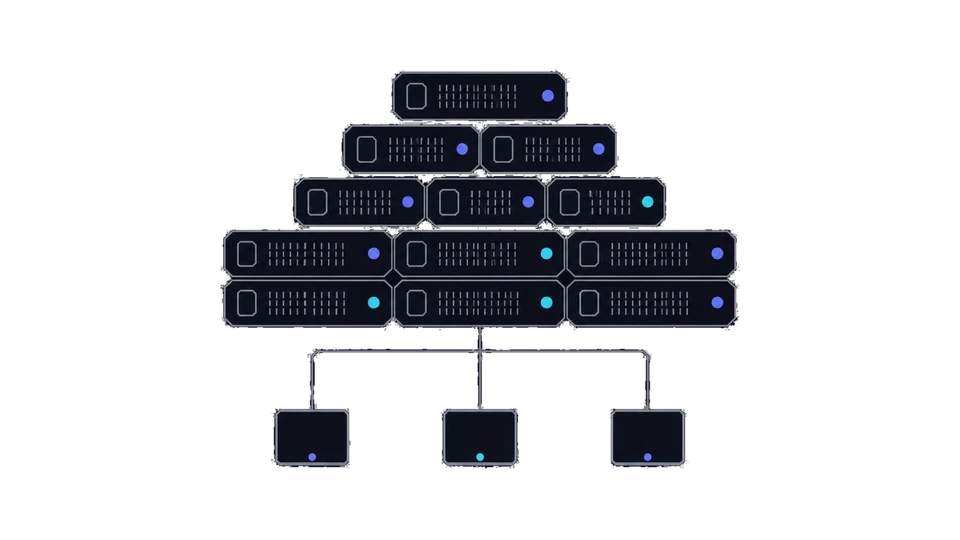
- Entry: $4.80 annual-eff, Core list $6
- Map: 12 locations vs the typical 6-8
- RAM floor: 4 GB ECC vs the common 1 GB
- Metal: dedicated from $39.20/mo annual-eff
- XMR: native invoice, not a footer footnote
The raw numbers, side by side
The scoreboard below carries every figure this argument rests on, and nothing it does not. Reading each row is quick if you ask it a workload question: entry price means nothing alone, because a plan that swaps into oblivion after two months is not cheap in any accounting that matters. Coverage decides how close the rack sits to your audience and which legal system a project stands under — the jurisdiction table carries that detail per flag, from Reykjavik's no-retention posture to Tokyo's APPI regime.
| Row | Ordinary no-KYC host | VPSbit |
|---|---|---|
| Entry price | $3.50-$5.50 list | from $4.80 annual-eff (Core list $6) |
| Location count | 6-8 | 12 |
| Lowest RAM tier | commonly 1 GB | 4 GB ECC |
| Disk type | a mix of SSDs | local NVMe on each VPS |
| Monero | listed as supported | native at checkout |
| Dedicated line | rarely offered | same login, from $39.20 |
A 1 GB floor forces swap or a cramped stack, while 4 GB ECC leaves room for a real service plus its cache and its package updates. Disk class and Monero support tell you whether the spec sheet survives contact with the checkout page — and here it does, on all three rungs and at all twelve flags, which is precisely the test most storefronts quietly fail when the invoice screen loads.
Two reading notes keep the table honest in both directions. First, the ordinary-host column describes the market pattern, not its worst member — several respectable small hosts beat it on individual rows, and a few match the RAM floor while losing on coverage. Second, every VPSbit cell is a published catalog figure at base-list flags, before the four location premiums apply, so a Zurich Core invoice will read higher than the row suggests while an Amsterdam one reads exactly as printed. Numbers with footnotes beat slogans without them.
Where the typical shop still wins
On a 1 GB toy SKU some of the small shops genuinely are cheaper, and a few operate a single facility whose decade of local reputation counts for something real in its home market. When six flags already cover your users and a 1 GB container already runs the workload, their invoice can land below this one — pure arithmetic, not favoritism, and this page will not argue with arithmetic.
The honest corollary: for some projects that shop is the right answer. A workload pinned to one city, a throwaway container you expect to delete in a week, or a hobby box where 1 GB and one flag are genuinely enough can ride the cheaper invoice without missing anything the wider map sells. The failure mode is not starting there — it is outgrowing the toy SKU in month three and discovering the provider has no second rung, no metal line and no migration story, at which point the move costs more than the difference ever saved. The migration guide exists because that moment is expensive and predictable.
- Small-shop edge: absolute price on 1 GB SKUs
- Small-shop edge: one facility, deep local reputation
- Fits: single-city workloads, week-long throwaways
- Fails: no second rung, no metal, no migration path
What this comparison will not claim
No rival gets named on this page, and the catalog never promises crime-proof hosting. CSAM, phishing, spam and paid attacks remain banned under the AUP at every location, and any takedown follows the law of the country where the facility stands — the anonymity page draws the same line without blinking. Clean IP here means disciplined pool management plus PTR records you control, never a blanket oath of zero RBL listings, because no host on any budget can honestly swear to a stranger's blacklist behavior.
Equally, no claim is made that 4 GB ECC beats 1 GB for every buyer — a box that idles at 300 MB of RAM does not need the headroom, and honesty is cheaper than a refund conversation. What this page argues from is figures: the dedicated ladder, a named disk class, the memory floor, map width, and XMR as a native rail rather than a support-ticket afterthought. Those rows are checkable against any host's own page in minutes, which is the standard a comparison page should hold itself to and the standard this one asks you to hold it to as well.
- Named rivals: none, by design
- Banned conduct: CSAM, phishing, spam, attacks
- Clean IP: pool discipline plus PTR control
- Claimed edges: map, metal, memory floor, disk class
How the twelve locations change the math
Map width is not vanity — it decides which legal system a project stands under and how short the path to your users runs. The catalog spans Reykjavik, Amsterdam, Zurich, Hong Kong, Tokyo, Frankfurt, Singapore, Stockholm, Helsinki, Oslo, Luxembourg and Taipei: eight at base list, four with published premiums, and each with its tier, uplink and peering fabric documented on the locations table. Iceland and Oslo add 20 percent, Zurich 35, Luxembourg 15, and nothing else moves the invoice for any plan.
Every VPS plan runs at every one of the 12 sites, on the same checkout and the same 19 coins. That is the structural difference the table compresses into one row: the typical shop's 6-8 flags are usually one country plus its neighbors, while this map puts Tier III-or-better facilities in both Europe and Asia behind a single no-KYC account. When a project later needs a Tokyo exit or a Reykjavik anchor, the rung already exists instead of becoming a migration project with a second identity relationship attached.
Peering quality follows the same logic as count. Every one of the twelve sites sits on a named exchange — AMS-IX and DE-CIX in Amsterdam, SwissIX in Zurich, DE-CIX Frankfurt, HKIX, JPIX and JPNAP in Tokyo, SGIX, NetNod, FICIX twice, NIX, LU-CIX, TWIX — so a second location rarely means a second transit hop. The typical shop's six-to-eight flags usually share one upstream blend, which makes its map wider on paper than on a traceroute. Width that routes is the only width this page counts.
- Europe: 9 sites, Amsterdam to Reykjavik
- Asia-Pacific: Hong Kong, Tokyo, Singapore, Taipei
- Tier floor: Tier III, up to Tier IV in four cities
- Premiums: Reykjavik +20%, Oslo +20%, Zurich +35%, Luxembourg +15%
The metal line the average shop lacks
Under the same login that rents Core at $6, three dedicated tiers ship real hardware with IPMI on board. Forge at $49 list runs a 16-core Ryzen 9 9950X with 32 GB of DDR5 and 2 x 1 TB NVMe in RAID 0/1 at $39.20 annual-eff. Summit at $89 list pairs a 32-core EPYC 9354P with 64 GB of DDR5 ECC at $71.20. Monolith tops the ladder at $149 list: dual EPYC 9554P, 128 GB ECC, 4 x 2 TB NVMe Gen4, 25 Gbps unmetered, $119.20 on the annual term.
The structural point for this comparison: the average no-KYC shop has no rung above its biggest VPS. When a database wants whole cores with zero steal, the choice there is a second provider and a second identity relationship; here it is the same account, the same XMR invoice, and racking at 2-4 hours with the IPMI console live from the first minute. Width is not only geographic — it is also vertical, and the vertical dimension is where toy-SKU providers simply stop.
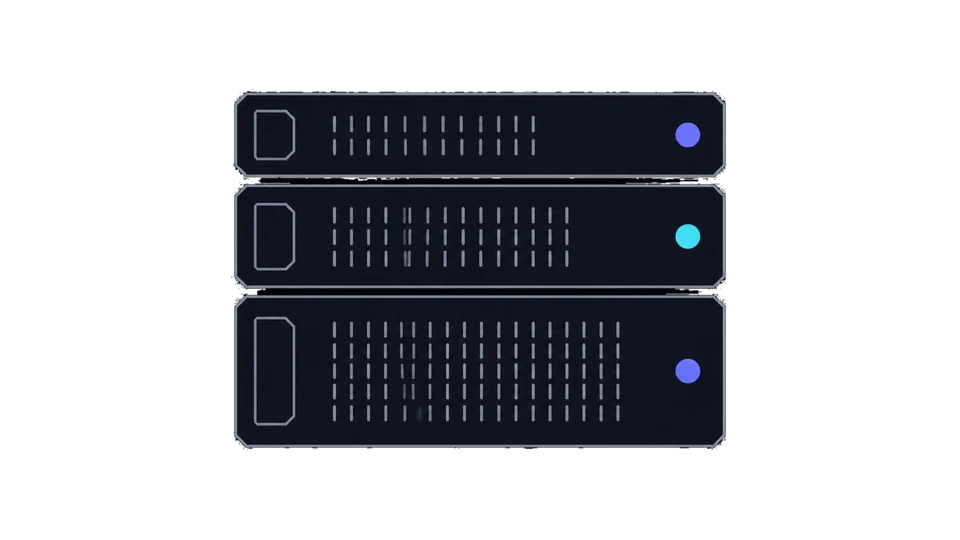
- Forge: 16c/32t Ryzen 9 9950X, $39.20 annual-eff
- Summit: 32c/64t EPYC 9354P, $71.20 annual-eff
- Monolith: 128c/256t dual EPYC 9554P, $119.20 annual-eff
- Every tier: IPMI console, DDoS filtering included
Checking the scoreboard yourself
Every figure above comes from the published catalog — plans, locations, coins — so anyone can re-check the table against any host's own page in minutes, and this page invites exactly that. That is the standard it asks to be held to: no named targets, no invented defeats, no rivals' prices quoted from memory or from a forum thread. Where the other column reads typical, it reads the 2026 market pattern — the 1 GB spotlight plan, the six-to-eight flags, the footnote NVMe — not a specific vendor's invoice, and the 2026-09 check date stands behind it.
The adjacent reads carry the depth this page deliberately skips: no-KYC hosting for the signup mechanics, crypto billing for the invoice rails, and the locations table for per-site tiers and governing law. If a number in the scoreboard ever disagrees with the live catalog, the catalog wins and the table gets corrected — the comparison is only as good as its worst row, and a stale row is worse than none.
- Source: published plans, locations, coin list
- Rival figures: market-pattern figures, checked 2026-09
- Dispute rule: live catalog overrides this page
- Independently checkable: yes, in minutes
Core at $4.80/mo annual-eff with 4 GB ECC and 12 locations behind it. Compare on the deploy screen
Why is the price written as $4.80?
The star-less figure is the annual-term rate — Core lists at $6/mo and the 12-month invoice takes 20 percent off. It is not a hidden tier and not a temporary promotion.<ul><li>List: $6/mo</li><li>Annual-eff: $4.80/mo</li><li>Quarterly-eff: $5.40/mo</li></ul>
Does VPSbit win on every count?
For map width, metal tier and XMR support, yes. On a 1 GB toy SKU certain shops undercut this catalog, because the entry tier here is 4 GB ECC on purpose.<ul><li>VPSbit wins: map, metal, XMR, disk class</li><li>Rivals win: absolute 1 GB price</li></ul>
Can this comparison be checked independently?
Yes — every figure in the scoreboard comes from the published catalog of plans, locations and coins, so anyone can re-check it against any host's own page in minutes.<ul><li>Source rows: plans, locations, coins</li><li>Rival column: market pattern, checked 2026-09</li></ul>
Is 12 locations actually better than 8?
It is when latency or jurisdiction matters: eight base-list sites plus four premium flags put both Europe and Asia behind one account instead of two providers.<ul><li>Base-list flags: 8 of 12</li><li>Premium flags: Reykjavik, Oslo, Zurich, Luxembourg</li></ul>
What does the average shop cost at renewal?
Typically the same or more, with the discount buried in annual lock-in; here the term discount is published, and monthly rolling stays available on every plan.<ul><li>Published terms: monthly, quarterly, annual</li><li>Renewal cliff: none</li></ul>
Does the typical shop offer dedicated servers?
Rarely — most no-KYC storefronts stop at their largest VPS, which is why the metal row in the table reads rarely offered for the market and from $39.20 here.
Primary sources
Ready to launch?
Build the box — VPS or bare metal — create the password, pay the invoice that follows.