 VPSbit
Support tickets: pack the facts, skip the noise
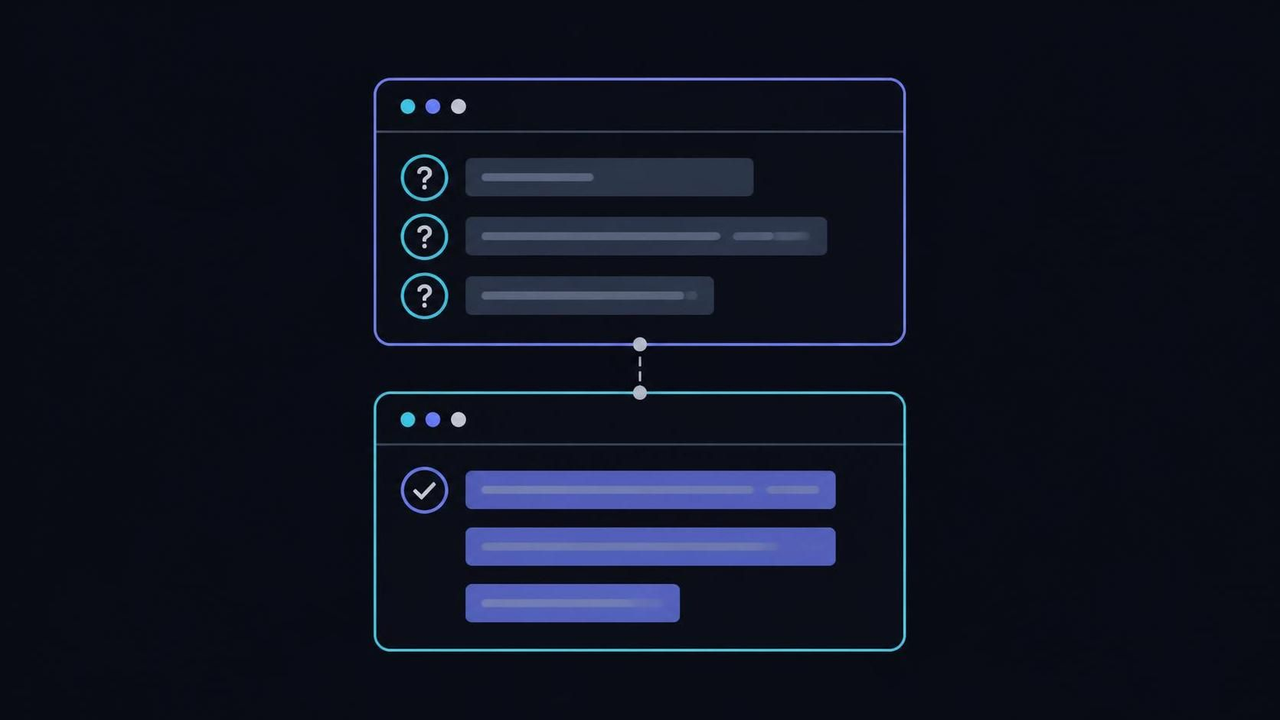
A ticket that closes in a single exchange: name the object up front, attach identifiers, leave credentials out. Entry VPS $4.80/mo prepaid yearly.
A ticket that closes in a single exchange: name the object up front, attach identifiers, leave credentials out. Entry VPS $4.80/mo prepaid yearly.
One object, one subject line
Everyone assumes slow answers mean busy engineers. Usually the opposite holds: the case itself was unreadable, so the first reply had to be a question. A queue moves at the speed of its identifiers. Hand the reader an invoice number, an address or a server tag in the opening line, and the answer often ships with the first batch. Force them to ask which machine you mean, and the clock doubles.
The mechanics are plain. A reader opens Panel → Support, scans the subject, and decides within seconds what species of case this is: billing, reverse DNS, a hung action. Everything that aids that decision belongs up top. Everything else — backstory, apologies, hardware envy — is friction. The thread itself lives on your account, so answers surface in the panel and history stays welded to the login rather than to a mailbox you check twice a week.
Watch how a subject changes its own fate. "Server down??" tells the reader nothing. PTR request, 203.0.113.7 names a record type plus an address — the example IP comes from the block RFC 5737 reserves for documentation, so no real machine gets quoted in a guide. That single line lets the first human reply carry a fix instead of a request for details about your setup.
Two habits burn the opening exchange. Vague bodies — "it died after lunch" — guarantee a reply that only asks for specifics. Worse is pasting a root password, which nobody requested and nothing legitimate consumes. Access to the box you rent runs through keys minted by ssh-keygen, per the OpenSSH manual; a credential inside a ticket is a secret you must now rotate, handed to strangers for zero benefit.
Arithmetic favors completeness. A case filed with every identifier often ends after a single exchange; a thin one idles until you log back in and answer questions. Each avoidable exchange costs half a day at typical queue cadence, and two of them stretch a five-minute fix across a week. Pack well and one gate remains before the form: money on the account, above 0.
VPS from $4.80* — Core on the annual term (list $6/mo), one invoice for 12 months, no auto-charges. Dedicated with IPMI from $39.20/mo. Crypto invoice, no KYC.
Launch nowThe zero-balance gate and the one-thread habit
Filing requires funds — a balance sitting at 0 blocks the form entirely. It looks like a toll and behaves like a filter: the support team is sized for people with machines actually running, not for passers-by. Clearing it costs about 2 minutes. Add funds, submit the case, and the thread remains open until the issue settles, however long that takes on your side.
Second rule: the account is the thread. Answers appear in the panel, never in your inbox, and the full exchange stays attached to the login that opened it. Nobody can mail you a transcript because no parallel channel exists. Want a copy? Open the panel from any browser you trust and read it there. That welding is also what keeps permissions sane when several people share one account.
One issue, one thread is the entire discipline. A case that opens as reverse DNS and mutates into a payment dispute reads as two problems wearing a single number, and each half waits on the other. Give the second topic its own subject and its own submission; both will finish sooner. The queue rewards cases that stay legible from first line to last.
Duplicates are the classic self-inflicted wound. Submitting the same request twice does not raise its priority; it splits your history, invites contradictory answers, and leaves two numbers to reconcile for one problem. Changed circumstances belong in the original thread as a reply. The sole exception points elsewhere entirely: reports about someone else's service go to the abuse lane, with links plus exact times.
Both gates clear in minutes — funds present, one thread per issue — and together they signal that you read the rules before typing. What separates a fast case from a slow one after that is content: which fields the body carries, and how those fields differ between a name-record request, a payment puzzle and a frozen machine action. That is next, case by case.
Bodies that join intent to records
Here is the asymmetry worth internalizing: the provider already sees its own side — invoice states, action logs, power status — while your intentions are invisible until written down. The body exists to weld the two together. Every useful line is a pointer: this address, this payment string, this button, this hour. Motivation, emotion and company lore are dead weight; they cost reading time and change nothing.
Name-record requests compress to a line. Provide the address plus the hostname the forward zone already serves — the A/AAAA side — since a PTR simply mirrors an existing name, standard behavior under RFC 1035. Verify the forward lookup first with dig -x 203.0.113.7 and paste its answer; if nothing resolves forward, the request is premature and will bounce straight back to you.
Payment puzzles need exactly three items: which coin, which transaction string, which invoice reference. Exact amounts on the correct chain credit themselves without human touch — the exceptions are shortfalls, transfers that left across the wrong ledger, and money still parked inside an exchange's outbound backlog. In all three, the transaction string is the investigation; omit it and somebody scans block explorers on your behalf.
A frozen server action wants the server identifier, the button pressed, and the wall-clock time. "Reboot hung" is a mood. "Pressed Reboot at 21:05; status stuck on Stopping for 10 minutes" is something an engineer can verify against internal logs immediately — precision replaces adjectives, and the case advances without a single clarifying question. Panel actions are recorded server-side with timestamps; your description tells the reader where to look.
The failure mode here is the three-case ticket: a name request, a billing worry and a stuck reboot fused into one body. Each topic drags at the others, and the single-thread rule from earlier already showed where that leads. Split first, then pack each body with its own pointers — and what remains is timing: what clears automatically, and when a person actually steps in.
Payments that need a human — and payments that don't
Counter-intuitive truth: most payment tickets are preventable. Money arriving at the quoted figure on the expected chain settles itself, silently, and no human ever hears about it. The human path exists for the residue — undercharges, mismatched networks, transfers trapped mid-exchange — and your ticket either feeds that review or creates it. Before writing, check the chain: if the explorer already shows the full amount at the right address, the credit may simply be minutes behind you.
Know what an invoice is: a quote priced at the current market rate, bound to one address created for it alone, watched until it fills. The coin list runs to nineteen entries, with USDT alone spanning seven ledgers — TRC-20, ERC-20, BEP-20, SPL, Polygon, Arbitrum, Optimism. Same ticker, different rails: any review will need to know which rail your funds actually took.
Three situations genuinely require a person. Shortfalls: the rate drifted, or an exchange skimmed its fee, and the arriving total misses the quote. Wrong-ledger departures: dollars sent across a chain the invoice never named. Stalls: the money still sits inside an exchange's withdrawal machinery, so the destination shows nothing yet. All three resolve through the same doorway — coin, transaction string, invoice reference, one submission from you.
The move that doubles the damage is a second transfer aimed at an address built for exactly one deposit. The first payment is not lost; it awaits judgment. Another deposit forks the case — now two transactions fight over one quote — and recovery takes longer for everyone, you included. Stop after the first anomaly. File once. Let the review finish its work.
Sometimes the real diagnosis is simpler: the account was never funded because the price felt off. In that case take the entry plan at $6/mo list — $4.80/mo on the 12-month prepay — and start from a clean quote. Otherwise, once your fields are in, ownership passes to the queue, and the question becomes who reads it and when. That is a question about rhythm.
Three things this queue will refuse to do
Scope is deliberately tight: accounts, billing, machine actions — nothing else moves faster for landing here. Three misdirected categories arrive constantly: sales questions the catalog already settles, abuse complaints about third parties, and requests that staff administer your machine. Each has a proper door, and picking the right one is what keeps your own future tickets quick.
Sales and invoice basics rarely deserve a submission. Prices, plan shapes, the twelve cities, the surcharge list — all published. The payment walkthrough answers most funding questions before any ticket exists. Read first, then file only what survives the reading; the queue exists for situations no page can settle. Even credential strategy has its own guide — the mailbox-free signup — so research before you write.
Complaints about other people's services follow a separate route: the abuse lane, with links plus exact times attached. The usage rules on /aup/ draw the hard lines — no phishing, no spam, no attack traffic, no CSAM — and reports shoved through the support form lose their timestamps in translation, starting from zero at the team that actually acts. You can save everyone a re-routing step by choosing the door first.
Administration requests are the subtle trap. There is no managed tier here; root is the product, and "just set it up for me" asks the wrong shop for the wrong job. The knowledge base carries the checklists instead — sshd hardening per the sshd manual, backup drills, key hygiene. Expect a pointer, not a technician, and you will never be disappointed.
So memorize the map once: support for your account and machines, abuse for other people's misdeeds, pages for facts, your own terminal for configuration. Everything inside that map still depends on reply timing — and the cadence here resembles tide more than chat, which is the next thing worth understanding before you press submit.
Tide, not chat: how replies actually arrive
Answers land in batches during business hours, not minute-by-minute like a messenger. Between batches, nothing accelerates your case: refreshing, resubmitting, rewording the subject — all noise. What genuinely accelerates it is completeness, since a fully packed case can be resolved by the same person who first reads it, and many close in one pass. Treat the queue like a post office, not a phone line.
Plan around the rhythm instead of the clock. Draft when you have twenty free minutes, send, then walk away. Replies either name your next move or close the matter; new facts from your side — a confirmed transaction, a screenshot, command output — get consumed in the next batch. Asking whether anyone has seen the thread merely guarantees that the next batch contains nothing new.
Metal keeps a different schedule. Racking a dedicated chassis and handing over its IPMI console takes 2–4 hours, announced stage by stage inside the order flow — not negotiated through tickets. Need the bare-iron case anyway? Lease Forge at $49/mo list, $39.20/mo prepaid yearly, then watch the provisioning tracker instead of the queue. The two channels answer different questions, and mixing them only slows both.
Importing messenger habits is the break: hourly nudges, demands to skip announced provisioning windows. Neither bends the clock, and the second asks staff to undercut a process that keeps hand-overs verifiable. Genuine deadlines belong in the thread exactly once, with timestamp and timezone — concrete context helps; pressure does not. A launch date written as facts can genuinely change how a case is handled; a complaint cannot.
Contract summary: you write completely, staff answers in batches, hardware announces itself. Two form-level details remain — what may be attached, and which language gets read first — and both hide footguns worth a minute each. Attachments can silently turn a strong case into a liability; language quietly reorders who reads you first. Next section.
Screenshots, strings and the language of the queue
One test governs attachments: does the file show the object? A capture with the invoice reference legible answers questions prose cannot; a pasted error, copied character for character, beats any summary because staff search logs by exact strings. Two hundred words of narrative lose to one clean .png image — and one attached private key loses to everything, instantly and permanently.
Attach with intent: the panel state, the timestamped log line, the command output. Attach nothing that authenticates — no passwords, no keys, no session cookies — because a legitimate case never consumes them, and whatever you upload becomes a stored file on someone else's disk. The day a case seems to require your credentials, stop: that request is itself the incident.
Language reorders the reading queue. Staff read English submissions first even though the interface follows your browser's locale. You need no eloquence — the identifier packet reads fine in plain words — but a case drafted elsewhere waits behind translation capacity that English never consumes. Technical strings stay untouched in any language: the transaction hash, the address, the error text.
The over-shared capture is the recurring disaster: the error visible and, in frame, a terminal naming ~/.ssh/id_ed25519, a session token, a browser row full of other accounts. Crop before sending. And never attach a key file "so staff can test" — keys exist precisely so no second copy is ever needed, as ssh-keygen's documentation assumes throughout. Nobody will ask; never offer.
For scale: a payment confirms and 60 seconds later the shell answers on a fresh machine — checkout moves that fast. Everything on this page defends that speed once something unusual interrupts it. One section remains, and it lines the whole discipline up in running order, short enough to bookmark, structured so the next case writes itself.
The ticket, in the order to run it
Clear the gates first. Balance above 0? If not, add funds — the form will not accept less. Does the case even belong here: account, billing, a machine action? Reports about other people's services route to the abuse lane with links plus exact times; product facts live on the pages. Two minutes spent routing saves a batch cycle.
Gather identifiers while context is fresh. Name-record case: the address plus the hostname the forward zone already answers — confirm with dig before writing. Payment case: coin, transaction string, invoice reference, plus a promise to yourself that the one-invoice address receives nothing further. Frozen action: server identifier, button, clock time. Each packet takes minutes to assemble and decides how the first read goes.
Compose the subject to name the object — a reverse-DNS request carrying the address is the model — then the body as pure pointers in plain English. Crop every image until only the object remains; copy errors verbatim; include zero credentials. Drafted in another language, the packet still works, but two English sentences around the fields move you up the reading order.
Submit once, then let the batch arrive. Replies surface in the panel thread; answer with facts, never with nudges. Iron questions — racking, IPMI hand-over — follow the two-to-four-hour window announced in the tracker instead. And should a second topic appear mid-thread, it deserves its own submission. One issue, one number: that rule does more for speed than any wording trick.
Finish by honoring the loop: the thread stays open until the case resolves, so reply within a batch when one field is missing. The packet you assembled — pointers, subject, verbatim strings — is reusable; the next case costs ten minutes rather than an afternoon. That is the whole craft: a ticket is a package, and you now pack it well.
Is email an option?
It is not, for case threads. Threads bind to the account so history and permissions stay coherent, and answers surface in the panel. The lone exception is an abuse report about a third party's service, which travels to the abuse lane with links and exact times.
Does language change speed?
Yes. English cases are read first, though the interface itself follows browser locale, so reading stays comfortable in your language. Write the fields in English and the wait shrinks; hashes, addresses and error text remain verbatim regardless.
A payment has not credited — now what?
Submit one case naming the coin, the transaction string and the invoice reference, then leave the address alone. Shortfalls can be completed onto the original quote once reviewed; a second deposit against it turns one puzzle into two.
Are attachments allowed?
Yes, when they show the object: a legible invoice reference, an error copied exactly, a timestamped log line. Credentials, keys and session cookies never belong in a case, both because nothing legitimate consumes them and because uploads become stored files.
Will an empty account pass the gate?
No — the form wants a balance above zero, which keeps the workload proportional to real usage. Fund it, file, and the thread stays open through resolution even if the balance drops afterwards.
Primary sources
More ways to pay
Pay with Bitcoin · Pay with Monero · Pay with USDT (TRC-20/ERC-20/SPL) · Pay with Litecoin · Pay with Ethereum · Pay with Solana · Pay with x402 · Pay with Dogecoin · Pay with XRP · Pay with TRX · Monero on bare metal · Dedicated servers with crypto · Pick the jurisdiction first.
Ready to launch?
Build the box — VPS or bare metal — create the password, pay the invoice that follows.