 VPSbit
VPS vs VPN: Is a VPS Better Than a VPN?
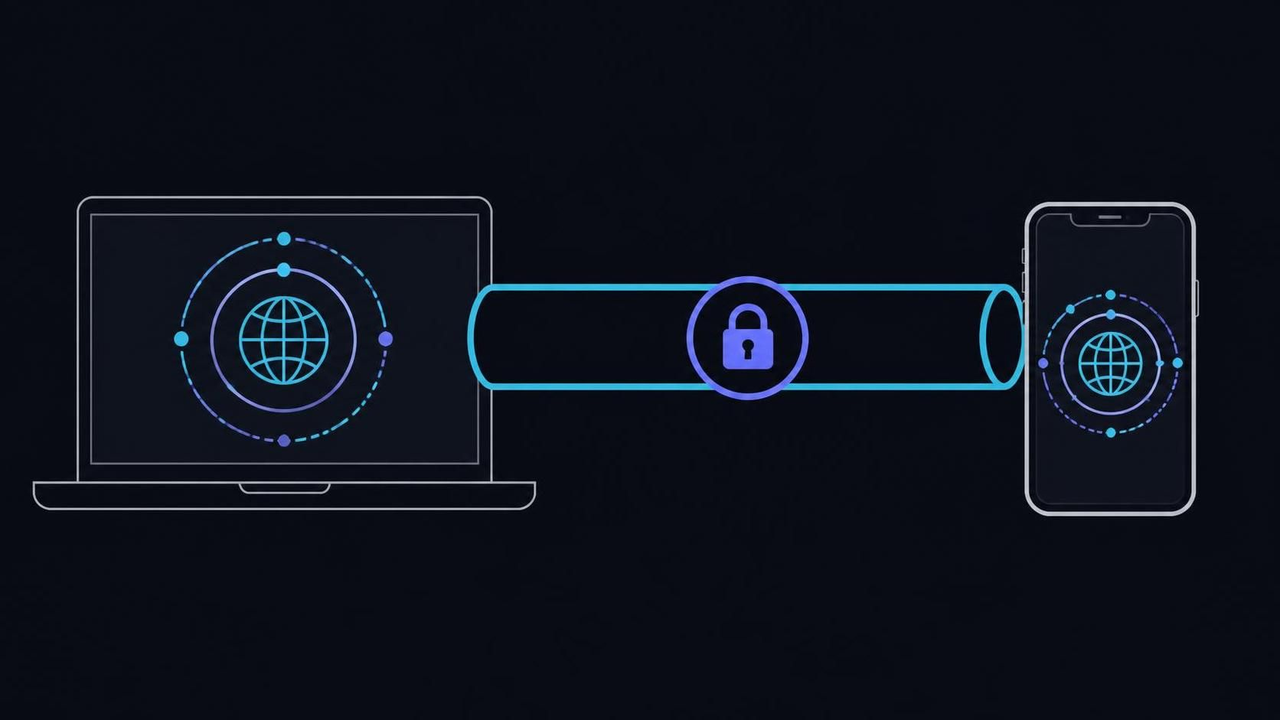
Different tools, not rivals: a VPN subscription rents a shared exit, a VPS is a server where you run WireGuard yourself. Specs and costs, from $4.80/mo.
Different tools, not rivals: a VPN subscription rents a shared exit, a VPS is a server where you run WireGuard yourself. Specs and costs, from $4.80/mo.
12 locations · 19 coins · SLA 99.95% · no KYC · public canary
The short answer
Short answer: they are different tools, so “better” is the wrong frame. A VPN subscription rents you an app plus a shared exit IP that hundreds of other customers rotate through; a VPS is a whole virtual server where you install WireGuard yourself and hold the keys. If the question is privacy from your ISP on one laptop, the subscription starts faster. If the question is an exit you administer — your IP, your retention decision, your revocation list — the VPS wins, and Core carries it at $4.80/mo annual-eff.
VPS from $4.80* — Core on the annual term (list $6/mo), one invoice for 12 months, no auto-charges. Dedicated with IPMI from $39.20/mo. Crypto invoice, no KYC.
Launch nowWhat the subscription does well
A commercial VPN is operationally cheap: an app, a server list, and a crowd whose traffic mixes with yours. That crowd is real cover for everyday browsing, and switching countries is a two-click affair. The trade is trust. The provider sees connection metadata on its side of the tunnel, the no-logs claim is a policy you audit once a year at best, and shared exits collect CAPTCHAs and streaming blocks because hundreds of strangers share the same address.
What changes when the endpoint is yours
A VPS endpoint is one IP that only your devices use. WireGuard installs from the official quick start in about ten minutes: a keypair, one UDP port (51820 by default), a peer block per device. The full walkthrough lives at self-hosting WireGuard, and the same KVM runs a stack behind the tunnel — a reverse proxy, a chain node, a bot. Traffic is unmetered at 1 Gbps on every VPS plan, and CPU/RAM resize live, so the tunnel is rarely the bottleneck.
Location works like the subscription's server list, with a different meaning: Amsterdam answers in under a millisecond to AMS peers, while Reykjavik trades 18 ms for jurisdiction and 100% geothermal power. Twelve flags bill at one list price; premium cities mark up published amounts — Zurich +35%, Oslo +20%, Luxembourg +15%.
Side by side
| Criterion | Subscription VPN | Self-hosted VPS endpoint |
|---|---|---|
| Exit IP | shared by hundreds of customers | only your devices |
| Logs | policy claim, audited rarely | your own retention decision |
| Signup identity | email, often a card | token or email, crypto invoice |
| Keys | on provider-run infrastructure | generated on your box, revoked per device |
| Cost | $4–12/mo typical | Core $4.80/mo annual-eff |
| Effort | none | patching and key rotation are yours |
When the honest answer is both
The setups are not mutually exclusive. Everyday browsing survives fine on a subscription; the endpoints that carry load — a work tunnel, a family exit, a self-hosted service behind the same box — belong on hardware whose root you hold. The VPN server page sizes the KVM by workload, and the VPS catalog lists every plan next to its spec. If payment is the deciding question, buying a VPS with crypto needs no card anywhere in the flow.
Deploy a WireGuard endpoint — Core from $4.80/mo annual-eff.
Open checkoutIs a VPS better than a VPN?
Neither is universally better: a subscription is a managed shared exit, a VPS is infrastructure you administer yourself. Pick by whether the priority is convenience or control.
Can I use a VPS as a personal VPN server?
Yes. Install WireGuard from the official quick start, open one UDP port, add a peer block per device — about ten minutes on a fresh KVM.
What does a self-hosted VPN on a VPS cost?
Core — 2 vCPU, 4 GB DDR5, 80 GB NVMe — lists at $6/mo and runs $4.80/mo on the annual term. Traffic is unmetered at 1 Gbps.
Do you KYC users who run VPN endpoints?
No. Signup is a 32-character token or an email plus a 12-character password; the invoice settles in nineteen coins and carries no identity fields.
Which location should a VPN server use?
Latency decides for daily use — Amsterdam for EU users. When jurisdiction is the point, Reykjavik or Zurich justify the extra milliseconds and the published premium.
Primary sources
Ready to launch?
Build the box — VPS or bare metal — create the password, pay the invoice that follows.